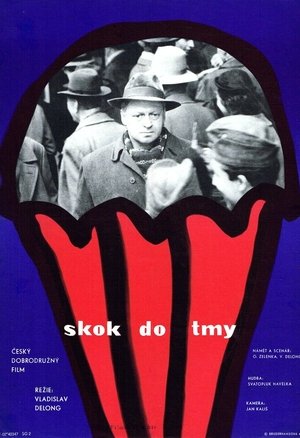
The plot begins in the Soviet Union showing first efforts to establish the Czechoslovak legion in 1942. The film also shows the assassination of Heydrich and the subsequent annihilation of Lidice. The main topis of the film is battles with German troops for Sokolovo.
As Hitler's Nazi army invades Yugoslavia, a Serbian village girl joins the underground movement, falls in love with the Croat soldier Ivan who is an expert in blowing up trains, and inspires villagers young and old to aggressively participate in the resistance.
A young Japanese-American orphan in California is taken in by a priest who is actually a Japanese secret agent and a samurai warrior. Due to the samurai's training, the boy murders his English teacher, kills the American parents who have adopted him, smuggles Japanese secret plans into the country, and eventually becomes the governor of California with plans to infiltrate Japanese spies into the state so they can take over.
Julia travels to the Indo-Burma border to perform for the troops during the World War II, on the insistence of Billimoria, her lover. She finds herself in love with Jemadar Malik, a soldier there.
It's a powerful melodrama about a thwarted romance in 1930s Tientsin, China, during the Japanese occupation, and it stars Linda Lin Dai, one of the era's most popular stars. It was part of Golden Horse's 100 Greatest Chinese-Language Films.
In the final days of the war, Duyên faces a daily struggle to take care of her young son and ailing father-in-law, all the while hiding from them the fact that her husband has recently been killed in battle.
Stanislaw Ignacy Witkiewicz, better known as Witkacy, enivsages the future horrors of the Polish nation, as embodied by Stalin and Hitler, and the world collapsing into chaos.
Four super-powered circus freaks find themselves trapped in war-torn Rome after their foster father is captured by the Nazis.
The television film based on the novel of the same name by Ladislav Mňaček draws on the period of World War II and the Slovak National Uprising. The film's story is composed of two intertwining time lines. In the images of the present that frame the entire narrative, the young partisan Voloďa - a hero with autobiographical features - recovers from a serious injury. In feverish reminiscences and in conversations with his nurse Eliška, he recapitulates the eventful events of his time in the partisan group in the village of Ploština, which the partisans abandoned under the pressure of events and left to the mercy of the German commando. Voloďa is haunted by visions of the burning Ploština, remorse and responsibility for the tragedy. In feverish reminiscences, he relives the meetings of the partisan detachment with the German commando. Memories of the mysterious Jewish girl Marta, a partisan liaison with whom Pavol had a passionate love affair, also return to him.
Slovak partisans, bravely fighting against Nazi superiority, would never have succeeded to such an extent if they had not been supported by the villagers. Despite the threat of repression, it is the villagers who care for the wounded, hide them, and behave conscientiously. Although the film was made in the late 1960s, it fully adopts the patterns of partisan stories, perhaps the only thing it can be credited with is a more developed sense of authenticity in the story, characters, and setting.
A military mission is interrupted when a British soldier claims that God had appeared to him in a transcendental vision.
Prague, during World War II. Hana Kaufmann, a Jewish ophthalmologist, marries Dr. Antonín Bureš, a Christian man. When her family is sent to the Theresienstadt concentration camp, their romance turns into a struggle for survival.
It is Singapore in the late 1930s. Kai and Fei are childhood friends and aspiring violinists. When Japan invades Malaya in 1941, Kai chooses to forgo his music career to join the anti-Japanese forces. After the war Kai goes missing. Determined to find him, Fei performs all over Southeast Asia, all the while seeking any news of Kai. Yet, as time fades, Fei has to decide if she must find her own music to define the remaining years of her life.
1938. While the Nazi troops march into Vienna, the lawyer Josef Bartok hastily tries to escape to the USA with his wife but is arrested by the Gestapo. Bartok remains steadfast and refuses to cooperate with the Gestapo that requires confidential information from him. Thrown into solitary confinement, Bartok is psychologically tormented for months and begins to weaken. However, when he steals an old book about chess it sets him on course to overcome the mental suffering inflicted upon him, until it becomes a dangerous obsession.
Strieborný Neptún
A war drama about the anti-Nazi resistance in the early spring of the last year of the war. German villains are furiously searching for their opponents, threatening the villagers who helped a downed pilot sent from England. But suspicions are also growing in the Czech environment, as someone has stooped to being an informer.
The film tells the story of a (somehow) love-triangle set in Bohol during World War II; though the main underlying themes deals with Filipino nationalism and the legacies of colonialism.
The film dramatizes November 11, 1919- a crucial date in the battle for Latvian independence. A year after the end of the official hostilities of WWI, a renegade German general and troops remain outside the Latvian capital. Latvian riflemen, most of them inexperienced volunteers, somehow managed to defeat a larger, better-armed force of German and Russian mercenaries.
A teacher leads an unlikely team to a high school baseball championship in this sports drama. Managing a team on the verge of extinction, teacher Hiroyoshi rallies the squad on an underdog journey.
Set against the backdrop of WW II in Calcutta, "Meri Bahen" is the story of a schoolteacher and his young sister. The film followed his rise to fame as a singer and the changes in his relationships following a bomb-raid.