This shows physicist Stephen Hawking's life as he deals with the ALS that renders him immobile and unable to speak without the use of a computer. Hawking's friends, family, classmates, and peers are interviewed not only about his theories but the man himself.
Astrophysicist Jean Surdej brings a small group of teenage pupils on a trip to the Lofoten islands in northern Norway, for a very special class on the solar system. Using the geography of the archipelago to illustrate the distances between the planets, they journey through space by car and ferry, with the picturesque landscapes standing in for the black emptiness that surround the heavenly bodies. A masterstroke of both pedagogy and filmmaking, Children of Stars is a captivating documentary about humanity's place in the grand scheme of things.
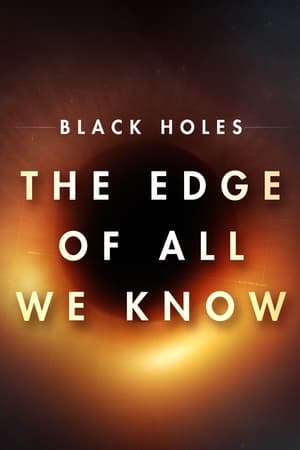
A team of international scientists attempt to document the first-ever image of a black hole.
William Shatner presents a light-hearted look at how the "Star Trek" TV series have influenced and inspired today's technologies, including: cell phones, medical imaging, computers and software, SETI, MP3 players and iPods, virtual reality, and spaceship propulsion.
One of humanity’s greatest achievements, the International Space Station is a $150 billion science laboratory hurtling around Earth at 17,000mph, its thin metal walls shielding astronauts from the most hostile environment humans have ever endured. Microgravity, the vacuum of space, extremes of temperature, micrometeorites - life here is perilous. To mark 25 years of continuous habitation onboard, Space Station We Have a Problem reveals how astronauts are only a technical glitch or software error away from disaster. From malfunctioning spacesuits and docking disasters, critical leaks and even the entire space station backflipping out of control, this is life and death played out in low earth orbit, coupled with the bravery and brilliance that each time, saves the day.
An Educational Favorites VHS from the NATURE SERIES featuring Leonard Nimoy
The 1960s was an extraordinary time for the United States. Unburdened by post-war reparations, Americans were preoccupied with other developments like NASA, the game-changing space programme that put Neil Armstrong on the moon. Yet it was astronauts like Eugene Cernan who paved the uneven, perilous path to lunar exploration. A test pilot who lived to court danger, he was recruited along with 14 other men in a secretive process that saw them become the closest of friends and adversaries. In this intensely competitive environment, Cernan was one of only three men who was sent twice to the moon, with his second trip also being NASA’s final lunar mission. As he looks back at what he loved and lost during the eight years in Houston, an incomparably eventful life emerges into view. Director Mark Craig crafts a quietly epic biography that combines the rare insight of the surviving former astronauts with archival footage and otherworldly moonscapes.
The dynamic meeting of solid science and futuristic simulation culminates in a dramatic exploration to another inhabited planet seven light years away. Alien Planet creates a realistic depiction of creatures on another world, where life is possible, if not provable, according to scientists' theories. Take this fascinating journey created by state-of-the-art animation and photo-realistic effects.
A feature-length documentary about the film Galaxy Quest and its legacy, celebrating its milestone 20th anniversary.
Archival material from the original NASA film footage – much of it seen for the first time – plus interviews with the surviving astronauts, including Jim Lovell, Dave Scott, John Young, Gene Cernan, Mike Collins, Buzz Aldrin, Alan Bean, Edgar Mitchell, Charlie Duke and Harrison Schmitt.
Travel alongside the astronauts as they deploy and repair the Hubble Space Telescope, soar above Venus and Mars, and find proof of new planets and the possibility of other life forming around distant stars.
A brief visualisation of NASA’s historic spacecrafts Mariner, Pioneer, Voyager, and Dawn, exploring the solar system, culminating in the New Horizons mission.
An inside look at NASA’s new Artemis program and its mission to return astronauts to the moon for the first time in 50 years.
Top Gear presenter James May presents this informative program that examines the historic moon missions. Traveling to America, May meets three of the men who walked on the surface of the moon, learning how it felt and how the now antiquated technology was used to achieve such an historic feat.
Discover the UFO phenomenon like never before, with insights from NASA, CNES, Oxford, compelling firsthand witnesses, and even the possible viewpoint of extraterrestrial visitors.
The Wonder of it All focuses on the human side of the men behind the Apollo missions through candid interviews with seven of the Apollo astronauts: Buzz Aldrin, Alan Bean, Edgar Mitchell, John Young, Charles Duke, Eugene Cernan and Harrison Schmitt. They all reflect on the training, the tragedies, the camaraderie, and the effect that their space travel has had on their families.
A year through the distant eyes of meteorological satellite Himawari-8 – a hypnotic stream of Earth's beauty, fragility and disasters. Animation of satellite irradiation scan measurements, scientific data by meteorological satellite Himawari-8 courtesy of JMA/BoM/NCI
The Hubble Space Telescope has spent more than 30 years scrutinizing the cosmos in an attempt to unravel the secrets of the Universe and go as close as possible to its origin. But Hubble has also become the superstar of space, offering us magnificent paintings of the Universe.
Explores the $10 billion JWST's engineering and construction process, historic Dec. 25, 2021 launch, and the release of its first full-color, galaxy-sprinkled images on July 12, 2022 witnessed by the entire planet.
Die Planeten Jäger