A luxury liner carries Jewish refugees from Hitler's Germany in a desperate fight for survival.
Israel, 1961. Nazi war criminal Adolf Eichmann, responsible for organizing the extermination of European Jews, is sentenced to death.
After arriving in 1940 New York, Freddy struggles to find work. His world of refugee acquaintances includes the depressed daughter of a poet/delicatessen owner, an aging surgeon who cannot find work, and a lovable charlatan photographer.
Freddy, a Viennese Jew who emigrated to New York after Hitler's invasion, and Adler, a left-wing intellectual originally from Berlin, return to Austria in 1944 as soldiers in the U.S. Army. Freddy falls in love with the daughter of a Nazi, and Adler attempts to go over to the Communist Zone. But with the advent of the Cold War and continuing anti-semitism, the idealism of both characters is shattered as they find themselves surrounded by cynicism, opportunism, and universal self-deception.
At the Wannsee Conference on January 20, 1942, senior Nazi officials meet to determine the manner in which the so-called "Final Solution to the Jewish Question" can be best implemented.
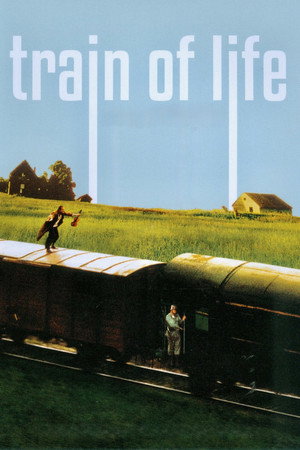
In 1941, the inhabitants of a small Jewish village in Central Europe organize a fake deportation train so that they can escape the Nazis and flee to Palestine.
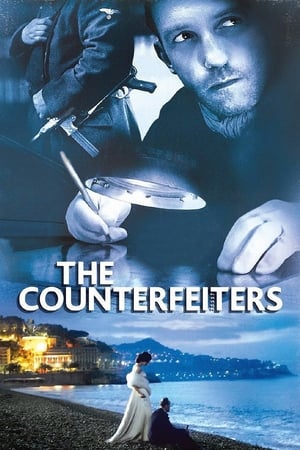
The story of Jewish counterfeiter Salomon Sorowitsch, who was coerced into assisting the Nazi operation of the Sachsenhausen concentration camp during World War II.
Kurt Gerstein—a member of the Institute for Hygiene of the Waffen-SS—is appalled to discover that a poison gas he helped discover is being used to kill Jews. Driven by his conscience to alert the rest of the world, Gerstein teams up with a young Jesuit priest, Riccardo Fontana, but their protestations fall on deaf ears in the Vatican.
Fictional account of what might have happened if Hitler had won the war. It is now the 1960s and Germany's war crimes have so far been kept a secret. Hitler wants to talk peace with the US president. An American journalist and a German homicide cop stumble into a plot to destroy all evidence of the genocide.
In one continuous shot, SHTTL shows the lives, loves, and inner conflicts within a Yiddish speaking shtetl on the border between Ukraine and Poland - one day before the Nazi invasion of the Soviet Union.
Set in Berlin, 1933, We are Dancers is the story of real-life anti-Nazi drag artist Hansi Sturm and his circle of friends in the immediate aftermath of the Reichstag fire, an event that allowed Hitler to become absolute dictator of Germany. Confronted by a former lover, now a Nazi, Hansi must decide whether to abandon his club or stay and face the Fascists on his own terms.
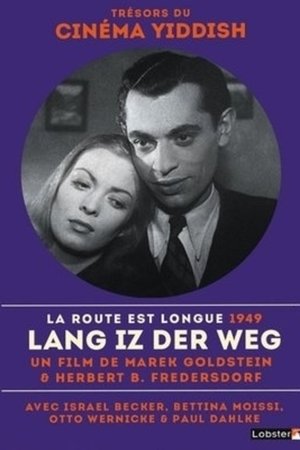
The first feature film to represent the Holocaust from a Jewish perspective. Shot on location at Landsberg, the largest DP camp in U.S.-occupied Germany, and mixing neorealist and expressionist styles, the film follows a Polish Jew and his family from pre-war Warsaw through Auschwitz and the DP camps.
Zurich, 1905. Nineteen-year-old Russian Sabina Spielrein is put by her parents in a psychiatric hospital, suffering from a severe form of hysteria and refusing to eat. A compassionate doctor, Carl Gustav Jung, takes her under his care and, for the first time, experiments with the psychoanalytical method of his teacher Sigmund Freud. Thus is born a sweeping story of love and passion, of body and soul, soaring to the utmost heights, but also plunging to the darkest depths of the 20th century.
The commandant of Auschwitz, Rudolf Höss, and his wife Hedwig, strive to build a dream life for their family in a house and garden next to the camp.
Film adaptation of Rudolf Jašík's novel of the same name. The plot of the film is situated in the forties of our century, in the first years of the Second World War. It captures the political and social atmosphere of one of the Slovak towns that lives seemingly in the lee, far from the world and war. Well, appearances are deceiving. Beneath the surface of peaceful, everyday life, a tragic process is taking place, accelerating people's destinies, the disintegration of their characters, but also the maturing of their relationships. The film is the story of Eva and Igor, their love, violently interrupted by political events. In this era of personal and social tragedies, children become adults almost overnight, honest people become victims, and mentally ill people become murderers. The film about the fates of Eva and Igor, the Jewish cartmen Samko and Maxi, and the careerist Flórik presents a believable, convincing picture of the era marked by the expansion of fascism.
The life and career of Erwin Rommel and his involvement in the plot to assassinate Hitler.
Love in a concentration camp. A young Jewish gay man, Otto, is protected by a "kapo" (a fellow prisoner) and an SS guard who unexpectedly ends up saving his life.
This gripping historical drama recounts the story of Armenian-born Missak Manouchian, a woodworker and political activist who led an immigrant laborer division of the Parisian Resistance on 30 operations against the Nazis in 1943. The Nazis branded the group an Army of Crime, an anti-immigrant propaganda stunt that backfired as the team's members became martyrs for the Resistance.
Six sequences about Fascism and its segments throughout history.
Confusion escalates when a little girl thinks she sees her beloved family cleaner steal a precious ornament.