A short documentary about the work of the National Trust in Great Britain
In early 1963, Toots Mondt and Vincent J. McMahon seceded from the governance of the NWA to form the WWWF. Shortly thereafter they would crown their champion and hang the fortune of their venture on him. That man will be your guide for a journey back to 1963 and the formative years of the WWWF up through 1969. Bruno Sammartino was selling out houses all across the northeast and was privy to all the inner workings of the company.
Woody Allen's interview with France Roche.
Mary La Trobe-Bateman talks with Richard La Trobe-Bateman about the Gap Bridge & his design practice.
This shows the heart of one of the tremendous drifts in the east end of Galveston. Hundreds of dead bodies are concealed in these immense masses, and at the time the picture was taken the odor given out could be detected for miles. The subject shows a gang of laborers clearing away the debris in the search for corpses, one of which was discovered while the picture was being taken. (Edison film catalog)
While our photographers were crossing the Atlantic Ocean a most wonderful and sensational picture was secured, showing a storm at sea. The picture was secured by lashing the camera to the after bridge of the Kaiserine Maria Theresa, of the North German Lloyd Line, during one of its roughest voyages. The most wonderful storm picture ever photographed. Taken at great risk. (Edison Films, 1901)
JDP/JLG 1963-2012
George Lamb travels across the UK meeting the young people whose voices have been left out of the mainstream media debate. He meets a young mum in Milton Keynes, a nuclear protester in a Scottish peace camp and a housing activist in Brixton.
Inspired by Steven Blush's book "American Hardcore: A tribal history" Paul Rachman's feature documentary debut is a chronicle of the underground hardcore punk years from 1979 to 1986. Interviews and rare live footage from artists such as Black Flag, Bad Brains, Minor Threat, SS Decontrol and the Dead Kennedys.
The brilliant self-taught pianist Erroll Garner left his mark on jazz forever. His song Misty, which he allegedly composed between two concerts on an aeroplane, immediately became one of the great jazz standards and is still one of the most covered ballads in the world today. Who was the man behind the ever-friendly smile from the ghettos of Pittsburgh, whose talent brought him to the biggest international stages?
The earliest surviving motion-picture film, and believed to be one of the very first moving images ever created, was shot by Louis Aimé Augustin Le Prince using the LPCCP Type-1 MkII single-lens camera. It was taken on paper-based photographic film in the garden of Oakwood Grange, the Whitley family house in Roundhay, Leeds, West Riding of Yorkshire (UK), on 14 October 1888. The film shows Adolphe Le Prince (Le Prince’s son), Mrs. Sarah Whitley (Le Prince’s mother-in-law), Joseph Whitley, and Miss Harriet Hartley walking around in circles, laughing to themselves, and staying within the area framed by the camera. Roundhay Garden Scene is often associated with a recording speed of around 12 frames per second and runs for about 2 to 3 seconds.
The fascinating landscape formations of Iceland in the North Atlantic bear witness to the beauty and primal power of nature. They were created through the interaction of powerful volcanic, geological and biological processes that have been changing the face of the earth for billions of years. This is what the Earth might have looked like four billion years ago. Iceland is the realm of ice and fire. Nowhere else is there such a high density of volcanoes. The landscapes, which are continually reshaped by eruptions, make the island a natural laboratory full of clues about the formation and development of the earth. The documentary follows a group of scientists through the most active areas of Iceland, along a mountain range that has emerged from the ocean. On the slopes of the volcanoes, in the fog of the fumaroles and on streams and rivers, the three researchers explore how the first forms of life populated the earth's surface and in what evolutionary steps they took over the earth.
The first woman to appear in front of an Edison motion picture camera and possibly the first woman to appear in a motion picture within the United States. In the film, Carmencita is recorded going through a routine she had been performing at Koster & Bial's in New York since February 1890.
“We were born in Liverpool but grew up in Hamburg”, John Lennon once said. This feature documentary seeks to find the truth in those words. The long and winding road that the Beatles took to worldwide fame passed through Hamburg, Germany in the early 1960s. Only a couple of years before they became household names, the former Quarrymen were cutting their musical teeth on nightclub stages in the city. Hamburg had become the vice capital of Europe after World War Two, its neon-lit streets home to sailors, sex workers, drug dealers, gangs and low life. Meanwhile, the English band was still developing, still young and virtually unknown. By the time of their last German visit in 1966, the Beatles were an international phenomenon. 'No Hamburg, No Beatles' explains how learning their trade in this fascinating city helped propel them to global stardom.
Directed By Blake Edwards
Documentary on the shock rock group "The Mentors".
Documentary produced for the 2013 Gaumont release of Michelangelo Antonioni's Identification of a Woman (1982), consisting of interviews with cast/crew members Enrica Antonioni, Andrea Crisanti, Renata Franceschi, and Tonino Guerra, as well as author Aldo Tassone.
Surfing at Waikiki Beach, Hawaii, on the island of Oahu. Most surfers are human, one is a dog. The educational documentary is part of the Bruce Scenic Novelties series.
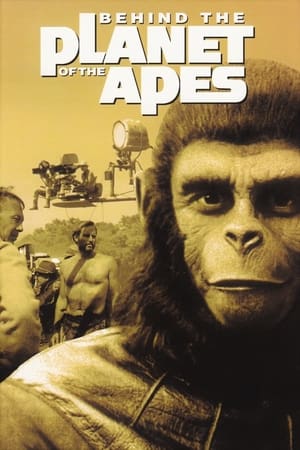
Roddy McDowall takes you, film by film, from production meetings to make-up sessions, then right onto the movie set to see the actual filming of the science fiction masterpiece. The most comprehensive history of Planet of the Apes ever created, this fascinating 127-minute documentary explores one of the most imaginative and influential series in movie history.
The film explores the “acute suffering” and transcendent glory experienced by current and former members of King Crimson, allowing the audience an intimate and sometimes uncomfortable insight into the musicians’ experience as they confront life and death head on in the world’s most demanding rock band.