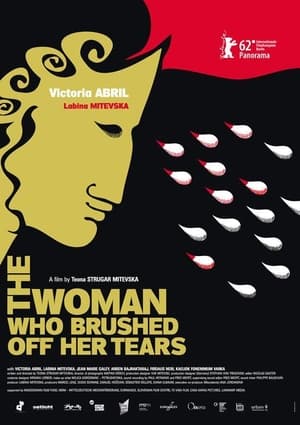
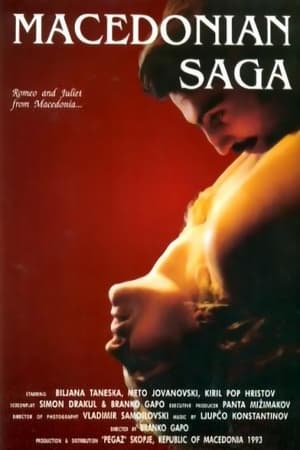
A promising debut feature tells the story of a young woman returning from America to discover the realities of life in Macedonia, that looks as if it will explode with all the soldiers, corrupt crooks and terrorist idealists.
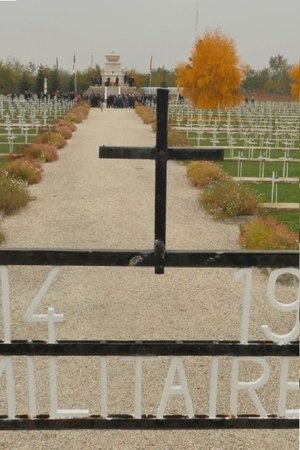
100 years since the beginning of First World War. Locality - French cemetery in Bitola. State protocol. There are deputies, ministers, ambassadors, military attaches, consuls, honorary consuls, media present - Priests - Orthodox, Catholic, Muslim. - Military band. Jean Batiste Valerie, an old man of about 77 years of age, arrives in Bitola for the first time. Tiny, petite, with thin and gray hair, arrives late at the sad ceremony held in honor of the fallen French soldiers in the First World War. According to correspondence and information from the French army, his predecessor with the same name and surname must be located somewhere nearby. The ceremony had already begun.
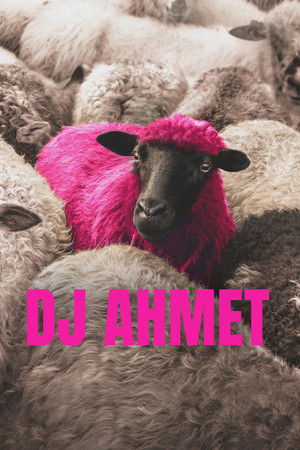
15-year-old Ahmet, from a remote Yuruk village in North Macedonia, finds refuge in music while navigating his father’s expectations, a conservative community, and his first experience with love — a girl already promised to someone else.
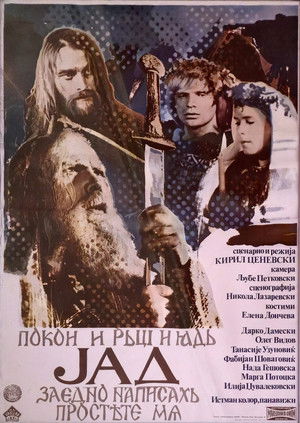
The story takes place in Ohrid, at the end of XI century. Slavic population gives resistance to Byzantium and the Christian dogma leads to the persecutions and murders. The villages are plagued with outbreak of smallpox, and all the people with the symptoms were thrown into the lime. The film follows the fate of Abraham's family as the story of survival in the Balkan intersections.
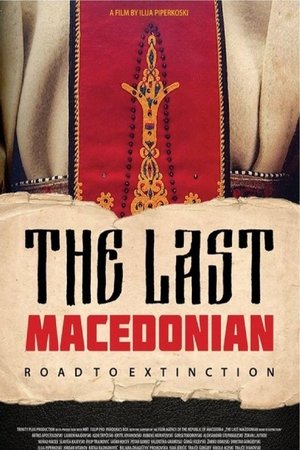
This is a documentary film about the land and people which will never restore their power of the past. A story about negations and many historical moments are enveloped in the veil of secret. Through the modern personalities and archives "The Last Macedonian from Macedonia" approaches to the truth revealing the never spoken moments and linking the past, present, but also the future. The film was shot on locations in Bitola and its surroundings.
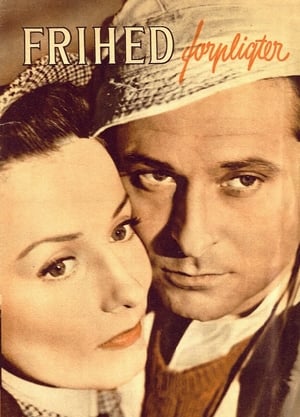
Danish social democratic propaganda film. During the Occupation, the young freedom fighter Søren had a good working relationship with a comrade in the resistance movement, despite the fact that Søren was a social democrat and his comrade a communist. After the liberation in May 1945, the differences that had been less important during the war begin to stand in Søren's way. Both his friendship with his comrade and his relationship with the wealthy Inger fall apart in the summer of liberation. But through his work in the Social Democratic Party, Søren experiences a renewed enthusiasm and resumes his relationship with Inger. Together, they actively engage in the party's work and both see it as an extension of the struggle for freedom during the occupation. Denmark's entry into NATO is particularly important.
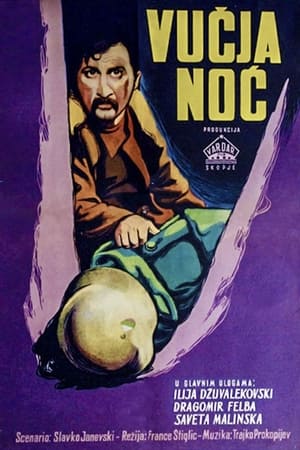
A group of Macedonian partisans are hiding away in the mountains from Bulgarian fascist authorities that occupy Macedonia.
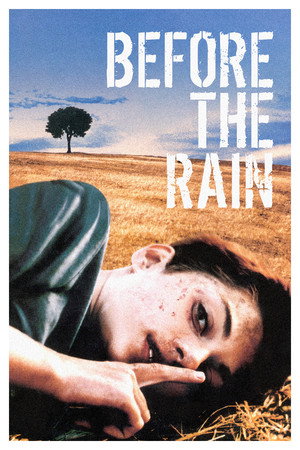
The circularity of violence seen in a story that circles on itself. In Macedonia, during the war in Bosnia, Christians hunt an ethnic Albanian girl who may have murdered one of their own. A young monk who's taken a vow of silence offers her protection. In London, a photographic editor who's pregnant needs to talk it out with her estranged husband and chooses a toney restaurant.
In this alleged retelling of Lincoln's early life, the President-to-be is rescued by Henry, a Black man and freed slave who has lost his papers. Locals with a grudge against Lincoln and a hatred of African-Americans frame Henry for stealing, and it's up to Lincoln to defend the man and find the vital clue that will set him free.
After her son's tragic death, Helena abducts her employee, Lucian, and travels with him and her husband to scatter her son's ashes in Macedonia. Meanwhile, Lucian's lover struggles to provide for their son and break free from her dictatorial father.
The arrival of the young teacher Damjan in one village in western Macedonia shakes the usual daily life of its inhabitants who belong to different religions.
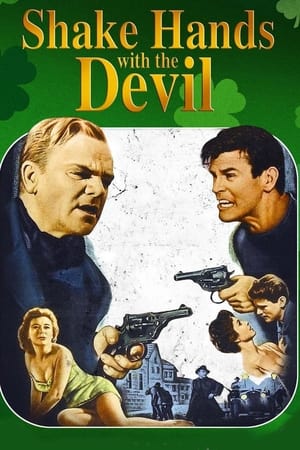
In 1921 Dublin, the IRA battles the "Black & Tans," special British forces given to harsh measures. Irish-American medical student Kerry O'Shea hopes to stay aloof, but saving a wounded friend gets him outlawed, and inexorably drawn into the rebel organization by his former professor Sean Lenihan, who has "shaken hands with the devil" and begun to think of fighting as an end in itself. Complications arise when Kerry falls for a beautiful English hostage, and the British offer a peace treaty that is not enough to satisfy Lenihan.
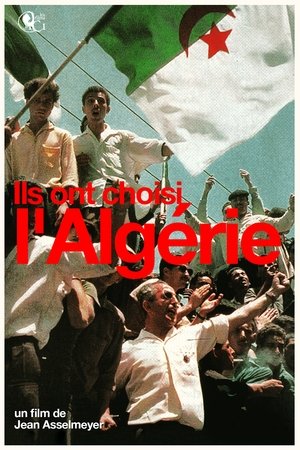
Many of them participated in the struggle for Algerian independence. There are "those who believed in heaven", priests, Christians committed against torture, friends of the "natives", there are "those who did not believe in it", communist activists, students, progressive intellectuals, others remained in this country because they could not imagine living anywhere other than in this land of all passions. They are European and chose to stay in Algeria after independence, most of them opted for Algerian nationality. The film is another vision of the history of Algeria from the end of the fifties to the present day, told by these Europeans filmed at home, or in the context of their activities, illustrated by unpublished archive documents.
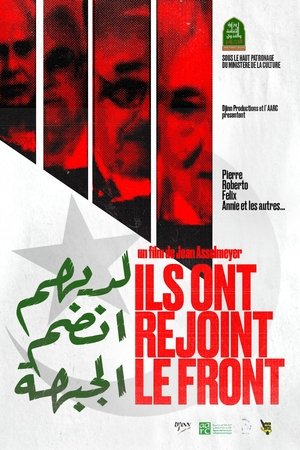
In this film, four key witnesses, who live in Algeria today, as full-fledged Agerians, show us what this colonization was really like, so "beneficial" that they themselves perceived it as the oppression of one people by another. Three of them, who today would be called "pieds noirs," in other words, those Europeans to whom France, the occupying power, gave the best land, taken from the indigenous populations, work, and exclusive rights, not shared by the entire population, lived rather well compared to the majority of the "natives." The fourth was far from all that and lived in Argentina. Annie Steiner, Felix Colozzi, Pierre Chaulet, and Roberto Muniz explain to us what led them to show solidarity with the struggle of the weak, the humiliated, and to risk their freedom and their lives by committing to liberate Algeria.
Roberto Muniz, nicknamed "Mahmoud the Argentinian," was a revolutionary fighter who joined the National Liberation Army in 1959 to support the Algerian cause in the war of independence against France. He joined a clandestine group that manufactured weapons and ammunition to be transported to Algeria to support the revolution that began in 1954. After the war, the Algerian government invited the mujahid to stay, an offer he accepted to begin a new life as an employee of Sonnelgaz and a member of the General Union of Algerian Workers (UGTA), accompanied by his wife Alfonsa, a textile union activist who came from Argentina to join this North African adventure.
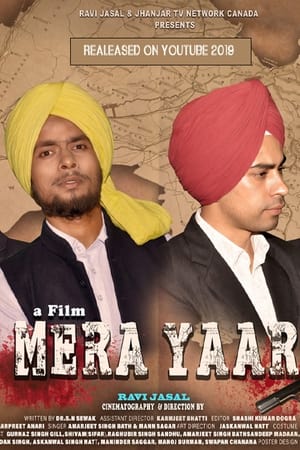
MERA YAAR" Film based On a play in Punjabi by Dr. S.N.Sewak. It deals with an important phase of the struggle for the independence of India from the colonial British rulers in the early years of the twentieth century. It depicts the role of Kartar Singh Sarabha, a young revolutionary, who had gone to the USA for higher studies, as seen through the eyes of another revolutionary of later years, Bhagat Singh, for whom he was a role model. Interestingly, Bhagat Singh kept the photograph of Kartar Singh Sarabha in his pocket because he always sought inspiration from him. Thus, Bhagat Singh is the narrator in the play which follows 'ode and episode' technique.
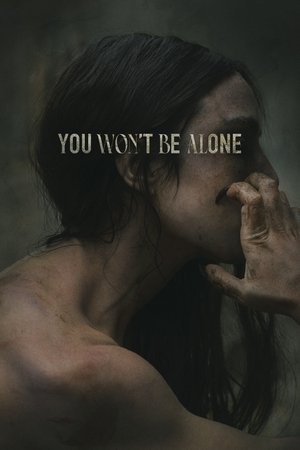
In an isolated mountain village in 19th century Macedonia, a young feral witch accidentally kills a peasant. She assumes the peasant's shape to see what life is like in her skin, igniting a deep seated curiosity to experience life inside the bodies of others.
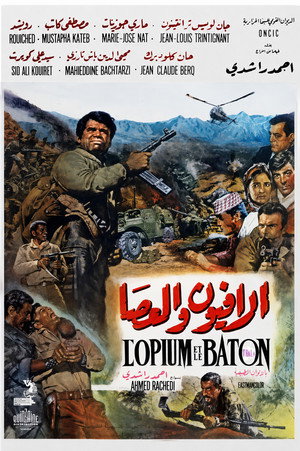
In 1950, in Algeria, in a village in Kabylia, Algerian resistance fighters resisted the French occupation army. Bachir returns to the village to escape the clashes ravaging Algiers. In Thala, he has two brothers, Ali and Belaïd. The first is engaged with the ALN (The National Liberation Army) and fights against the colonizer. His second brother, Belaïd, the eldest, is convinced of a French Algeria. His family torn apart, Bachir decides to join the war and takes sides against the repression of the French army. The French army is trying in vain to turn the population against the insurgents by using disinformation. The more time passes, the more the inhabitants of the village and surrounding areas, oppressed, rally to the cause of the FLN, their houses and their fields will be burned... Adaptation to the cinema of the eponymous novel Opium and the Stick, published in 1965, by Mouloud Mammeri, the film was dubbed into Tamazight (Berber), a first for Algerian cinema.
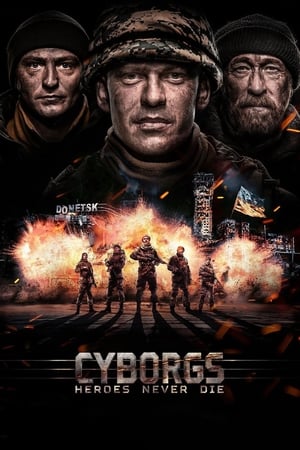
‘The Cyborgs’ is re-telling the recent history of Ukraine – the legendary fight for Donetsk Airport in 2014 during Russian invasion. The freedom fighters from various divisions of Ukrainian army and volunteer battalions took a 242-days stand against the Russian backed militants until the complete destruction of the airport’s terminal.
In the midst of the Algerian liberation war, two characters, a meddah (traditional storyteller) and a guerrab (water distributor), having become aware of their subhuman condition in their own country, join the National Liberation Army (ALN) to fight against inhumane colonialism. They will climb the ranks to become political commissioners before falling on the field of honor, the first in a skirmish and the other in Barberousse prison (Serkadji) where he will be guillotined.