The Westward movement — and a woman's perspective of that movement — emerges in the dramatic story of Delilah Fowler's first year on the Kansas frontier in 1869. Based on diaries of the period, the program reveals the cruel violence, and even crueler loneliness, which early settlers encountered — but above all, it shows the quiet courage of those who lived it.
Toni, Aghi, Bubu, and Saras get the task of making essays. They create a free school for street children but they chose to earn money than learn.
An aging doorman, after being fired from his prestigious job at a luxurious hotel, is forced to face the scorn of his friends, neighbours and society.
The life of the cotton workers in the Chaco and its struggle for wages.
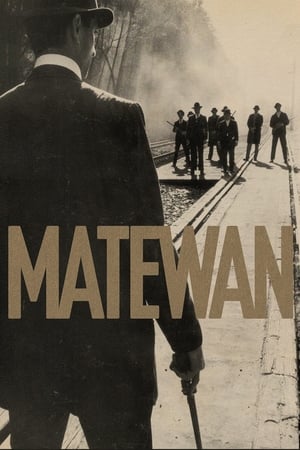
Filmed in the coal country of West Virginia, "Matewan" celebrates labor organizing in the context of a 1920s work stoppage. Union organizer, Joe Kenehan, a scab named "Few Clothes" Johnson and a sympathetic mayor and police chief heroically fight the power represented by a coal company and Matewan's vested interests so that justice and workers' rights need not take a back seat to squalid working conditions, exploitation and the bottom line.
On a freezing February Saturday night, three soldiers are returning to the barracks from a dance party. They have missed their train, so they are now wading through deep snow. They have drunk a lot of alcohol, and Zdeněk, who keeps falling asleep, has to be supported by his comrades with all his might...
Hosted by some unnamed escapee from a twelve-step program, Man and Wife, moves from anatomy charts and Asian erotic art into actual footage of two couples demonstrating nearly fifty different sexual positions.
Venereal disease threatens to tear a young couple apart.
The Harbour shows how two brothers end up on opposing sides of this system. One becomes the leader of an employer’s gang of thugs, while the other becomes an activist. All the while, the women in their family go hungry and the community is ravaged by violence and alcoholism.
The sawmill in a northern Swedish village close down. Nils becomes unemployed. In order to cope with needs of his family, he is forced to travel south. His wife Karin and the children will stay in the village until further notice. Nils starts working at a factory. In addition to the job, he has been promised a good residence so that the family can move to him.
Jeanette, a pretty high school student, is looking for “kicks”. She starts hanging out with a wild crowd, and begins popping bennies, uppers and other pills. Soon she graduates from barbiturates to marijuana…
Chceš zabít?
Marriage and sexuality is examined through the lens of screenwriter Dr. van de Velde, a Dutch gynocologist.
Workers in a factory in pre-revolutionary Russia go on strike and are met by violent suppression.
Konfrontace
Saying No is an early 1980s educational film produced by Crommie & Crommie that, true to the title, presents a process for young women to successfully decline advances from the opposite sex.
A French-to-Spanish interpreter working for a food processing plant that hires seasonal workers from Guatemala is, at first determined to obey the sometimes excessive directives of the young boss, but she befriends the workers and tries to defend them against the exploitation they suffer.
Jeanne, a high school girl, dumps her dull boyfriend Larry for Nick, a local thug and hot-rodder she finds exciting. Nick terrifies everyone with his dangerous and reckless driving, but that only turns Jeanne on even more. Until one night, zooming around the countryside terrorizing motorists, Nick and Jeanne smash into another car...
The Inglewood Police Department's 1960s video, "LSD: Trip or Trap?" is a classic of the genre. Alex sez, "It's a story of two friends who enjoy flying model planes, except that one becomes an 'acidhead' so he can be 'groovy' with the other acidheads. The other does research into LSD and decides it's a 'bummer'."
Emma Freese is desperate when her husband Alfred falls ill at the Howaldtswerke in Kiel. How is the family supposed to get by without their wages? The war has scarred this generation, but now things are supposed to be looking up. The workers want their fair share and are fighting for an income that also gives them room to live. In October 1956, 34,000 metalworkers in the shipyards and factories of Schleswig-Holstein walk off the job to fight for justice and their dignity. This strike is still regarded as the toughest and longest in Germany. Employers and politicians stand in the strikers' way.