After a dreadful incident coupled with an ungovernable paroxysm of violence, a butcher will fall into a downward spiral that will burn to the ground whatever dignity still remained in him.
Short film spinoff of CONFESSIONAL featuring one of the minor characters.
Overwhelmed by grief following the death of his wife, Donnelly shares a train carriage home with a troubled young man identified only as the 'Kid'. As the Kid becomes more agitated and foul-mouthed, the journey takes on a violent and dangerous hue – for the bereaved Donnelly and for other hapless passengers on the train. Academy Award Winner: Best Live Action Short Film – 2005
A man listening to Rachmoninoff's 'Prelude' dreams he is the victim of premature burial.
The seven short films making up GENIUS PARTY couldn’t be more diverse, linked only by a high standard of quality and inspiration. Atsuko Fukushima’s intro piece is a fantastic abstraction to soak up with the eyes. Masaaki Yuasa, of MIND GAME and CAT SOUP fame, brings his distinctive and deceptively simple graphic style and dream-state logic to the table with “Happy Machine,” his spin on a child’s earliest year. Shinji Kimura’s spookier “Deathtic 4,” meanwhile, seems to tap into the creepier corners of a child’s imagination and open up a toybox full of dark delights. Hideki Futamura’s “Limit Cycle” conjures up a vision of virtual reality, while Yuji Fukuyama’s "Doorbell" and "Baby Blue" by Shinichiro Watanabe use understated realism for very surreal purposes. And Shoji Kawamori, with “Shanghai Dragon,” takes the tropes and conventions of traditional anime out for very fun joyride.
Edward James Olmos narrates this multi-fest winner about an immigrant who recalls a vivid and momentous memory where he discovered his boundaries.
The intersecting lives of two otherwise unrelated people in a rural Bolivian village adjacent to the Uyani salt flats are presented. The first is Carlos, a poor salt miner. Unlike his colleagues, he is unwilling to take the one time compensation package from an American conglomerate who wants to purchase the mining rights. Carlos would rather get paid for doing actual work than risk living off a one time payment without a guarantee of any other work in the area. Carlos being the one holdout irks his fellow miners, who cannot get their compensation until Carlos also agrees to the terms. Carlos views all gringos in a bad light because of this situation. The second is Marc, an American doctor who has worked in various third world countries providing aide where needed. Marc is completing his term here. Carlos and Marc have a turbulent few meetings based on Carlos' feelings toward gringos and his want for a simple stable life.
Aïssa is a Congolese immigrant in France. She says that she is under eighteen but the authorities consider her an adult. To determine if she can be deported, a doctor must give her a physical examination.
Camila broke up with her boyfriend recently. She's been going out and spending time with her girlfriends and her dog.
A doctor must remove a parasite infestation from within a patient's breast.
A man awakes to find himself trapped in a dirty, confined crawlspace. He barely has enough room to move. He also has no memory of why he's there, or why he's bleeding from a stomach wound. Apparently drugged, he occasionally 'zones out' of his surroundings as he tries to edge towards his way to freedom. But the more he explores, the more pain he has to endure, and the more frightening his predicament becomes.
One of the two earliest horror films ever made. This film is presumed lost.
One of the two earliest horror films ever made. This film is presumed lost. In this black comedy scene, the bottom falls out of a coffin, the corpse tumble out, and is jolted back to life. Short sequences like this, as well as street scenes and dancing geisha girls were the main subjects of early Nippon cinema, pioneered by Shiro Asano and Shibata Tsunekichi from 1897 onwards. In creating dramatic, scenes, film-makers naturally chose the most striking or bizarre. Another undocumented film, recalled by cameraman Shiro Asano.
A green-skinned demon places a woman and two courtiers into a flaming cauldron.
Fisnik is about to embark on a absurd journey in creating a fake weeding video, to get the German visa. He has to succeed in convincing his family, friends, and his ex to join him in this crazy journey.
Guillaume is getting ready to meet his wife in the maternity ward where she has just given birth. But an unexpected phone call plunges him back into bitter childhood memories: his father, whom he has not seen for years, wants nothing more than to see his daughter-in-law and the newborn child.
Jesus is asked to judge an inheritance dispute, but instead He uses this conflict to affirm the eternal ideals of His Beatitudes taught in the Sermon on the Mount. Jesus teaches the wronged brother to forgive and love his brother. All who follow Jesus must learn that what we own has little to do with who we are. Important ideals of stewardship and preparedness are emphasized through the parable of the House Built on Rock.
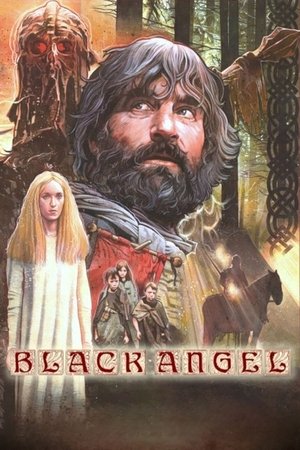
A knight returns home from the Crusades to find his village devastated by disease and his family gone. He roams the forest searching for them, until he finds a mysterious maiden who is being held prisoner by a black knight. In order to free her, he must confront her captor.
When young Victor's pet dog Sparky (who stars in Victor's home-made monster movies) is hit by a car, Victor decides to bring him back to life the only way he knows how. But when the bolt-necked "monster" wreaks havoc and terror in the hearts of Victor's neighbors, he has to convince them (and his parents) that despite his appearance, Sparky's still the good loyal friend he's always been.
Directed by J. Stuart Blackton.