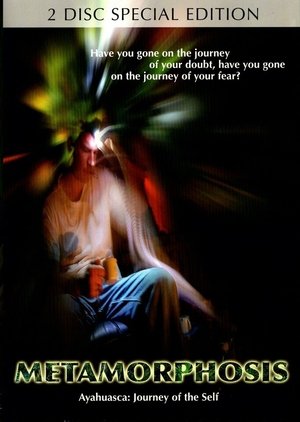
Back in 2012 I had my very first Ayahuasca ceremony and, needless to say, I was terrified. But it ended up entirely changing my life and that of my future family. Which is why I decided to revisit the medicine in 2018, participating in three Ayahuasca ceremonies over the course of one week in Costa Rica, and document the process. In the film, we tackle my personal story of trying to build London Real into a global media and transformation company while also struggling with my own disconnection from friends, family and my own species. We also dive deep into the division and tribalism currently facing all of us around the world.
The story of the evolution of tropical rain forests, their recent and rapid destruction, and the intense efforts of scientists to understand them even as they disappear. This film gives viewers a better appreciation of the importance of tropical rain forests on a global scale.
This is the story of a tiny country that made a decision to do something that no other country had ever done -- it decided to abolish its army and declare peace to the world. And this is the story of a young boy who grew up in that country, and how he ended up challenging -- and sometimes even convincing -- the greatest powers in the world to follow Costa Rica's example. "Oscar Arias: Without a Shot Fired" is a Don Quixote-like saga with great historical touchstones -- Ronald Reagan and Mikhail Gorbachev, Cold War politics and Communism, Central American War and Peace. It follows a slight, academic, and most unlikely hero over the course of more than fifty years, as he travels the world in a quest to stop the spread of the weapons of war. In the end, it is a story about the triumph of reason, of the sparrow triumphing over the eagle, and how the impossible dream can sometimes come true.
This documentary examines ayahuasca shamanism near Iquitos (a metropolis in the Peruvian Amazon), and the tourism it has attracted. The filmmakers talk with two ayahuasqueros, Percy Garcia and Ron Wheelock, as well as ayuahuasca tourists and local people connected with the ayahuasca industry.
The forest is like an organism, ancient and full of mechanisms. Its plants need water and are temperature-dependent. Nevertheless, it survives in a wide variety of locations around the world. How does it manage to adapt to even the most adverse conditions?
On a quest for emotional healing and spiritual awakening, a naturopathic doctor and an accountant join others in the Peruvian Amazon to drink a psychedelic brew called ayahuasca.
Costa Rica's motto is Pura Vida - Pure Life - and this deceptively small country is bursting with some of the most spectacular wildlife and pristine ecosystems in the world. All this diversity thrives, in part, thanks to one surprising little creature: hummingbirds. Venture across Costa Rica's wild and rugged landscapes, from volcanic peaks to coastal jungle to misty cloud forests and discover the nation's dazzling diversity of hummingbirds. Watch how these tiny birds play an outsize role in maintaining some of the richest and wildest environments on Earth, where a whole community of creatures, such as macaws and monkeys, enjoys The Hummingbird Effect.
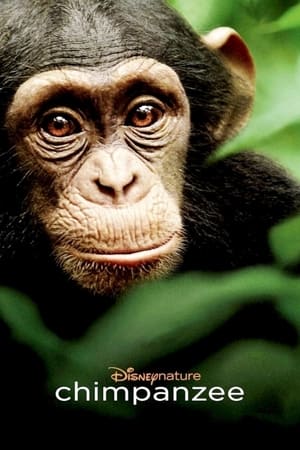
A nature documentary centered on a family of chimps living in the Ivory Coast and Ugandan rain forests. Through Oscar, a little chimpanzee, we discover learning about life in the heart of the African tropical forest and follow his first steps in this world with humor, emotion and anguish. Following a tragedy, he finds himself separated from his mother and left alone to face the hostility of the jungle. Until he is picked up by an older chimpanzee, who will take him under her protection.
An Independent Film in Costa Rica
American tourists at SpiritQuest Sanctuary, a medicine lodge in Peru, share their thoughts about the traditional medicine ayahuasca, and their motivations for drinking it. Don Howard Lawler, founder of SpiritQuest, describes ayahuasca and its beneficial effects, as do the filmmakers themselves.
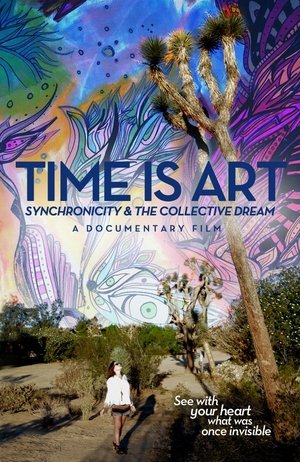
"Time is Art" is ultimately the story of an artist's search for inspiration in a money-driven society that shuns creativity, and of the human search for meaning in a seemingly meaningless world.
Plant Explorer Richard Evans Schultes was a real life Indiana Jones whose discoveries of hallucinogenic plants laid the foundation for the psychedelic sixties. Now in this two hour History Channel TV Special, his former student Wade Davis, follows in his footsteps to experience the discoveries that Schultes brought to the western world. Shot around the planet, from Canada to the Amazon, we experience rarely seen native hallucinogenic ceremonies and find out the true events leading up to the Psychedelic Sixties. Featuring author/adventurer Wade Davis ("Serpent and the Rainbow"), Dr. Andrew Weil, the Grateful Dead's Bob Weir and many others, this program tells the story of the discovery of peyote, magic mushrooms and beyond: one man's little known quest to classify the Plants of the Gods. Richard Evans Schultes revolutionized science and spawned another revolution he never imagined.
A personal, scientific, mystical exploration of Amazonian curanderismo, focus on Ayahuasca and Master Plants, their healing and visionary properties and risks, along with the Shipibo people and their songs.
How do we heal our deepest wounds? Two combat veterans, suffering from severe trauma, abandon pharmaceuticals in order to seek healing through psychedelic medicines. Recent scientific research has shown that these substances can help people to recover from post-traumatic stress disorder (PTSD). Beyond the personal stories, From Shock to Awe raises fundamental questions about war, the pharmaceutical industry, and the US legal system.
This travelogue of Costa Rica, the second smallest of the American republics, starts at San Jose Airport. Transportation is key within the country, boasting among the best roads in the world. San Jose itself is the capital, a small city of about 70,000, with many recreational areas in its suburbs. Heading out of the city, we come to an orchid farm, there being said to be more varieties of the plant in Costa Rica than anywhere else in the world. Next, we move to the volcanic mountains, the range within Costa Rica which contains the largest crater in the world. We then move to the farmland, with coffee and bananas being the primary agricultural export crops.
The secrets about unlocking the mysteries of consciousness by plant-drugs. The related chances and risks involved in this shamanism. While filming Blueberry, the Secret Experience, Jan Kounen met the Shipibo healers of the Peruvian Amazon and discovered their sacred plant: Ayahuasca, the spirit vine. Deeply affected by this experience, he decided to return to Peru to shoot a documentary on the plant and the medicinal rites of the shamans. To this end, he filmed the natives but also met neurologists, philosophers, artists, and chemists working on this subject. He notably interviewed Jean Giraud, the illustrator of Blueberry, and Kary Mullis, winner of the 1993 Nobel Prize in Chemistry. More than a traditional documentary, the film is an invitation to travel, a half-open door to another world or another perception of reality. The secrets about unlocking the mysteries of consciousness by plant-drugs. The related chances and risks involved in this shamanism.
Inspired by an exclusive interview and performance footage of Chavela Vargas shot in 1991 and guided by her unique voice, the film weaves an arresting portrait of a woman who dared to dress, speak, sing, and dream her unique life into being.
Queremos tanto a Bruno
Through interviews with leading psychologists and scientists, Neurons to Nirvana explores the history of four powerful psychedelic substances (LSD, Psilocybin, MDMA and Ayahuasca) and their previously established medicinal potential. Strictly focusing on the science and medicinal properties of these drugs, Neurons to Nirvana looks into why our society has created such a social and political bias against even allowing research to continue the exploration of any possible positive effects they can present in treating some of today's most challenging afflictions.
Psychologist and anthropologist Alberto Villoldo talks with traditional healers of Madre de Dios, a department within in Peruvian Amazonia. They and Dr. Villoldo explain aspects of ayahuasca, a powerful, plant-based medicine of crucial importance.