The circle of life continues for Simba, now fully grown and in his rightful place as the king of Pride Rock. Simba and Nala have given birth to a daughter, Kiara who's as rebellious as her father was. But Kiara drives her parents to distraction when she catches the eye of Kovu, the son of the evil lioness, Zira. Will Kovu steal Kiara's heart?
Kaibutsu-kun's father, the Great Monster King, suddenly complains of pain in his chest and collapses. It turns out that the rival Demon King has placed a curse on him with the "Demon Sword". Kaibutsu-kun and his three companions head into enemy territory, Demon Land. Prince Demokin, the son of the Great Demon King, appears. Out of curiosity, he invites the monsters to the temple where the demon sword is located.
Kaibutsu Taro, also known as Kaibutsu-kun, the prince of Monster Land. Hiroshi-kun, a human boy who is close to him, takes advantage of winter vacation to head to Kaibutsu-kun's hometown, Monster Land. However, humans are strictly prohibited from visiting Monster Land, and Hiroshi-kun, who breaks the rules, is turned into stone by the power of the eyes of Kaibutsu-kun's father, the Monster King! Kaibutsu-kun goes to retrieve the secret medicine "Flower of Life" in order to restore Hiroshi-kun to his normal state. But that flower...
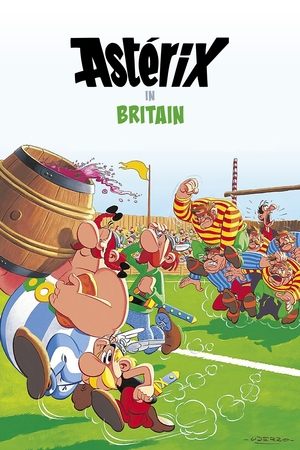
Asterix and Obelix have been given a tough mission: Transform the chief's lazy nephew Justforkix into a warrior. When the Vikings abduct him and bring him back to their homeland, Asterix and Obelix must travel to Norway to rescue Justforkix.
A collection of newly restored short films from the imagination of Paul Grimault, an icon of French animation. Le Marchand de notes (The Note Seller), 1942, 10 min L’Épouvantail (The Scarecrow), 1946, 10 min Les Passagers de la Grande Ourse, (The Passengers of the Ursa Major), 1943, 9 min Le Voleur de paratonnerres (The LIghtning Rod Thief), 1946, 10 min La Flûte magique (The Magic Flute), 1946, 9 min Le Petit Soldat (The Little Soldier), 1948, 11 min Le Diamant (The Diamond), 1970, 9 min Le Chien mélomane (The Dog Who Loved Music), 1973, 11 min
The cuddly Care Bears and their cousins star in this charming third feature-length film incorporating characters from Alice in Wonderland. A young girl named Alice and the Care Bears travel together into the whimsical land of the Mad Hatter and the Cheshire Cat. In this magical story about friendship and self-esteem, they try to thwart an evil wizard's attempt to become the King of Wonderland.
The two pigs building houses of hay and sticks scoff at their brother, building the brick house. But when the wolf comes around and blows their houses down (after trickery like dressing as a foundling sheep fails), they run to their brother's house. And throughout, they sing the classic song, "Who's Afraid of the Big Bad Wolf?".
Junyer Bear has a number of surprises for Good Ol' Pa on Good Ol' Father's Day, whether he wants them or not.
Sylvester Cat spots Tweety Bird in a display window of an after-hours department store and sneaks inside through a mail server chute. Tweety flees Sylvester by hiding in a hat pile and a doll house, evades the shots from a rifle Sylvester uses, and escapes in a vacuum tube. Tweety sends a dynamite stick through another tube, and Sylvester swallows it, thinking it is Tweety. The dynamite blows up inside Sylvester after the cat leaves the store and walks down the street.
Elmer Fudd introduces two pieces of classical music: "Tales of the Vienna Woods" and "The Blue Danube", and acted out by Bugs Bunny, Porky Pig, Laramore the Hound Dog, a family of swans, and a juvenile Daffy Duck.
Ahoy, matey! Your Favorite Playmobil toys have come to life for the very first time, in an all-new swashbuckling adventure and you're invited to join them! You'll have a treasure chest full of fun with seven-year-old Jack and his big sister Amelia as they stow away on a pirate ship headed for the mysterious Pirate Island -- a place filled with treasure and curious creatures. Can Jack and Amelia stay one step ahead of a bunch of wacky skeletons and get to the treasure before the pirates do?
Bugs Bunny single handedly takes on the “Gas-House Gorillas,” a baseball team of hulking, cigar-chomping bullies.
Bugs Bunny, once again making that "wrong turn at Albuquerque", burrows into a bullring where a magnificent bull is making short work of a toreador. The bull bucks Bugs out of the arena, prompting the bunny to declare "Of course you realize, this means war!" The deft Bugs' arsenal comes plenty packed, as he uses anvils, well-placed face slaps and the bull's horns as a slingshot. The bull fights back, using his horns as a shotgun barrel. The bull's comeback is short-lived; just after Bugs makes out his will, he lures the bull out of the arena, just in time to set up a rube-like device that leads to the bull's defeat.
Balto and the other sled dogs are feeling dejected because the mail that used to be delivered by dogsled is now being delivered by airplanes. But when a mail plane crashes in the mountains, the dogs come to the rescue.
Within a relatively small framework this short cartoon tells us about two little cousins—a beautiful one and an ugly one—that prove that all that glitters is not gold, and even an embodied beauty can have the heart of a werewolf. From an artistic point of view, the message of the story is underlined by Salamoun's specific style.
A rare glimpse of early Japanese sound anime and prewar Japanese culture, The Roots of Japanese Anime features the masterworks of such pioneers of Japanese animation as Noburo Ofuji, Yasuji Murata, and Kenzo Masaoka, in addition to Mitsuyo Seo’s Momotaro’s Sea Eagle, the notorious war cartoon billed as Japan’s first feature anime. These movies represent the brilliance and variety of anime, ranging from beautiful Japanese paper animation to powerful multiplane cel cartoons. They also evoke the fascinating complexity of Japan, a nation that is then both marching towards war, enlisting kids in militarist nationalism, yet also delighting in a mixture of modern popular culture, ancient folk tales, irreverent comedy, and the everyday life of prewar Japanese children.
Carried by a rich narration from Orson Welles, this rarely seen 1973 animated adaptation of Plato’s 'allegory of the cave' populates the tale with haunting human figures, bringing retro-surreal life to the parable.
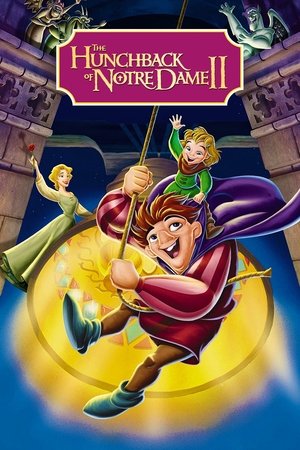
Now that Frollo is gone, Quasimodo rings the bell with the help of his new friend and Esmeralda's and Phoebus' little son, Zephyr. But when Quasi stops by a traveling circus owned by evil magician Sarousch, he falls for Madellaine, Sarouch's assistant.
When a litter of dalmatian puppies are abducted by the minions of Cruella De Vil, the parents must find them before she uses them for a diabolical fashion statement.
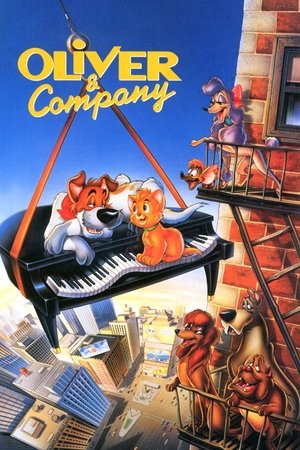
A young cat named Oliver is left alone in a kitten box, while all the other young cats have new owners. A big dog named Dodger shows him how to get food and later Oliver lives with him, his owner Fagin and Fagin's other dogs Tito, Rita, Einstein, and Francis. Fagin has one problem besides being broke he owes a nasty man named Sykes a lot of money. If he can't pay it back he's in big trouble. While Oliver runs into a little girl named Jenny who becomes his new owner which he is happy with and later Sykes sees Jenny as the key for him to get his money.