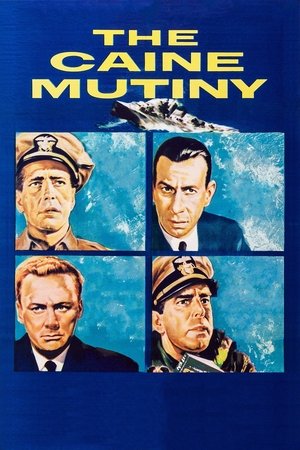
When a US Naval captain shows signs of mental instability that jeopardize his ship, the first officer relieves him of command and faces court martial for mutiny.
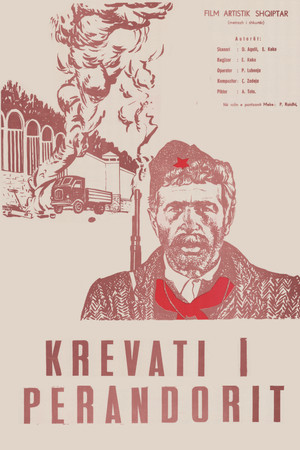
In the first day of liberation, partisan Meke enters the palace where the king used to live.
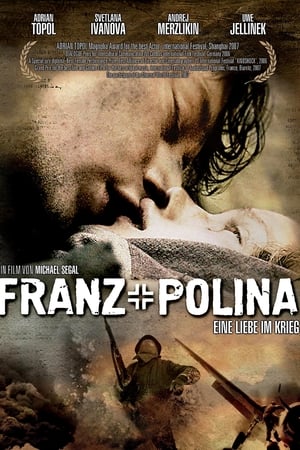
The movie tells the story of Franz, a Waffen-SS soldier who deserts, and Polina, a Belarusian woman whose village is razed and people massacred.
During World War II, spy Wu Lai-sheung is instructed by her superior Fan Yeung-shan to murder spy number 13 Cheung Chi-ping. While Wu establishes a relationship with Sakei, the assistant general of the Japanese army, she also gets acquainted with Cheung. Cheung and Wu fall in love. Wu recommends Cheung to become Sakei's driver. Cheung pretends to court the Japanese spy Siu-kuen, but Siu-kuen arranges to kill the spies contacting with him. Cheung has seen through Kuen's identity for long. When Kuen is going to kill Wu, Cheung kills Kuen, Fan compels Wu to kill Cheung. Wu follows the instruction to murder Cheung. After the murder, Wu disappears. After the war, Fan discovers Wu ends up in asylum. When he visits Wu, he tells her of Cheung's innocence. This breaks Wu's heart. Cheung turns out to have seen through Wu's identity for a long time and pretended to have been killed to cover up his identity and facilitate his work. With the truth known and the war ended, Cheung and Wu married.
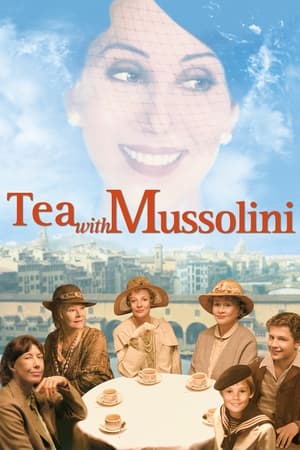
In 1930s fascist Italy, adolescent Luca just lost his mother. His father, a callous businessman, sends him to be taken care of by British expatriate Mary Wallace. Mary and her cultured friends - including artist Arabella, young widow Elsa, and archaeologist Georgie - keep a watchful eye over the boy. But the women's cultivated lives take a dramatic turn when Allied forces declare war on Mussolini.
In an attempt to assassinate Hitler, four American soldiers pretend to be Nazi's and sneak into enemy territory.
A teenage orphan fights against the Red Army at the end of WWII and in the aftermath is 'adopted' by a Commissar. Years later he is sent to London during the Cold war to work for the KGB, where he questions his life.
During World War II, Helmut Dantine specialized in playing villainous Nazis in Hollywood melodramas. He offers a compelling performance in a variation of these earlier roles in this suspense filled and politically loaded tale of intrigue. The story opens in German-occupied Athens during the darkest hours of the war. Civilians are not allowed on the streets after dark.
August 1943, Europe. The tentacles of the German octopus have begun to recoil. As the Nazis retreat, their concern focuses on the supply of oil from the refineries of Romania. Without the flow of "black gold", Germany's doom is sealed. Armadas of American bombers from bases in North Africa have begun to assault Pioesti - and there is another threat from the Partisans across the border of Yugoslavia. Against the tableau of spectacular events, the dramatic story of WILD WIND unfolds.
A WWII military pilot makes a valiant effort to be certified insane in order to be excused from flying missions. But there's a catch.
Tracey Lawrence is assautled in her home and is so affected by the traumatic event she now finds all men totally repulsive, including her husband. Her attitude does not change with time, and to make matters worse her husband has got romantically involved with his secretary. Also, the police still have not tracked down Tracey's attacker and there is no guarantee that she is safe.
Paris : Les Lieux secrets de l'occupation
L'Enfer de la bataille de Normandie
Shpresa goes to the house of fascist collaborators to commit an assassination. After that, dressed as a bride, she becomes an illegal.
In August 1942, during the Second World War, Six Jewish children are trying to escape the Nazis. They are hidden by the resistance in the Chambord Castle, where paintings from Le Louvre are being stored as well. The Nazis are looking for paintings from private collections that would be hidden there as well.
World War II is raging, and an American general has been captured and is being held hostage in the Schloss Adler, a Bavarian castle that's nearly impossible to breach. It's up to a group of skilled Allied soldiers to liberate the general before it's too late.
Once upon a time, a poor woodcutter and his wife lived in a great forest. Cold, hunger, poverty, and a war raging all around them meant their lives were very hard. One day, the woodcutter's wife rescues a baby. A baby girl thrown from one of the many trains that constantly pass through the forest. This baby, this "most precious of cargoes", will transform the lives of the poor woodcutter's wife and her husband, as well as those whose paths the child will cross—including the man who threw her from the train. And some will try to protect her, whatever the cost. Their story will reveal the worst and the best in the hearts of men.
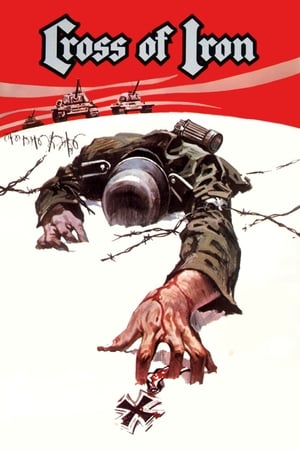
Starting in late May 1944, during the German retreat on the Eastern Front, Captain Stransky (Helmut Griem) orders Sergeant Steiner (Richard Burton) to blow up a railway tunnel to prevent Russian forces from using it. Steiner's platoon fails in its mission by coming up against a Russian tank. Steiner then takes a furlough to Paris just as the Allies launch their invasion of Normandy.
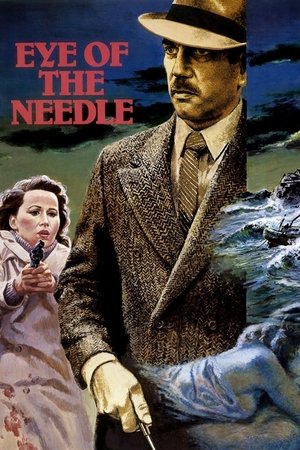
Great Britain, 1944, during World War II. Relentlessly pursued by several MI5 agents, Henry Faber the Needle, a ruthless German spy in possession of vital information about D-Day, takes refuge on Storm Island, an inhospitable, sparsely inhabited island off the coast of northern Scotland.
It is 1943, and the German army—ravaged and demoralised—is hastily retreating from the Russian front. In the midst of the madness, conflict brews between the aristocratic yet ultimately pusillanimous Captain Stransky and the courageous Corporal Steiner. Stransky is the only man who believes that the Third Reich is still vastly superior to the Russian army. However, within his pompous persona lies a quivering coward who longs for the Iron Cross so that he can return to Berlin a hero. Steiner, on the other hand is cynical, defiantly non-conformist and more concerned with the safety of his own men rather than the horde of military decorations offered to him by his superiors.