For five years, Stephen McCoy documented street life in Boston. This is what he captured.
If God came down to earth and try to earn a living in Bombay, most probably he would become successful as a voice over artiste, lending his voice to thousands of Hindi movies and even more documentaries and public service films in India.
A wife's husband dies in a car accident, but the wife has doubts about his death because she knows their son cursed her husband right before the strange death.
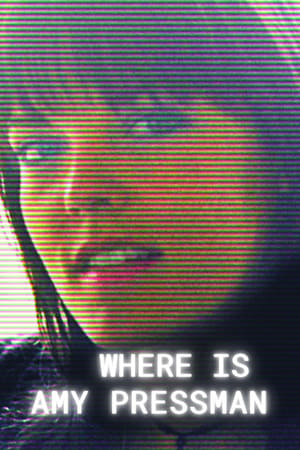
Before disappearing in the Mojave Desert, Robbie Zagorac captured love, life and heartbreak in a video diary.
Small Town Hero is a dark and comical drama set in an idyllic rural town in England. It follows the story of 'Pep' who becomes a local hero after taking the law into his own hands to prevent a crime. Relishing in his new found glory, Pep joins the neighbourhood watch to further his agenda and fulfil his dream of creating a utopia; a town free of crime and antisocial behaviour. Before long, the extremity of Pep's measures and his aggressive and violent approach to achieving his goals becomes unacceptable to the local community and he is shunned. Desperate to regain his hero status, the rumour of a paedophile gives Pep one last chance to save the day; a manhunt ensues.
A mysterious natural phenomenon sets an end to the party night of a group of young adults. The morning after begins with far more than just a hangover.
Filmmakers and paranormal investigators spend two weeks in the world-famous home that inspired the horror movie "The Conjuring."
A collection of 8mm film reels from İlhan Mimaroğlu’s archive—once tucked away in whisky boxes—has found new life through art. Curated by director Serdar Kökçeoğlu and producer Dilek Aydın, the project brings together visual artists and musicians to reimagine these long-lost images. Over thirty artists transformed the footage into fifteen distinct audiovisual pieces, blending experimental soundscapes with contemporary video art. The project concludes with a special highlight: the first-ever screening of Mimaroğlu’s silent short film about a street jazz festival, accompanied by Erdem Helvacıoğlu’s dark jazz score.
A private investigator RETURNS to London. Andrew Robinson and his team investigate a London Pub that has Poltergeist activity. They encounter paranormal events, ghosts and phantoms who will make their investigation go all the way to hell.
Four adults are detained in their apartments with only each other and a computer for online company. They each come from a different class with differing views but they all have one defining purpose to understand why they are really being held hostage in their own homes. The AI refuses to reveal the reason.
The 1992 suicide of a young Iranian refugee in a small Canadian town prompted filmmaker Masoud Raouf to examine his own past as a political prisoner in Iran who helped fight for democracy, only to be persecuted by the ayatollah's regime. Raouf's documentary features historical footage and interviews with veterans of the 1979 revolution, who watched with dismay as their homeland traded a despot for a religious dictatorship.
"CIVIL WAR SURVEILLANCE POEMS (Part 1)" is the first installment in a five-part project of experimental and hybrid-form short films contemplating a second American civil war via lyrical nonfiction, mixing call-in radio, twenty years of verité footage from the filmmaker's archive, and robots. Conceptually speculating from sixteen years in the future (and a protracted civil war), the project is partly nostalgic political travelogue, partly a quest to mine the archive for what went wrong, and part prewar surveillance records, the project deconstructs and builds to a clashing ideology, culminating in an installation of sound sculpture, four-walled video and artifacts.
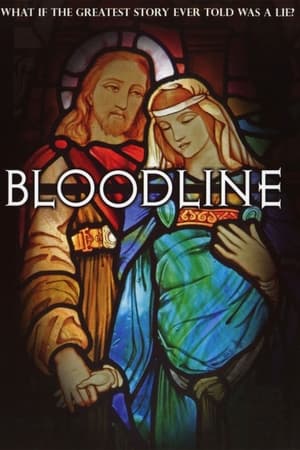
One man's journey into the world of the so-called 'Bloodline' conspiracy, at the heart of Dan Brown's The Da Vinci Code, where a secret society, the Priory of Sion, claims to have guarded evidence of the marriage of Mary Magdalene and Jesus Christ, their children and their descendants down through the centuries.
Two misunderstood suburban kids challenge society and run from the police while documenting all of their deeds with a digital camera.
Kaspar Carr is a professional burglar who lives and works in Chicago. Carr loves his job and is good at it, and two documentary filmmakers are granted access to his private world when he agrees to let them make a film about him.
Native Americans clash with the Canadian government as they struggle for independence in this factual Canadian drama set in Quebec during the summer of 1990. Eddie Laroche, a rebellious native leader spawned a national crises when he and his supporters declared the independence of Aki territory in a far-flung area of northern Quebec. He refused to negotiate without the presences of television cameras to record his people's plight. Jean Fontaine was the reporter assigned to the story and much of the film is told from his viewpoint. To reach Laroche's land, negotiators, government officials, and the film crew had to travel by boat. Fontaine is initially cynical and reluctant to do the story, but after he spends time on the boat interviewing it's passengers, his cynicism has dissolves and he realizes he is faced with the presentations of a terribly complex situation. His dilemma provides a main focus for the film.
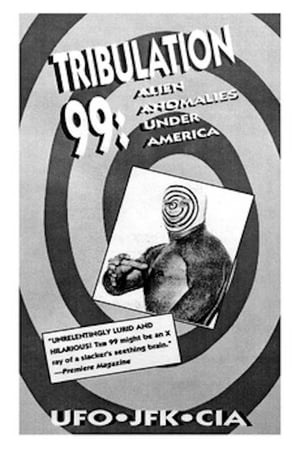
Baldwin’s “pseudo-pseudo-documentary” presents a factual chronicle of US intervention in Latin America in the form of the ultimate conspiracy theory, combining covert action, environmental catastrophe, space aliens, cattle mutilations, killer bees, religious prophecy, doomsday diatribes, and just about every other crackpot theory broadcast through the dentures of the modern paranoiac.
Fvoyer
In 2007, a teen girl from a posh L.A. suburb must deal with the grizzly murder of her family while trapped in the company of their killers.
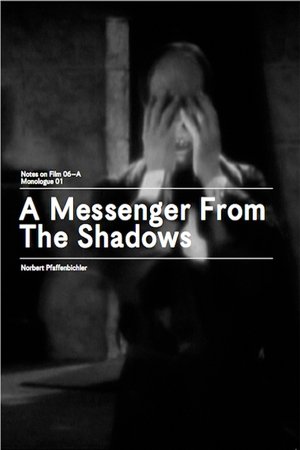
Thanks to his myriad film roles, Lon Chaney is known as “the man of a thousand faces,” and you could say that the early horror era never beheld a figure more intriguing. Yet because of his numerous transformations, his face never became as iconic as that of, say, Boris Karloff. Accompanied by a soundtrack from Bernhard Lang, this “re-imagination of shots” taken from Chaney´s forty-six surviving films offers a beguiling excursion into the history of film. The director reveals surprising associations, while highlighting the enduring magic of works which are now more or less forgotten.