The Chinese company Huawei wants to expand 5G worldwide and is well advanced in the development of the technology. With the help of 5G, entire communities can function wirelessly, self-driving cars become possible and advanced medical care can be performed remotely in real time. However, many are worried that Huawei is incorporating backdoors that allow vast amounts of data to be collected and then used by China for espionage.
In the 19th century, China held the monopoly on tea, which was dear and fashionable in the West, and the British Empire exchanged poppies, produced in its Indian colonies and transformed into opium, for Chinese tea. Inundated by the drugs, China was forced to open up its market, and the British consolidated their commercial dominance. In 1839, the Middle Empire introduced prohibition. The Opium War was declared… Great Britain emerged as the winner, but the warning was heeded: it could no longer depend on Chinese tea. The only alternative possible was to produce its own tea. The East India Company therefore entrusted one man with finding the secrets of the precious beverage. His mission was to develop the first plantations in Britain’s Indian colonies. This latter-day James Bond was called Robert Fortune – a botanist. After overcoming innumerable ordeals in the heart of imperial China, he brought back the plants and techniques that gave rise to Darjeeling tea.
At Evergreen Primary School in Wuhan, China, a Grade 3 class learns what democracy is when an election for class monitor is being held. Three children are chosen by the teacher as candidates and they have a few days to campaign and convince their classmates to vote for them. The little candidates are seen at school and at home, where their parents do their best to make sure their child will win the election.
As a young missionary, Richard Wilhelm in 1899 to China, which was then exploited by the colonial powers. He lived there revolts against foreigners, the end of the imperial dynasties and the First World War. In these times of turbulent upheavals he was indefatigable in search of the deepest truth that helps people deal with change and able to shape their own lives. Richard Wilhelm baptized not only Chinese, but accomplished one of the largest translation services of the 20th century: Confucius, LAOTSE the most important texts of Daoism and especially the I CHING THE BOOK OF CHANGES. The book also served many readers in the West as inspiration. Wilhelm is still one of the most important mediators of Chinese culture in Europe.
Amidst the grand walls of the Forbidden City, the film takes us on a deep journey through the ceremonial life of the Chinese emperor, unveiling the secrets and intrigues of concubines, eunuchs, and palace maids. As the West begins to influence China in the late 19th century, the dynamics within the city shift dramatically. The film highlights the preservation and restoration of invaluable treasures and paintings, culminating in the creation of the Palace Museum. With insights from renowned China scholar, Jonathan Spence, this is an intimate exploration of the rich cultural and historical tapestry that makes up the heart of ancient China.
An unsettling and eye-opening Wall Street horror story about Chinese companies, the American stock market, and the opportunistic greed behind the biggest heist you've never heard of.
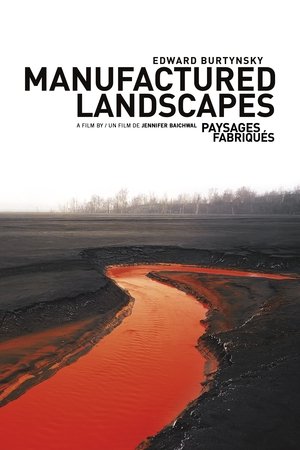
MANUFACTURED LANDSCAPES is the striking new documentary on the world and work of renowned artist Edward Burtynsky. Internationally acclaimed for his large-scale photographs of “manufactured landscapes”—quarries, recycling yards, factories, mines and dams—Burtynsky creates stunningly beautiful art from civilization’s materials and debris.
In China, there exists an astonishing place. A burial ground to rival Egypt’s Valley of the Kings, where pyramid tombs of stupendous size are full of astonishing riches. In 221 BC, China's first Emperor united warring kingdoms into a nation that still exists today. To memorialise this achievement, he bankrupted the national treasury and oppressed thousands of workers to build one of the world’s biggest mortuary complexes. China's second dynasty, the Han, inherited the daunting challenge of building larger tombs to command respect and establish their right to rule without running the nation into the ground. Although no Han emperor's tomb has been opened, the tombs of lesser Han aristocrats have revealed astonishing things: complete underground palaces (including kitchens and toilets) and at least one corpse so amazingly well-preserved some believe Han tomb-builders knew how to "engineer immortality".
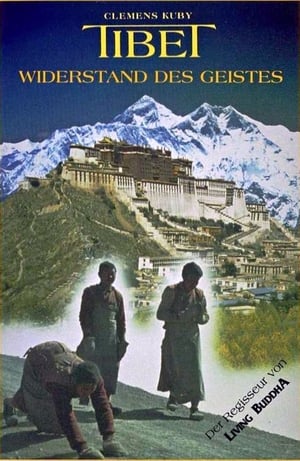
Kampf um Tibet
It's a story about post-90 generation in China and how they chasing their dreams through a talent show. The summer of 2013 saw a group of young boys enter a Chinese TV talent show called Super Boy, hoping to be catapulted to fame. The film documents how the young boys coped with their new challenging lives. While under unthinkable pressure, they proved themselves by trying to make the right choices during live shows. Talent shows create a new type of entertainer, but can they still keep their true selves? Can they adjust themselves and balance the ups and downs? What have the ten years of Chinese talent shows given us? What is urging us to grow up?
Jerry, an ordinary immigrant dad, retired in Orlando, is recruited to be an undercover agent for the Chinese police. Jerry’s family recreates the events on film and his three sons discover a darker truth. True crime meets spy thriller in this genre-bending docufiction hybrid about an immigrant’s search for the American dream. A Slamdance Film Festival Grand Jury and Audience Award winner.
Thousands of terracotta warriors guarded the first Chinese emperor's tomb. This is their story, told through archeological evidence and reenactments.
This film was shot between 2014 and 2019 in the town of Zhili, a district of Huzhou City in Zhejiang province, China. Zhili is home to over 18,000 privately-run workshops producing children's clothes, mostly for the domestic market, but some also for export. The workshops employ around 300,000 migrant workers, chiefly from the rural provinces of Yunnan, Guizhou, Anhui, Jiangxi, Henan and Jiangsu.
Cao Fei recorded her experiences within the online social platform Second Life. The result is a wistful, surreal vision of an alternative reality sprung from the pop culture fantasies and hyper-consumerism of contemporary urban China, while also trying to transcend its real-life limitations. It can be seen as an answer to the challenge posed by River Elegy: how to envision a new Chinese destiny founded on principles of individuality, creativity, discovery, and freedom. The film also reflects the contemporary condition of the virtual supplanting our experience of the real.
The Forbidden City is the world’s biggest and most extravagant palace complex ever built. For five centuries, it was the power center of imperial China and survived wars, revolution, fires, and earthquakes. How did the Ming Emperor’s workforce construct its sprawling array of nearly 1,000 buildings and dozens of temples in a little over a decade?
For over 1,000 years, chariots were indispensable weapons in ancient China. The art of chariot driving and special warfare were used there for longer than anywhere else. Their contribution to the unification of the Chinese empire is undisputed. New archaeological discoveries reveal how the Chinese developed and perfected this sophisticated weapon. In the Bronze Age, over 3,000 years ago, chariots and other war equipment arrived in China from Central Asia via the Hexi Corridor. In addition to trade and new alliances, their spread was mainly due to the Zhou dynasty's incessant military campaigns against rebellious vassal states and the constant attacks by the mobile cavalries of its northern neighbors. Manned with spearmen or archers, the chariots were a decisive weapon in battle.
In China’s popular live-streaming showrooms, three millennials – a karaoke singer, a migrant worker and a rags-to-riches comedian – seek fame, fortune and human connection, ultimately finding the same promises and perils online as in their real lives.
During the 16th Workers' Festival in Dresden in 1976, a student group of Chilean emigrants paints a mural symbolically depicting the activity of the Unidad Popular during Salvador Allende's reign. Festival guests comment on this work. Music by Chilean music group Jaspampa, formed in Leipzig in 1972.
The supermarket chains used to seem unbeatable, capturing the lion’s share of the grocery market. But for some years now they have been in crisis. In the wake of a fierce price war, retailers are resorting to increasingly aggressive commercial negotiation methods at the expense of suppliers, farmers and producers. Further competition is coming from the tech giants as Amazon and Alibaba invest in the food industry. What are the implications of all these changes on working conditions, the quality of our food and the future of our planet?
China's Secret Monkey Kingdom