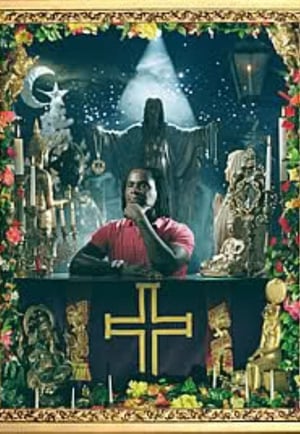
This short film was created by a group of Indigenous filmmakers at the NFB in 1972 and is essentially a song by Willie Dunn sung by Bob Charlie and illustrated by John Fadden: "Who were the ones who bid you welcome and took you by the hand, inviting you here by our campfires, as brothers we might stand?" The song expresses bitter memories of the past, of trust repaid by treachery, and of friendship debased by exploitation upon the arrival of European colonists.
The Inglewood Police Department's 1960s video, "LSD: Trip or Trap?" is a classic of the genre. Alex sez, "It's a story of two friends who enjoy flying model planes, except that one becomes an 'acidhead' so he can be 'groovy' with the other acidheads. The other does research into LSD and decides it's a 'bummer'."
In 1937 the Nazi regime held two exhibitions in Munich: one to stigmatize “Degenerate Art” (which they systematically looted and destroyed) and one, personally curated by Hitler, to glorify “Classic Art”. This immersive new documentary reveals the Nazi’s complicated relationship with classical and modern art, displaying an incredible number of masterpieces by Botticelli, Klee, Matisse, Monet, Chagall, Renoir and Gauguin amongst others, intertwined with human stories from the most infamous period of the twentieth century. A state-of-the-art detective story exploring the Nazis’ obsession with creative expression, Hitler versus Picasso combines history, art and human drama for an unforgettable cinema experience.
The Obersalzberg was an ordinary Bavarian mountain until Adolf Hitler discovered it in 1923. There at the Berghof, the Nazi leader spent his time surrounded by his most faithful lieutenants and his mistress, Eva Braun. Though mostly destroyed, remnants of the vast building complex still exist.
Most people don't think about singing when they think about revolutions. But song was the weapon of choice when, between 1986 and 1991, Estonians sought to free themselves from decades of Soviet occupation. During those years, hundreds of thousands gathered in public to sing forbidden patriotic songs and to rally for independence. "The young people, without any political party, and without any politicians, just came together ... not only tens of thousands but hundreds of thousands ... to gather and to sing and to give this nation a new spirit," remarks Mart Laar, a Singing Revolution leader featured in the film and the first post-Soviet Prime Minister of Estonia. "This was the idea of the Singing Revolution." James Tusty and Maureen Castle Tusty's "The Singing Revolution" tells the moving story of how the Estonian people peacefully regained their freedom--and helped topple an empire along the way.
For more than 100 years, the Statue of Liberty has been a symbol of hope and refuge for generations of immigrants. In this lyrical, compelling and provocative portrait of the statue, Ken Burns explores both the history of America’s premier symbol and the meaning of liberty itself. Featuring rare archival photographs, paintings and drawings, readings from actual diaries, letters and newspapers of the day, the fascinating story of this universally admired monument is told. In interviews with Americans from all walks of life, including former New York governor Mario Cuomo, the late congresswoman Barbara Jordan and the late writers James Baldwin and Jerzy Kosinski, The Statue of Liberty examines the nature of liberty and the significance of the statue to American life. Nominated for both the Academy Award ® and the Emmy Award ®, The Statue of Liberty received the prestigious CINE Golden Eagle, the Christopher Award and the Blue Ribbon at the American Film Festival.
The story that was silenced for 91 years was revealed for the first time: in August 1933 the leaders of the Zionist Organization signed "transfer agreements" with Nazi Germany. As part of the agreement, about 60 thousand Jews with a lot of property will arrive in the Land of Israel. Is it permissible to make a "contract with the devil" to save people?
Aleksandar Zograf, a renowned cartoonist discovers an unusual comic book from World War II. The comic’s hero is Kaktus Kid – a small cactus trapped in his pot. Intrigued, Zograf investigates into the life of Kaktus Kid’s creator – little known artist Veljko Kockar. He soon discovers that Kockar was arrested just after the liberation of Belgrade in 1944. He was charged for being a Gestapo agent and executed. Zograf’s investigation reveals a far more complex story: Kockar’s identity and artistic works were stolen, he possibly has an affair with the girlfriend of a guerilla soldier and he drew anti-communist propaganda for the Nazis. As he explores the story and pieces together the scraps of evidence 70 years after it happened Zograf is faced with his own personal and artistic dilemmas: why do these little drawings have such power to give consolation but also lead to violence?
550,000 Jewish American men and women fought in World War II. In their own words, veterans both famous and unknown (from Hollywood director Mel Brooks to former Secretary of State Henry Kissinger) bring their war experiences to life: how they fought for for their nation and their people, struggled with anti-Semitism within their ranks, and emerged transformed, more powerfully American and more deeply Jewish.
During the Second World War, the Allies threaten to attack Spain, an allegedly neutral country, if the Francoist regime keeps allowing Nazi Germany to extract Galician tungsten, a strategic mineral, paramount to the war effort.
Morro do Castelo was chosen by the Portuguese to found Rio de Janeiro city. It was an important historical and architectural reference. Despite its relevance, the hill was destroyed by urban reforms aimed to promote real state speculation.
To celebrate the centenary of the Royal Air Force, Ewan and Colin McGregor take to the skies in some of the world's most iconic planes. These are the planes that were involved in aerial combat at every stage of the RAF's story, from the biplanes used in the early days of dogfighting in World War I to the beautiful Spitfire of the Battle of Britain, the plucky Lysander and on to mighty Vulcan nuclear bomber, as well as the Chinook helicopter and supersonic Typhoon that are still in service today. It is a story of amazing machines and epic battles, but above all it is the story of the men and women whose courage and ingenuity have been at the heart of the RAF for 100 years. On their journey Ewan and Colin meet an amazing cast of characters.
Born to Be Wild observes various orphaned jungle animals and their day-to-day behavioural interactions with the individuals who rescue them and raise them to adulthood. The film unfurls in two separate geographic spheres. Half of it takes place in the rain forests of Borneo, where celebrated primatologist Dr. Birute Galdikas assists baby orangutans; the other half takes place on the arid savannahs of Kenya, where zoologist Dame Daphne Sheldrick works with baby elephant calves.
Pearl Harbor, l’histoire vraie d’une attaque surprise
Documentary short featuring a visit by American newsman Edward R. Murrow to the English town of Dover during the Second World War.
A documentary account of the allied invasion of Europe during World War II compiled from the footage shot by nearly 1400 cameramen. It opens as the assembled allied forces plan and train for the D-Day invasion at bases in Great Britain and covers all the major events of the war in Europe from the Normandy landings to the fall of Berlin.
Winston Churchill, one of the most revered men of the twentieth century. Adolf Hitler, one of the most hated leaders in contemporary history. Between 1940 and 1945, these two enormously contradictory personalities faced each other in both politics and war. A clash of giants whose story begins in the trenches of the World War I and ends with the debacle of the World War II.
Lindsay Anderson's early documentary film of a British amusement park, the irony of its manufactured fun on full display.
"The Man We Want to Hang" is a 12-minute short, consisting of Anger filming borrowed paintings done by legendary and controversial occultist Aleister Crowley.
Posing as West German journalists, East German documentary filmmakers Heynowski and Scheumann pay a visit to the notorious Nazi-turned-mercenary Siegfried “Kongo” Müller, pump him with booze, and get him to talk about his life and war campaigns in Africa.