Jean-Baptiste Poquelin is raised by his father and his grandfather because his mother dies when he's still very little. He works as a handyman, studies the law at a university and travels the country as an actor before he becomes the celebrated playwright Molière who impresses firstly the Duke of Orleans and then even King Louis XIV.
The local theater in Armstadt has to take a step back; the budget gets cut due to less audience. However, the actors try their best to prepare for a new piece.
Owen, the prodigal son, returns to rural Donegal from Dublin. With him are two British army officers. Their ambition is to create a map of the area, replacing the Gaelic names with English. It is an administrative act with radical consequences.
It is a tragedy, set among low-lifes on the outskirts of Budapest. Dramatic Exchange describes it as "Widely considered to be the most important Hungarian play of the last 20 years". The odd title of the play refers in the first instance to the chicken heads that an old woman feeds to her cat. However, it can also be taken to refer more broadly to the obtuse behaviour of the main characters in the play. The play is an odd mixture of pathos and nihilism, written against the bleak background of Stalinist totalitarianism from which Hungary was emerging. As with much modern drama, there is no hero in the play. The only noble behaviour that one can find belongs to one of the characters in the past, when he was a child, but he is no longer as he was. The hint that what once existed might be achieved again is the only faint ray of hope in a very bleak view of the human condition.
In pre-war Japan, a government censor tries to make the writer for a theater troupe alter his comedic script. As they work with and against each other, the script ends up developing in unexpected ways.
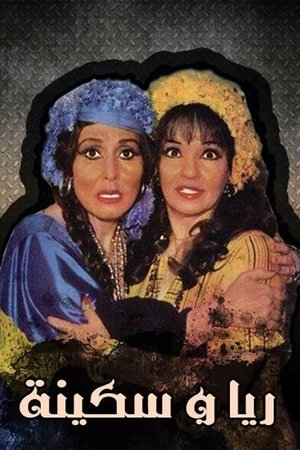
Rayya and Sekina, two poor sisters, kill their stepmother Ammuna and seize her gold, and to bury her body, Rayya marries Hasab Allah, and Sekina marries Abdel Aal, who works in the police station, so that he would dispel suspicions against them. Over time, they get used to bringing women to their homes, killing them, and stealing their gold.
In order to win over a tough dramatist at her next audition, a young actress turns to method acting to such an extreme that she slowly loses herself in the coveted role of a promiscuous bisexual self-destructive wild girl and starts sleeping around, provoking fights and cutting herself. Can she pull herself back from the edge of the abyss before it's too late?
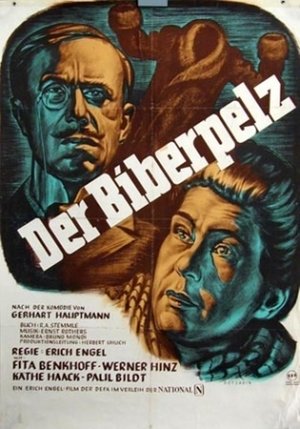
Mother Wolffen, a washerwoman, is a woman of principle: A poor man must do what he must to get through life, only he mustn't get caught doing it. All sorts of crooked deals contribute to the improvement of the daily menu and the increase of household funds. When everyone is searching for pensioner Krueger's missing beaverskin coat, Mother Wolffen and her family are calmly enjoying fresh roast venison.
Der Biberpelz
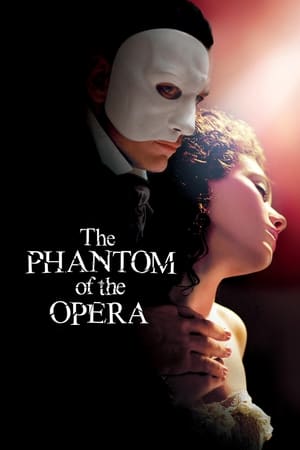
The deformed Phantom who haunts the Paris Opera House causes murder and mayhem in an attempt to make the woman he loves a star.
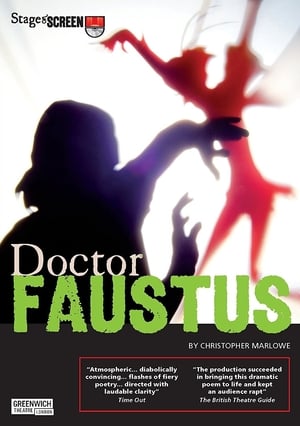
The Tragical History of Doctor Faustus, to give it its full title, by Christopher Marlowe, was first published in 1604, at least twelve years after its first performance, although the basic story of the play is much older. Having decided he has accumulated all he can of conventional knowledge, Doctor Faustus turns to magic in a quest for greater truths. Before long, he ends up selling his soul to the devil – the famous “Faustian pact” that has entered everyday language. Dr Faustus gradually realizes his terrible mistake. He apparently repents, but finally dies, the devil coming to collect his soul, and his friends the dismembered body.
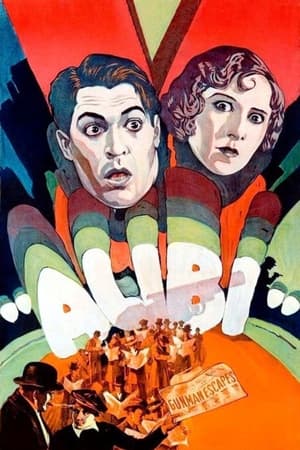
Chick Williams, a prohibition gangster, rejoins his mob soon after being released from prison. When a policeman is murdered during a robbery, he falls under suspicion. The gangster took Joan, a policeman's daughter, to the theater, sneaked out during the intermission to commit the crime, then used her to support his alibi. The detective squad employs its most sophisticated and barbaric techniques, including planting an undercover agent in the gang, to bring him to justice.
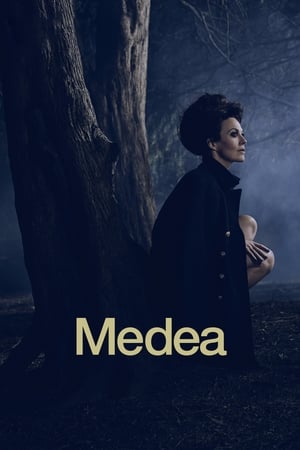
Medea is a wife and a mother. For the sake of her husband, Jason, she’s left her home and borne two sons in exile. But when he abandons his family for a new life, Medea faces banishment and separation from her children. Cornered, she begs for one day’s grace. It’s time enough. She exacts an appalling revenge and destroys everything she holds dear.
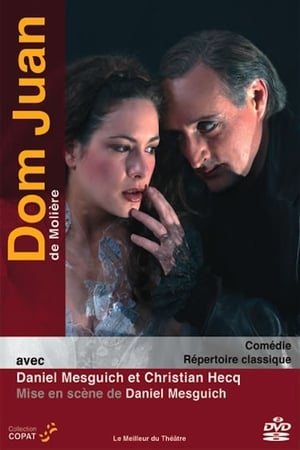
Escorted by his valet Sganarelle, Dom Juan, a libertine gentleman, brave and hypocritical, seduces women, fights duels, denies his father's authority, and mocks Heaven. Carried away by his passion for women and gambling, he goes so far as to commit perjury. A classic revisited by Mesguich with a lot of visual effects: special effects, magic tricks, imposing sets. A playful staging for this tragi-comic play.
Nina is a young, carefree actress who arrives in Paris searching for her big break. There, she finds drama both on- and offstage as she becomes involved with three men: a mild-mannered real-estate agent who offers her stability, a bad-boy actor who lives dangerously on the edge, and an intense theater director who casts her in a production of “Romeo and Juliet.” As opening night approaches, the emotional extremes of Nina’s love life fuel her art.
In a touring Shakespearean theater group, a backstage hand - the dresser - is devoted to the brilliant but tyrannical head of the company. He struggles to support the deteriorating star as the company struggles to carry on during the London Blitz. The pathos of his backstage efforts rival the pathos in the story of Lear and the Fool that is being presented on-stage, as the situation comes to a crisis.
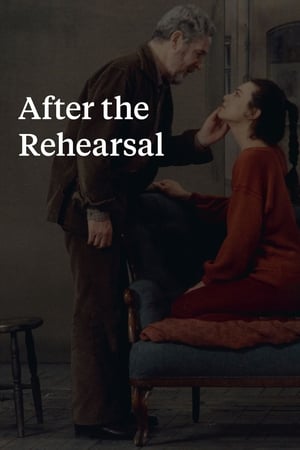
Rational, exacting, and self-controlled theater director, Henrik Vogler, often stays after rehearsal to think and plan. On this day, Anna comes back, ostensibly looking for a bracelet. She is the lead in his new production of Strindberg's A Dream Play. She talks of her hatred for her mother, now dead, an alcoholic actress, who was Vogler's star and lover.
Piera is a young woman who grows up under the parentage of two extremely original overseers: both her mother and father have incestuous relations with her before they are committed to insane asylums. A special connection, between a mother and her daughter, full of sensuality and complicity, has allowed to portray a family full of fears, rather unbalanced, but nevertheless searching infinite love.
A powerful portrait of the American spirit and a heartbreaking testament to the bonds of friendship.
Alfie Byrne is a middle-aged bus conductor in Dublin in 1963. He would appear to live a life of quiet desperation: he's gay, but firmly closeted, and his sister is always trying to find him "the right girl". His passion is Oscar Wilde, his hobby is putting on amateur theatre productions in the local church hall. We follow him as he struggles with temptation, friendship, disapproval, and the conservative yet oddly lyrical world of Ireland in the early 1960s.