Features several of the sport's major stars, past and present, including NCAA record-setting wide receiver Jerry Rice, national championship-winning head coaches Barry Switzer and Nick Saban, Heisman Trophy winner Andre Ware and many more.
NFL Films presents the greatest collection of big-time playmakers ever assembled. Hosted by Chad Johnson, In Just One Play: The Big-Play Men of the NFL, packs a thrill a second as men like LaDainian Tomlinson, Adrian Peterson, and Devin Hester light it up each week.
An independently produced sports documentary on the career of O.J. Simpson, (#32) the upcoming running back for the Buffalo Bills football team.
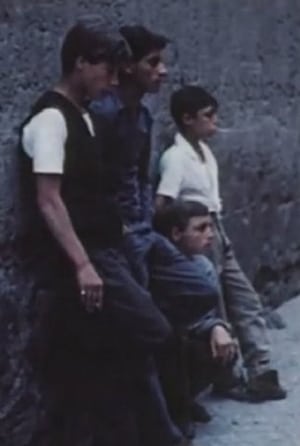
In Chile, where European football (i.e., soccer) is the dominant sport, Coach Carlos Zuniga offers at-risk teenage boys a unique opportunity to learn and play American-style football. He struggles through a grueling season trying to balance teaching the unfamiliar game to his players while fighting for recognition and funding from city officials who have no interest in the sport.
The film is set on the campus of Hampden-Sydney College during the 2002 Tiger football season. Walter Simms has lived on the campus of H-SC for 28 years and has been an integral part of the community, the college and their football team. He is an icon at the prestigious, all-male Virginia school, where he has touched the lives of generations of young men and inspired an entire community. This season in particular is very special to Shorty. Written by Revolution Earth Productions
An immersive, time-capsule style film chronicling the controversial Heisman race that unfolded at the center of an unforgettable season.
A behind-the-scenes look at the team and event that made history. The DVD chronicles the Rider's incredible run to the 101st Grey Cup Championship game and their historic victory on home soil. This 70 minute feature takes you behind the scenes of the Roughrider's 2013 season, the Grey Cup Championship Game, the Grey Cup Festival and the aftermath of one of the greatest moments in Roughrider history. Insightful interviews get you up close and personal with General Manager Brendan Taman, Head Coach Corey Chamblin, broadcasters, event crews and the players that made it all happen.
The NFL has staged 48 Super Bowls. Four photographers have taken pictures at every one of them. In KEEPERS OF THE STREAK, director Neil Leifer tells the story of this exclusive club, made up of John Biever, Walter Iooss, Mickey Palmer and Tony Tomsic. With their cameras, they have captured football's biggest game of the year for almost five decades.
In 1983 the upstart United States Football League (USFL) had the audacity to challenge the almighty NFL. The new league did the unthinkable by playing in the spring and plucked three straight Heisman Trophy winners away from the NFL. The 12-team USFL played before crowds that averaged 25,000, and started off with respectable TV ratings. But with success came expansion and new owners, including a certain high profile and impatient real estate baron whose vision was at odds with the league’s founders. Soon, the USFL was reduced to waging a desperate anti-trust lawsuit against the NFL, which yielded an ironic verdict that effectively forced the league out of business. Now, almost a quarter of a century later, Academy Award-nominated and Peabody Award-winning director Mike Tollin, himself once a chronicler of the league, will showcase the remarkable influence of those three years on football history and attempt to answer the question, “Who Killed the USFL?”
In 1982, the Raiders and owner Al Davis captivated black and Latino fans with swagger and charisma that matched the rapidly changing city.
In late March of 1984, a moving company secretly packed up the Baltimore Colts’ belongings and its fleet of vans sneaked off in the darkness of the early morning. Leaving a city of deeply devoted fans in shock and disbelief. What caused owner Robert Irsay to turn his back on a town that was as closely linked to its team as any in the NFL? Academy Award-winning filmmaker Barry Levinson, himself a long-standing Baltimore Colts fanatic, will probe that question in light of the changing relationship of sports to community. Through the eyes of members of the Colts Marching Band, Levinson will illustrate how a fan base copes with losing the team that it loves.
In 1981, college athletic recruiting changed forever as a dozen big-time football programs sat waiting for the decision by a physically powerful and lightning-quick high school running back named Marcus Dupree. On his way to eclipsing Herschel Walker’s record for the most touchdowns in high school history, Dupree attracted recruiters from schools in every major conference to his hometown of Philadelphia, Miss. More than a decade removed from being a flashpoint in the civil-rights struggle, Philadelphia was once again thrust back into the national spotlight. Dupree took the attention in stride, and committed to Oklahoma. What followed, though, was a forgettable college career littered with conflict, injury and oversized expectations. Eight-time Emmy Award winner Jonathan Hock will examine why this star burned out so young and how he ultimately used football to redeem himself.
Throughout the 1980s, Miami, Florida, was at the center of a racial and cultural shift taking place throughout the country. Overwhelmed by riots and tensions, Miami was a city in flux, and the University of Miami football team served as a microcosm for this evolution. The image of the predominantly white university was forever changed when coach Howard Schnellenberger scoured some of the toughest ghettos in Florida to recruit mostly black players for his team. With a newly branded swagger, inspired and fueled by the quickly growing local Miami hip hop culture, these Hurricanes took on larger-than-life personalities and won four national titles between 1983 and 1991. Filmmaker Billy Corben, a Miami native and University of Miami alum, will tell the story of how these “Bad Boys” of football changed the attitude of the game they played, and how this serene campus was transformed into “The U.”
From 1981-1984, a small private school in Dallas owned the best record in college football. The Mustangs of Southern Methodist University were riding high on the backs of the vaunted "Pony Express" backfield. But as the middle of the decade approached, the program was coming apart at the seams. Wins became the only thing that mattered as the University increasingly ceded power of the football program to the city's oil barons and real estate tycoons and flagrant and frequent NCAA violations became the norm. In 1987, the school and the sport were rocked, as the NCAA meted out "the death penalty" on a college football program for the first and only time in its history. SMU would be without football for two years, and the fan base would be without an identity for 20 more until the win in the 2009 Hawaii Bowl. This is the story of Dallas in the 1980's and the greed, power, and corruption that spilled from the oil fields onto the football field and all the way to the Governor's Mansion.
Randy Moss has long been an enigma known for his brilliance on the football field and his problems off it. Sometimes there's even been an intersection of those two qualities. "Rand University" gets to that crossing by going back to where he came from - Rand, West Virginia - and exploring what almost derailed him before he ever became nationally known for his extraordinary abilities as a wide receiver.
Celebrated author and Nation magazine sports editor Dave Zirin tackles the myth that the NFL was somehow free of politics before Colin Kaepernick and other Black NFL players took a knee.
In some ways, Barry Switzer and Brian Bosworth were made for each other. The Oklahoma coach and the linebacker he recruited to play for him were both out-sized personalities who delighted in thumbing their noses at the establishment. And in their three seasons together (1984-86), the unique father-son dynamic resulted in 31 wins and two Orange Bowl victories as Bosworth was awarded the first two Butkus Awards. But then Bosworth's alter ego: "The Boz," took over both their lives and ultimately destroyed their careers. In "Brian and The Boz," Bosworth looks back on the mistakes he made and passes on the lessons he learned to his son. It's a revealing portrait of a man who had and lost it all, and a trip back to a time when enough just wasn't enough.
Part 2 picks up where the original film left off, with the program trying to recover from the devastation left by NCAA sanctions and scandals that had some calling for the school to drop football. The Hurricanes rose from those ashes to win another national championship, only to face new controversies when a booster used a Ponzi scheme to win favor with the program.
When NFL superstar Barry Sanders vanished at the height of his career, he left the NFL world in shock. He was still in his prime, chasing the all-time NFL rushing record when he boarded a flight to England and never stepped foot on the field again. Now, 24 years later, Barry retraces his steps through the streets of London to finally confront the mystery.
Despite having just 40,000 residents and limited financial resources, the Schwäbisch Hall Unicorns have been able to compete at the highest level of football in all of Europe. But as more money floods into the sport, coaches and fans must face the question: has this team become a relic of the past or can their remarkable culture propel them beyond the constraints of reality?