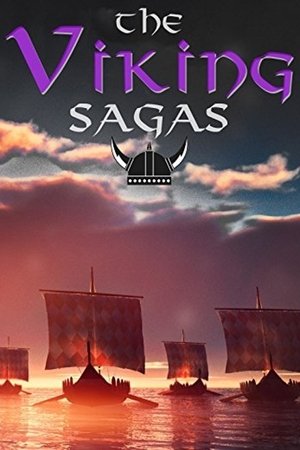
Dr Janina Ramirez travels across glaciers and through the lava fields of Iceland to find out about one of the most compelling of the great Viking stories - the Laxdaela Saga. This hour-long film explores how the unique literary achievements of the Saga writers were possible at a time of such immense cultural, political and religious upheaval.
What if the events in a key era in our history were actually completely different than what our history textbooks try to tell us? What if Master Jan Hus didn't even get warm in Constance, let alone burn up? What if Jan Zizka had more than one healthy eye? This animated comedy from director Pavel Koutský playfully breaks the myths about the Hussite era as the pedestal of history is occupied not by preachers and military leaders but by two unbelievable scatterbrains, who become the heroes of their time against their will.
A group of soldiers are sentenced for the murders of key political figures in the night of October 19th, 1921, in the streets of Lisbon. But the names of the conspirators remain unknown. Berta Maia, a widow of the 1910 revolution hero Carlos da Maia, will fight for the truth…
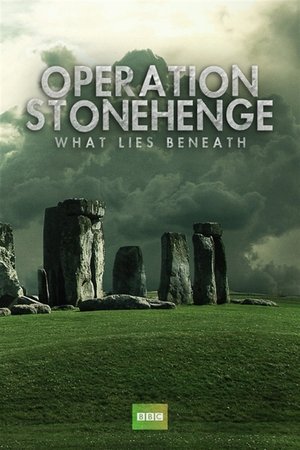
Stonehenge is an icon of prehistoric British culture, an enigma that has seduced archaeologists and tourists for centuries. Why is it here? What is its significance? And which forces inspired its creators? Now a group of international archaeologists led by the University of Birmingham and the Ludwig Boltzman Institute in Vienna believe that a new state-of-the-art approach is the key to unlocking Stonehenge's secrets. For four years the team have surveyed and mapped every monument, both visible and invisible, across ten square kilometres of the sacred landscape to create the most complete digital picture of Stonehenge and the surrounding area over millennia. Operation Stonehenge takes the viewer on a prehistoric journey from 8000BC to 2500BC as the scientists uncover the very origins of Stonehenge, learning why this landscape is sacred, preserved and has been revered by following generations.
Professor Saul David uses the BBC archive to chart the history of the world's most destructive war, by chronicling how the story of the battle has changed. As new information has come to light, and forgotten stories are remembered, the history of World War Two evolves. The BBC has followed that evolution, and this programme examines the most important stories, and how our understanding of them has been re-defined since the war ended over 70 years ago.
Raphael: The Lord of the Arts is a documentary about the 15th century Italian Renaissance painter Raphael Sanzio.
Beginning just after the bloody Sioux victory over General Custer at Little Big Horn, the story is told through two unique perspectives: Charles Eastman, a young, white-educated Sioux doctor held up as living proof of the alleged success of assimilation, and Sitting Bull the proud Lakota chief whose tribe won the American Indians’ last major victory at Little Big Horn.
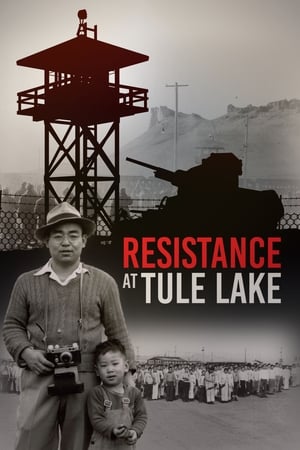
The long-suppressed story of 12,000 Japanese Americans who dared to resist the U.S. government's program of mass incarceration during World War II. Branded as 'disloyals' and re-imprisoned at Tule Lake Segregation Center, they continued to protest in the face of militarized violence, and thousands renounced their U.S. citizenship. Giving voice to experiences that have been marginalized for over 70 years, this documentary challenges the nationalist, one-sided ideal of wartime 'loyalty.'
This MGM Passing Parade series short presents how separate events led to the creation of three provisions - freedom of speech, freedom of the press, and prohibition of the infliction of cruel and unusual punishments - in the U.S. Constitution's Bill of Rights.
A historical drama set in Roman Egypt, concerning philosopher Hypatia of Alexandria and her relationship with her slave Davus, who is torn between his love for her and the possibility of gaining his freedom by joining the rising tide of Christianity.
A young Bulgarian girl digs into her grandfather's turbulent life in an attempt to unravel the past and find answers and explanations for the catastrophic fall of communism.
Over the period of 25 years the director met General Võ Nguyên Giáp, a legendary hero of Vietnam’s independence wars, a number of times. She was the first American who entered the home of the “Red Napoleon”. The fruit of this friendship is a film, personal and politically involved at the same time. Travelling across the country and talking to important figures as well as ordinary people, the director finds out more about her roots and offers the audience a unique perspective on Vietnam’s present and past.
In a dark world of violence and lies, an assimilated Ottoman frees a sentenced Witch from the pyre to start a new life with her.
This reconstruction refers to a meeting that allegedly took place on 25 November 1804 at Fontainebleau between Pope Pius VII and Napoleon to discuss the coronation.
A politically naive Viennese butcher manages to survive the Nazi occupation of Austria and the second world war.
During the Napoleonic Wars, when the French have occupied Spain, some Spanish guerrilla soldiers are going to move a big cannon across Spain in order to help the British defeat the French. A British officer is there to accompany the Spanish and along the way, he falls in love with the leader's girl.
The Chukchi reindeer breeders are peculiar people. They are nomads. Reindeers are their welfare, the purport of life. The mother-reindeer is the main divine being; it protects the Chukchi from misfortune and troubles. Nature is not friendly towards people here. Only Chukchi can survive in Tundra. A rush period for the Chukchi reindeer breeders comes in winter, when the temperature rises up to 50 degrees Celsius at night and in the sunlight of the day it doesn't exceed 40 degrees Celsius in tundra: they should separate young deers from the rest of the herd, the weak from the strong. And this, considering that the herds of the Chukchi reindeer breeders number some thousand heads...
It is the year 2546. Corporations rule the world, and an agent is on a secret mission to explore the untold stories of the past. His journey leads him into a secret virtual reality where one corporation has recreated the 1980s, an era that witnessed the birth of video game development, an event in which a politically and economically restricted small European country, Hungary, had a significant role. He discovers a strange but exciting world, where computers were smuggled through the Iron Curtain and serious engineers started developing games. This small country was still under Soviet pressure when a group of people managed to set up one of the first game development studios in the world, and western computer stores started clearing room on their shelves for Hungarian products.
1547. Fernando de Gama, a young "Soldier of Fortune" from Portugal, set sail for the Orient in an effort to find a man who murdered his father and, with luck, like many of their compatriots, to make his fortune. A vicious storm in the Indian Ocean almost ended his plans when he was on the ship sank. The sole survivor, he was washed up on a tropical beach only to be captured by Arab slavers and taken to Ayutthaya in the kingdom of Siam, where he was offered for sale as a slave.
The Prince of Guastalla falls in love with the young citizen Emilia Galotti, who is soon to marry Count Appiani. In order to win Emilia, the prince tries to send the count on an "honorable" journey on his behalf with the help of his chamberlain Marinelli. However, after the Count refuses this offer, Marinelli decides to have the wedding carriage robbed on his own initiative in order to have Emilia abducted to the Prince's nearby pleasure palace. But he has not thought of the prince's mistress, Countess Orsina, and Emilia's shaken father Odoardo, both of whom soon arrive at the castle, one to meet the prince, the other to look after his daughter...