In the summer of 1961, a group of young Italian anthropologists made a clandestine journey through Spain, in order to record popular songs that supported anti-Franco resistance. As a result of their work, they were prosecuted and their recordings were censored. Sixty years later, and guided by Emilio Jona, aged 92, the last living member of that group of travellers, we recover the unpublished recordings and reconstruct the journey, today, across an emotional and political landscape, regaining historical memories through these songs, as relevant today as they were then.
Martin Slivka's documentary film about Karol Plicka (1894-1987), the founder of Slovak cinematography.
Hanča, Janko a Lucia
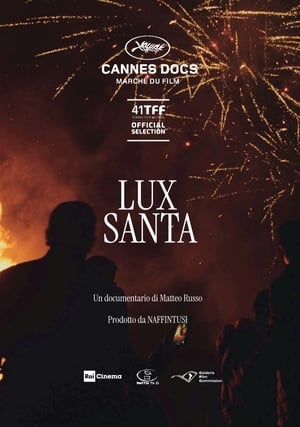
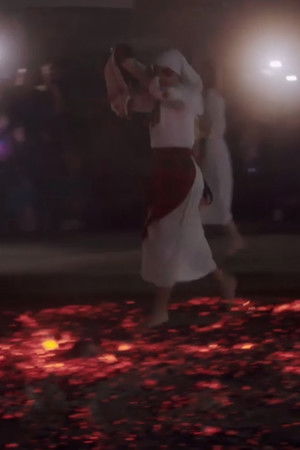
Venerdì Santo - Bronte
The film presents a parade of customs, music, songs and dances of the Slovak people in four seasons, based on a theatre play by I. Teren and K.L. Zachar from the first years after the liberation.
The story of Nisar Ahmed Khan, told through his children and the people he served, a spiritual guide whose followers still visit his tomb on his birth and death anniversaries. And alongside how his family spends a few days at the village keeping his traditions alive.
Two Chinese tourists swap their megacity for the Dutch village of Giethoorn where the hosts work hard to provide for them the authentic Dutch experience.
Stephen Fry embarks on a journey to discover the stories behind some of the world's most fantastic beasts that have inspired myths and legends in history, story-telling and film.
This exhaustive documentary attempts to tell the history of Bram Stoker's influential novel Dracula, explaining both the historical antecedents to the story, as well as offering look at Stoker's life in order to help illuminate this enduring horror tale, and exposing some of the myths surrounding vampires that have long been accepted as fact.
In a remote area of northern Spain, the wind has a name: Tramuntana. Tramuntana takes what it wants—clothes, trees, boats, and the people of the landscape who live with the endless threat of being carried away by its force. This film is a lyrical portrait of this furious wind, woven from the stories passed down by local villagers.
In the frigid waters off of Russia’s Bering Strait, Inuit and Chukchi hunters today still seek out the giant sea mammals that have provided their people with food since time immemorial. It is known, that the whale hunting today is controversial and subject to international criticism and regulations. But the Inuit and Chukchi hunt is permitted by international law because of the whaling is the foundation of their culture and their life. The contemporary story of elders Aleksandr and Aleksei blends seamlessly with that of “the woman who gave birth to a whale” and other ancient myths, told here in vivid animation, in this ongoing struggle for survival and preservation of a traditional lifestyle in one of the most remote places on earth.
In a remote mountainous village elderly people no longer deemed productive are stoned to death.
"Man in Red Bandana" is about Welles Remy Crowther, an extraordinary 9/11 hero. However, how his heroics became known is even more remarkable. Eight months after the disaster, his parents learned about how their son spent his last hour due to an ordinary object ... a red bandana. This revelation dramatically shifts their perspective on their loss. After hearing his remarkable story and how it unfolds, viewers will see how the actions of one man have touched 1,000s. This inspirational segment of the film depicts the unique, diverse and folklore ways that Welles is honored throughout the United States including in art, sports and song. Even President Barack Obama pays homage to this young man in the film. Our uplifting ending culminates in the revelation of a secret about Welles that can only be described as "perfect".
A magic realist fable about invisible elves, financial collapse and the surprising power of belief, told through the story of an Icelandic woman - a real life Lorax who speaks on behalf of nature under threat.
Hody v Hrubé Vrbce
Bosnian Croat writer Miljenko Jergović and Serbian writer Marko Vidojković replace one another by the steering wheel of Yugo, a symbol of their common past while driving on the Brotherhood and Unity Highway that stretched across five of six republics of Yugoslavia.
The Woven Path: Perempuan Tana Humba is made up of two short movies that highlight the role of women in Sumba culture. The first part of the documentary, The Woven Path, is a 10-minute movie featuring picturesque footage and images that serve as a backdrop to two poems centering on the theme of mothers. The 30-minute Perempuan Tana Humba is a much more straightforward documentary, focusing more on Sumba culture and women in three short chapters: “Marapu”, “Belis” and “Perkawinan”.
"Who plays me, hears my voices”, shows a recent moment in the life of Gaston Lafourcade, a classical pianist and harpsichordist who, at the age of 83, enters a recording studio for the first time in his life to record a solo album and to join his daughter, Natalia Lafourcade, who during a recess period in her career, decides to embark on this adventure as a love letter to her father and as a way to enjoy what brings them together, beyond blood ties: their deep love for music.
In the same vein as Meri's other documentations, this one takes advantage of the glasnost policy to discuss the social and ecologic impact of the Russian oil industry on the natives and the lands they inhabit.
Children parade through the streets of Hinton St George in Somerset on the last Thursday of October. Children have hollowed out pumpkins or mangelwurzels, a type of animal fodder turnip to make lanterns following a tradition in this part of West Somerset that coincides with Halloween. Punky or Punkie Night is thought to date from the turn of the 20th century or perhaps medieval times chanting rhymes and following a Punkie King and Queen.