On April 13, 2011, Les Films 13 production company turned 50. How can one celebrate an anniversary of this sort ? By simply making "another" film that would sum up all the earlier ones. D'un film à l'autre is hence a kind of anthology of the films produced Les Films 13 since the 1960s (short and feature films written and directed for the main part by Claude Lelouch), a best-of of half a century of cinema, going from Le Propre de l'homme to What Love May Bring. A biography in images of a filmmaker as admired as he is criticized. In reality, D'un film à l'autre is more than a series of film excerpts, interviews, and making-of documents (some of which possess an undeniable historical value, like that from A Man and A Woman, or the final performances of Patrick Dewaere).
As society tackles the problem of feeding our expanding population safely and sustainably, a schism has arisen between scientists and consumers, motivated by fear and distrust. Food Evolution, narrated by Neil deGrasse Tyson, explores the polarized debate surrounding GMOs. Looking at the real-world application of food science in the past and present, the film argues for sound science and open-mindedness in a culture that increasingly shows resistance to both.
The key to the communal laundry room in the block of flats on the Rue de Genève 85 in Lausanne serves a much greater function than merely unlocking the door. This encounter between a symbol of typical Swiss mentality with a penchant for order and the tenants who have been housed here by the city’s social services department is not something to be taken for granted. Although the laundry room is normally located in the cellar, the tenants in this building share a tiny laundry room off the entrance hall because the cellar is reserved for prostitution. To maintain order and cleanliness, the landlord hires Claudina, a new “laundry woman”.
Three young men commit themselves to one of the best summers of their lives...marching in a World Class drum and bugle corps. The bond of brotherhood this organization provides, helps them through both their struggles and their triumphs.
A deeply human portrait of a boxer with the heart of a lion who refused to give up, in and outside of the ring. This documentary follows the fighter's life from a child who was taught how to hate, to a father who learned how to love.
Industrial food production has provided the public with an abundance of food at very low prices. But with obesity and diabetes at record levels in Europe, there is clearly a problem with the food we eat. This documentary puts the spotlight on the agri-food industry and reveals how low-cost ultra-processed foods are really made.
From New York City to the farmlands of the Midwest, there are 50,000 Chinese restaurants in the U.S., yet one dish in particular has conquered the American culinary landscape with a force befitting its military moniker—“General Tso’s Chicken.” But who was General Tso and how did this dish become so ubiquitous? Ian Cheney’s delightfully insightful documentary charts the history of Chinese Americans through the surprising origins of this sticky, sweet, just-spicy-enough dish that we’ve adopted as our own.
When Harvard PhD student Jennifer Brea is struck down at 28 by a fever that leaves her bedridden, doctors tell her it’s "all in her head." Determined to live, she sets out on a virtual journey to document her story—and four other families' stories—fighting a disease medicine forgot.
Share the Road is the latest release from Cirque Productions, the makers of TREK: A Journey on the Appalachian Trail. This unique documentary chronicles a 6,200 mile cross-country bike ride from Maine to Seattle down to Mexico. Four narrators offer their individual perspectives while biking across North America, camping in town parks, meeting Americans of all creeds, and living a dream. Epic scenery and an all-original soundtrack by Big Pretty and the Red Rockets will carry you through this four month journey. This film appeals to not only the biker, but to the adventurer in all of us.
Documentary filmmaker Robert Kenner examines how mammoth corporations have taken over all aspects of the food chain in the United States, from the farms where our food is grown to the chain restaurants and supermarkets where it's sold. Narrated by author and activist Eric Schlosser, the film features interviews with average Americans about their dietary habits, commentary from food experts like Michael Pollan and unsettling footage shot inside large-scale animal processing plants.
Filmmaker S.R. Bindler profiles Texas contestants trying to win a truck by keeping one hand on it longer than everyone else.
A exploration of the fanaticism that surrounds the Apple brand, featuring interviews with Mac evangelists and members of the Mac community.
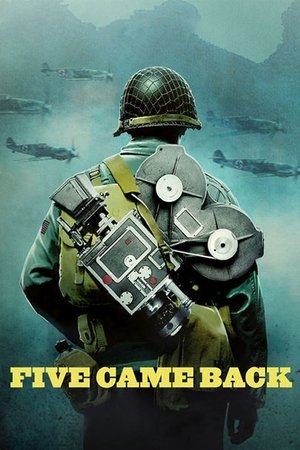
The extraordinary story of how Hollywood changed World War II – and how World War II changed Hollywood, through the interwoven experiences of five legendary filmmakers who went to war to serve their country and bring the truth to the American people: John Ford, William Wyler, John Huston, Frank Capra, and George Stevens. Based on Mark Harris’ best-selling book, “Five Came Back: A Story of Hollywood and the Second World War.”
After a quarter-century of political denial and social stigma, of stunning scientific breakthroughs, bitter policy battles and inadequate prevention campaigns, HIV/AIDS continues to spread rapidly throughout much of the world. Through interviews with AIDS researchers, world leaders, activists, and patients, FRONTLINE investigates the science, politics, and human cost of this fateful disease and asks: What are the lessons of the past, and what can be done to stop AIDS?
After looking at countless "before and after" photos on the web, Sergei Boutenko became curious to see if he, too, could achieve his dream fitness goals by following a no-gimmick exercise and diet protocol. At age 30, Boutenko noticed his metabolism slowing down, his weight increasing, and the temptation to get caught in life’s bad habits (eating out, drinking, and living sedentary lifestyle). Instead of yielding to these pressures, Boutenko hired a film crew and decided to use himself as a guinea pig.
This film speaks of archaic peoples, their customs and mores, in an attempt to make the last snapshots of their traditional lifestyles before they are gone for good.
Georgian director Otar Iosseliani prepares his film Jardins en Automne. Nothing is conventional in the filmmaker's system: Julie Bertuccelli portrays the gestation and production of a film that seems to follow the freest and most unpredictable poetic intuitions of its creator. The constant and hilarious arguments with the producer, Martine Marignac, a Michel Piccoli transformed into an old woman, and the director's peculiar filming system, in which he signals his actors to start with a whistle, paint a picture of one of the most unclassifiable cinematic experiences in contemporary cinema.
Tenor saxophone master Sonny Rollins has long been hailed as one of the most important artists in jazz history, and still, today, he is viewed as the greatest living jazz improviser. In 1986, filmmaker Robert Mugge produced Saxophone Colossus, a feature-length portrait of Rollins, named after one of his most celebrated albums.
De Madrid a la Luna
King Corn is a fun and crusading journey into the digestive tract of our fast food nation where one ultra-industrial, pesticide-laden, heavily-subsidized commodity dominates the food pyramid from top to bottom – corn. Fueled by curiosity and a dash of naiveté, two college buddies return to their ancestral home of Greene, Iowa to figure out how a modest kernel conquered America. With the help of some real farmers, oodles of fertilizer and government aide, and some genetically modified seeds, the friends manage to grow one acre of corn. Along the way, they unlock the hilarious absurdities and scary but hidden truths about America’s modern food system in this engrossing and eye-opening documentary.