The French High Mountain Military Group (G.M.H.M.) expedition to Everest in 1981, led by General Pierre Astorg, took place on the north face of the mountain. Fifteen military climbers participated in this expedition, which lasted approximately ninety days. Their goal was to reach the summit by following a siege approach, but despite their efforts, the expedition failed to reach the summit. The French military, engaged since the beginning of March on the north face of Everest (8,848 meters), gave up less than 300 meters from the summit. The climbers, Jean-Claude Mosca, Hervé Sachetat, and Hubert Giot, gave up on setting up Camp 7, the last planned intermediate camp, at 8,600 meters. Poor weather conditions and the physical condition of the expedition members were the reasons for the failure of this meticulously prepared expedition...
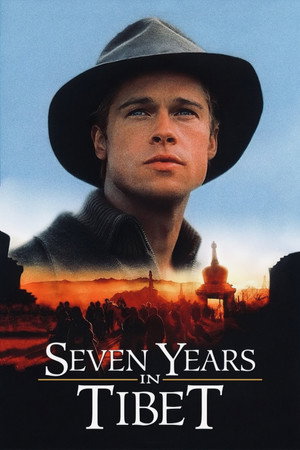
Austrian mountaineer Heinrich Harrer journeys to the Himalayas without his family to head an expedition in 1939. But when World War II breaks out, the arrogant Harrer falls into Allied forces' hands as a prisoner of war. He escapes with a fellow detainee and makes his way to Lhasa, Tibet, where he meets the 14-year-old Dalai Lama, whose friendship ultimately transforms his outlook on life.
A tribute to the controversial black activist and leader of the struggle for black liberation. He hit bottom during his imprisonment in the '50s, he became a Black Muslim and then a leader in the Nation of Islam. His assassination in 1965 left a legacy of self-determination and racial pride.
A portrait of His Holiness, the 14th Dalai Lama, which includes historical footage of China's repression of Tibetan Buddhism in 1959.
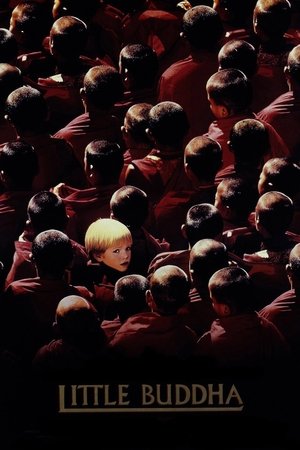
After the death of Lama Dorje, Tibetan Buddhist monks find three children — one American and two Nepalese — who may be the rebirth of their great teacher.
Luzía visits the eight stages of the 'pilgrimage' that the intellectuals Otero Pedrayo, Vicente Risco and Ben-Cho-Shey hiked from Ourense to San Andrés de Teixido in 1927; the story of the journey was published in the book ‘Pelerinaxes I’ (Pilgrimages I). She carries out this journey in order to finish up an audiovisual project about Otero Pedrayo’s book started at the University, together with a colleague who passed away in an accident.
British diplomat Robert Conway and a small group of civilians crash-land in the Himalayas, where they are rescued by the inhabitants of the hidden, idyllic valley of Shangri-La. Protected by the mountains from the world outside, where the clouds of World War II are gathering, Shangri-La provides a seductive escape for the world-weary Conway.
Six blind Tibetan teenagers climb the Lhakpa-Ri peak of Mount Everest, led by seven-summit blind mountain-climber Erik Weihenmayer.
Join the big cats as we get up close and personal with their journeys through growing pains, adulthood, survival struggles and unfamiliar territories. These seven films follow the lives of some of the most formidable feline predators - lions, leopards, tigers and cheetahs in intimate detail.
The popularity of the Santiago de Compostela pilgrimage continues to grow. Four Czech pilgrimage stories also inspired a new pilgrim, who has just embarked on his long journey. He steps out of his comfort zone to not only discover the magic of the pilgrimage, but also to find himself. When a pilgrim meets a pilgrim on the way to Santiago de Compostela, their first question is clear: “Where are you coming from?” Because every step counts. This is evidenced by four pilgrims’ stories: Kvakin, who came from Boskovice; Olga, who managed her own pilgrimage at an older age; Mario, whose journey summoned him on its own accord; and Peter, who was paralyzed in half his body but got up from his wheelchair and hit the road. We also follow the pilgrimage of Kamil Bartošek, better known as the entertainer and mystifier Kazma Kazmitch.
Three siblings who detest each other and hiking must complete together a pilgrimage to Santiago de Compostela in order to be eligible to inherit their mother's wealth.
The Road Leads to Tibet
At nearly 30 years old, Pauline left her stressful life in Paris and started walking with nothing but her backpack, on the path to Santiago de Compostela, Spain. Embarking on a four month long journey, she traveled over 2000 kilometers on foot from her native town of Strasbourg, France, meeting pilgrims from across the world along the road and asking them what made them go on this adventure. Whether it was a desire to reconnect with their inner selves, a desire to challenge themselves, or even as a spiritual quest : every path is unique. This documentary discusses a generation of pilgrims and their needs to review their everyday habits, to discover the unknown and experiencing the magic of life.
The story of Yeshe Dolma, and her turbulent marriage to a proud warrior, Jiacuo, across half a century.
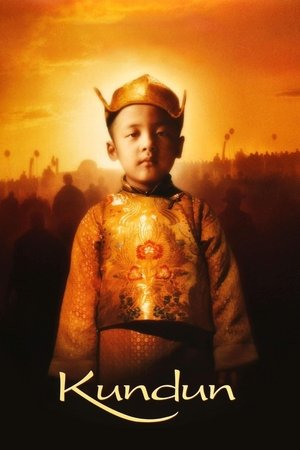
The Tibetans refer to the Dalai Lama as 'Kundun', which means 'The Presence'. He was forced to escape from his native home, Tibet, when communist China invaded and enforced an oppressive regime upon the peaceful nation. The Dalai Lama escaped to India in 1959 and has been living in exile in Dharamsala ever since.
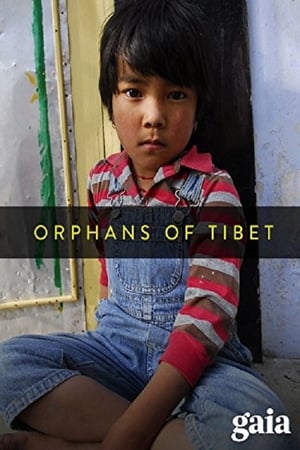
Each year, groups of Tibetan children secretly flee their homeland over the Himalayas to reach schools in India founded by the government in exile. Entrusted to smugglers, they are risking their lives by illegally crossing the great Himalayan range, a towering rampart between Tibet and India. The director will take us in the Mussorie school, in North India, where two thousand four hundred children have been rescued. They have left behind their family childhood and are now considered as orphans. We will discover the itineraries of Sonam, aged nine, and Dholma, the little new girl of the school. Here in India, they are taught about Tibetan culture and will find out about the history of their country and their ancestors. Sonam and Dholma's story is that of thousands of Tibetan children. Are they orphans of a lost country or bearers of hope who will save an endangered culture?
Wheel of Time is Werner Herzog's photographed look at the largest Buddhist ritual in Bodh Gaya, India.
Karma, a Tibetan filmmaker from New York, goes to Dharamsala, the Dalai Lama's exile headquarters in northern India, to make a documentary about former political prisoners who have escaped from Tibet. She wants to reconnect with her roots but is also escaping a deteriorating relationship back home.One of Karma's interviewees is Dhondup, an enigmatic ex-monk who has just escaped from Tibet. He confides in her that his real reason for coming to India is to fulfill his dying mother's last wish, to deliver a charm box to a long-missing resistance fighter. Karma finds herself unwittingly falling in love with Dhondup even as she is sucked into the passion of his quest, which becomes a journey into Tibet's fractured past and a voyage of self-discovery
Reda, summoned to accompany his father on a pilgrimage to Mecca, complies reluctantly - as he preparing for his baccalaureat and, even more important, has a secret love relationship. The trip across Europe in a broken-down car is also the departure of his father: upon arrival in Mecca, both Reda and his father are not the characters they were at the start of the movie. Avoiding the hackneyed theme of the return to the homeland, the film uses the departure to renew a connection between two generation.
Four men from a nomadic Tibetan tribe undertake their annual, ritualistic pilgrimage to a sacred salt lake. Salt gathered in this traditional fashion will be sold to provide the economic livelihood of the tribe for the coming year. The journey, necessary for the group's survival, also incorporates a number of rituals necessary for their culture to survive in the modern world.