In spring 1997, after several delays, The Video Dream Mixes was released. It features music material from The Dream Mixes, combined with films of US landscapes and alienated sights of Venice, pictures and computer animated graphics and virtual views from outer space. The film material was mixed up with clips showing the band on stage or during journeys. Most of the material was filmed by Edgar Froese.
In a remote area of northern Spain, the wind has a name: Tramuntana. Tramuntana takes what it wants—clothes, trees, boats, and the people of the landscape who live with the endless threat of being carried away by its force. This film is a lyrical portrait of this furious wind, woven from the stories passed down by local villagers.
The first mountains that the Amsterdam-based Colombian artist and filmmaker Ana Bravo Pérez saw in the Netherlands were black. In this experimental work, she follows the stench of the coal in the port of Amsterdam back to its origin: an open wound in northern Colombia. The mine is located in the territory of the Wayuu and has a huge impact on the indigenous people.
Here, where even monsters are political, the topography has its own memory. It has the mythological blues. Meanwhile, old gods are upset with us, and I am upset with my father.
Valérie Jouve is a weel-known photographer, and Grand Littoral is her first film. Out the outskirts of Marseille, in a landscape criss-crossed by motorways, railways and srubland paths, some figures that seem to be from her famous photos passby and bump into each other. They act as our guides in a tour without beginning or end. How do you look at a place without taking possession of it? How do you describe characters without confining them within a given plot? How do you make the transition from still shots to moving pictures? this brief, musical film leaves us asking these and other unresolved questions.
Daily dedications to a minor artisan of the classical Hollywood western. Each segment was originally a kind of letter, a private correspondence, sent in fragments to a friend over a few weeks—an ode to R.G. but also to B.C. (an ode to cinema, to everyday life, and to the cinephilic fantasy of their becoming indistinguishable).
An exploration of built and natural environments along the 800-mile length of the Trans-Alaska Pipeline.
The reception ebbs and flows as the unfamiliar landscape whirls by the window of a plane or train or car. Communication is delayed, fragmented, interrupted. Memories of a distant country.
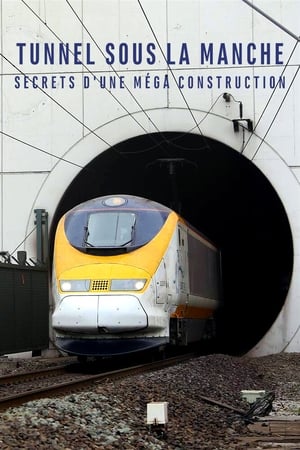
The Channel Tunnel linking Britain with France is one of the seven wonders of the modern world but what did it take to build the longest undersea tunnel ever constructed? We hear from the men and women, who built this engineering marvel. Massive tunnel boring machines gnawed their way through rock and chalk, digging not one tunnel but three; two rail tunnels and a service tunnel. This was a project that would be privately financed; not a penny of public money would be spent on the tunnel. Business would have to put up all the money and take all the risks. This was also a project that was blighted by flood, fire, tragic loss of life and financial bust ups. Today, it stands as an engineering triumph and a testament to what can be achieved when two nations, Britain and France put aside their historic differences and work together.
Shot in two places marrying with each other by a single and fractured bridge between Condrieu and les Roches-de-Condrieu, this film is the continuation of exploring ephemeral movement through the use of editing, camera movements and color sampling.
Exploring the reports of a spectral mansion on the outskirts of Rougham, a village in the Eastern county of Suffolk. The film delves into local folklore surrounding these sightings as villagers recount their haunting experiences against the desolate backdrop of rural Britain. It reflects on themes of memory, place, and the fading tradition of oral storytelling, evoking the eerie atmosphere of a fractured England and our growing disconnect from the natural environment.
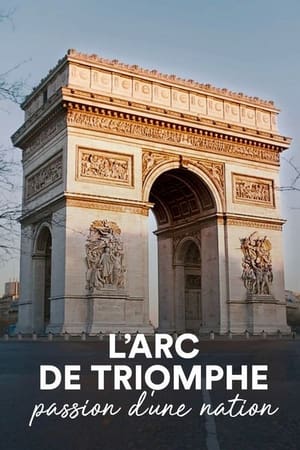
The pride of Napoleon's victories, the Arc de Triomphe, whose first stone was laid in 1806 at the top of the Champs-Élysées, is, along with the Eiffel Tower, one of the most visited monuments in the French capital. Wanted by an emperor, inaugurated under the reign of a king (Louis-Philippe) and sanctuarized by the Republic, this patriotic temple polarizes the passions of a whole nation. A historical portrait before "packaging", which teems with anecdotes and unsuspected details.
Crossing the vast outskirts of the big city we can glimpse that after the great future catastrophes there will still be room for the promise of a new youth, perhaps the last one.
A timeless landscape steeped in history that is little changed today, but was surely made to be filmed!
Iceland's first non-narrative full-feature film's focus is set on presenting Iceland in a way it has never been presented before, using various elements of high-end cinematography. There are places everyone knows, but there are also thousands of well hidden places. To find these locations one has to be adventurous or a local, and to capture them right, one has to be creative and extremely patient.
Dans la forêt de Borek
"Adrift" is shot on the arctic island of Spitzbergen and in Norway. It combines time-lapse photography with stop-motion animation of the landscape. Through camera-angles and framing the film gradually dislocates the viewer from a stable base where one loses the sense of scale and grounding.
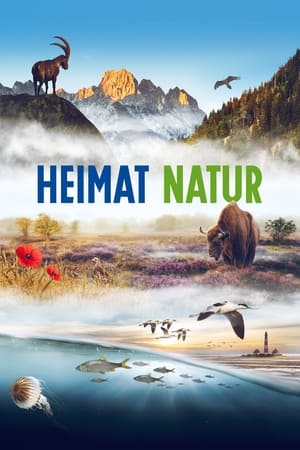
Home is where we grow up or settle permanently. And this home is always shaped by nature. Today, we human beings change and shape this more than any law of nature. HEIMAT NATUR is a visually stunning journey through the nature of our homeland, from the peaks of the Alps to the coasts and the depths of the North and Baltic Seas. In between is a cinematic foray through steaming forests, shimmering moors, over rose-blossoming heaths and the colorful cultural landscape around our villages and towns. In extraordinary images this nature is shown from its most beautiful side, examining the state of the native habitats. Slow-motion and time-lapse photography as well as intimate shots of familiar and unfamiliar species, some filmed for the first time, making the film a cinematic nature experience for the whole family.
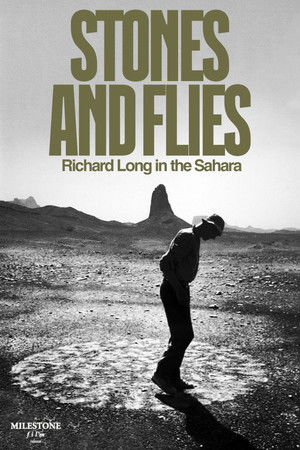
In the fall of 1987, Philippe Haas accompanied the sculptor Richard Long to the Algerian Sahara and filmed him tracing with his feet, or constructing with desert stones, simple geometric figures (straight lines, circles, spirals). In counterpoint to the images, Richard Long explains his approach. Since 1967, Richard Long (1945, Bristol), who belongs to the land art movement, has traveled the world on foot and installed, in places often inaccessible to the public, stones, sticks and driftwood found in situ. His ephemeral works are reproduced through photography. He thus made walking an art, and land art an aspiration of modern man for solitude in nature.
With more than 300 days a year, the sun dominates this country so much that it’s even shining from their flag. It’s a barren land, sometimes it’s like it’s from another planet but still familiar. It is land of contrasts and colours with wide landscapes and fascinating deserts. Influenced by various cultures during colonization and now reborn from the shadows of Apartheid in 1990, Namibia gives a beautiful collage of culture, language, art, music and food. Everyone who loves an adventure should travel to Namibia, the precious corner of our world full of incredible natural wonders. The experience of endless landscapes and an unparalleled blaze of colour make Namibia unforgettable. NAMIBIA – THE SPIRIT OF WILDERNESS invites you on a trip whose fascination will never let you go: From the Namib Desert over the breath-taking Fish River Canyon to the spectacular Etosha National Park where you will see wild elephants, antelopes, giraffes, zebras and lions.