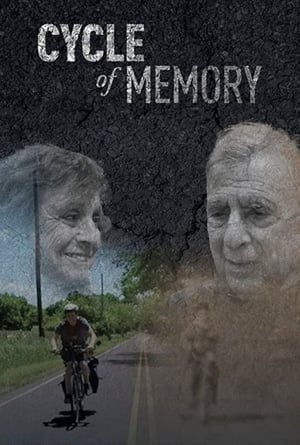
After quitting their jobs and selling their house and cars, a couple bikes around the country visiting 100 sustainable communities as they look for a new place to live. Along the way, they explore the meaning of community -- and of life itself.
70-year-old Timo makes the most of his short ride to work. Speeding up on a bicycle ends up in a ditch, but the adrenaline rush leaves a feeling of pleasure.
And urban planner's journey to making the impossible possible.
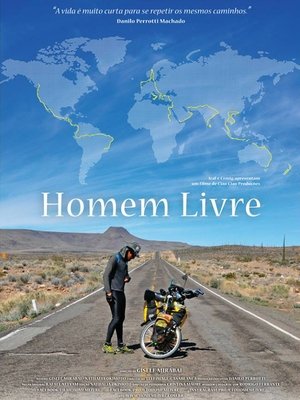
Homem Livre
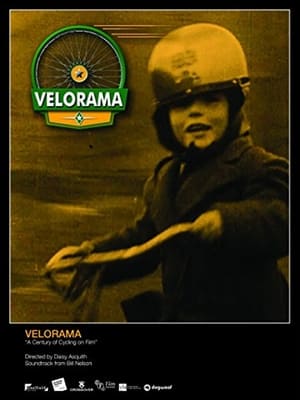
Documentary looking at a century of cycling. Commissioned to mark the arrival of the 2014 Tour de France in Yorkshire, the film makes full use of stunning British Film Institute footage to transport the audience on a journey from the invention of the modern bike, through the rise of recreational cycling, to gruelling competitive races. Award-winning director Daisy Asquith artfully combines the richly-diverse archive with a hypnotic soundtrack from cult composer Bill Nelson in a joyful, absorbing watch for both cycling and archive fans.
For Los Angeles natives living in the early 1900s, bicycles and streetcars shared the road as our primary modes of transportation. But the arrival of the freeway effectively wiped them out. Today, a collective of cycling communities fight for protected bike lanes and road safety, determined to bring a new era of mobility justice to the city.
Climate justice! OHNE KEROSIN NACH BERLIN is a campaign by the Students for Future, which is part of the Fridays for Future movement. In 2020, 60 people loudly carried the climate protest by bicycle from Cologne to Berlin. This film emerged from the movement and shows the activists' experiences up close.
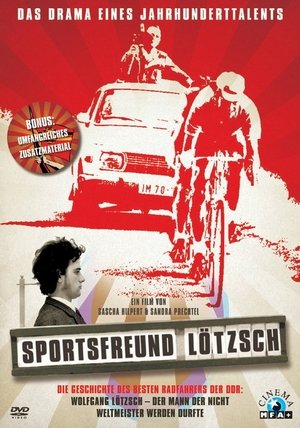
Sportsfreund Lötzsch
A staged film where over 100 cyclists cycle towards the camera.
An urban documentary illuminating the struggles of pedestrians, bike and skateboard commuters in Charleston, SC experience on a daily basis.
In East Los Angeles, three young misfit women find solace in an unapologetic, feminist bicycle crew. They call themselves the Ovarian Psycos Bicycle Brigade.
Long before the mountain bike entered our global consciousness, the cycling enthusiasts of Northern California's Marin County rode modified pre-WWII bicycles down the slopes of Mount Tamalpais. They developed their bikes through rigorous field-testing, often risking life and limb to do so. Some of these cyclists were Category-1 road racers looking for a new way to train during the off-season. Others were simply fun-loving hippies looking for a new way to commune with nature. Their early bikes were scavenged from dumpsters and junkyards. It was from these humble beginnings that a multi-billion dollar industry, a form of recreation for the masses, and an Olympic event, were born. These hefty steeds were affectionately known as Klunkerz.
Champion adventure racer, Jason "The Hammer" Lane, had both knees reconstructed in 2010. After being told that the best therapy was to ride a bike, Jason entered The Race Across America (RAAM) - a 3000-mile, coast to coast cycling race. The winner will finish in less than 8 days. Sleep? Certainly not for the first 48 hours. After that, rest comes in the form of receiving IV drips and counting REM cycles. "The Hammer" literally puts you in the passenger's seat of RAAM as you follow an unknown rookie racer battle for the lead, get run over by a car, and feud with an unprepared crew in a fight to the finish line. In this raw, unabashed documentary, you will witness the determination of a true champion and the love that grows among near strangers through challenge and conflict. The Race Across America has no favorites; rather a taste to swallow half of the field. Each and every racer is tested. Some will pass, some will fail, but only one will Hammer.
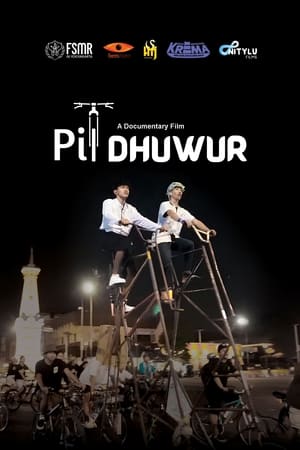
In the heart of Yogyakarta, a tall bike enthusiast takes a stand against the city's lacklustre cycling infrastructure in the city with the "Bicycle Friendly City" label.
The film Together we cycle investigates the critical events that has led to the revival of the Dutch cycling culture. For most people, cycling in the Netherlands, seems a natural phenomenon. However, until the 1970s the development of mobility in the Netherlands followed trents across the globe. The bicycle had had its day, and the future belonged to the car. The only thing that had to be done was to adapt cities to the influx of cars. Then Dutch society took a different turn. Against all odds people kept on cycling. The question why this happened in the Netherlands, has not an easy answer. There are many factors, events and circumstances that worked together, both socially and policy-wise. In Together we cycle, key players tell the story of the bumpy road which led to the current state. Where cycling is an obvious choice for most citizens.
Bas Jan Ader rides his bike into a canal in Amsterdam.
This bicycle-safety film shows children what can happen when bicycles are driven carelessly and recklessly.
¡ La Macha!
In the darkroom, 50 unexposed film strips were laid across a surface, upon which a frame of "La sortie des ouvrier de l'usine Lumière" was projected. The stringing together of the individual developed sections make up the new film, which reads the original frame like a page from a musical score: within the strips from top to bottom and sequentially from left to right.
La bicyclette fait sa vélorution