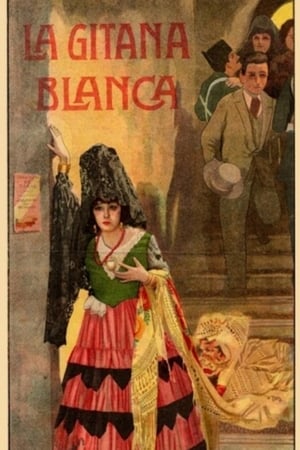
The film centres around the young woman Erika, desperately seeking for love and escape from the depression of the times, drifting, and in the end becoming involved with a circle of rich people who sell goods for sexual favours.
Irked by the success of a brassy nightclub owner. her rivals set out to drive her out of business, and frame her for a murder in the bargain.
Dorothy Desmond, a naive young woman from Kentucky who becomes virtually penniless after her father (an editor) is shot by a political rival and her mother dies of shock. Believing she has a talent for writing, Dorothy travels to New York to find work at a newspaper. She secures a position and is assigned to the Chinatown section of the city to cover a story, which presumably involves the titular jade necklace and the "perils" hinted at by the serial's title.
Jane Abom, a woman unaware of her husband’s criminal life, begins working as a newspaper writer and later marries her editor after her husband is reported dead. A former associate of her first husband later attempts to blackmail Jane by revealing he is still alive. When Jane and her first husband finally confront one another, he is killed in the ensuing struggle. Ultimately, a friend clears Jane of any wrongdoing, allowing her to find happiness with the editor.
Bear (10 minutes, 35 seconds) was Steve McQueen's first major film. Although not an overtly political work, for many viewers it raises sensitive issues about race, homoeroticism and violence. It depicts two naked men – one of whom is the artist – tussling and teasing one another in an encounter which shifts between tenderness and aggression. The film is silent but a series of stares, glances and winks between the protagonists creates an optical language of flirtation and threat.
A tramp cares for a boy after he's abandoned as a newborn by his mother. Later the mother has a change of heart and aches to be reunited with her son.
In 1908, Director/Producer Shozo Makino (father of Japanese cinema) directed and produced the first dramatic film in Kyoto. “Honnô-ji Gassen” was shot at Shinnyo-Do Temple. Considered a lost film.
Pinku distributed by Xces / Nikkatsu.
An army pilot is visiting the home of another army pilot in a neighboring country, and falling in love with his sister, when war breaks out.
Jewel thieves, murder, and a manhunt swirl around a sailor off a cargo ship in post-war London.
Thwarted by his despotic uncle from continuing his love affair, a young man's thoughts turn dark as he dwells on ways to deal with his uncle. Increasingly convinced that murder is merely a natural part of life, he kills his uncle and hides the body. However, the man's conscience awakens; paranoia sets in and nightmarish visions begin to haunt him.
A romantic rivalry among members of a secret society becomes even more tense when one of the men is assigned to carry out an assassination.
Manfredi, an habitual user of opium, is a piano player in a Chinese café. A wealthy tourist becomes interested in the young musician and sends him abroad to study. He promises Zuletta, his common law wife, that on his return he will marry her. Five years later he comes back, still addicted to the drug. Under its spell he is proclaimed a genius. Failing to make good his promise to Zuletta, he becomes infatuated with Margery Rhodes, a society girl, who comes to study music with him. So strongly is Margery influenced by her teacher, that she also acquires a taste for opium. John Hale, her lover, is in the secret service. Through the revengeful Zuletta, he learns that Manfredi conducts an opium joint. Hale has the place raided, just in time to save Mergery from a fate worse than death.
First ever Bangladeshi feature film. The film about a conflict between two family members.
An adventure film with Benshi performers. Sometimes considered the 'first Japanese feature film', it survives today as a compilation of scenes from various different 1910s adaptations totaling nearly three hours in length. The bulk of the content comes from the 1911 adaptation by legendary Japanese filmmaker Makino Shozo.
Daughters of Today was a 1928 silent film from Lahore, in present-day Pakistan (then British India). It was produced by G.K Mehta and directed by Shankradev Arya. This was the first feature film made in Lahore, and helped to establish the city of Lahore as one of the centers of filming in India. The Lahore film industry is now known as Lollywood. Production started in 1924 and took three years to complete, mainly due to financial problems. Two participants later became prominent personalities of the South Asian film industry: A.R. Kardar was one of the most famous Bombay film directors in the 1930s, 1940s and 1950s; and actor M. Ismael's film career spanned over five decades.
A successful artist and a struggling one both love the same woman; she chooses the poor one but as the years roll on and other choices she makes and her husband’s misunderstanding lead to a near breaking point for the couple.
Brothers Keiji and Ryoichi move to a new neighborhood in the Tokyo suburbs after their father, an office clerk, is promoted. The boys join the local gang as lowly new kids and emerge as natural leaders after defeating a bully. While visiting the home of their father's boss, the brothers witness the ridicule their father endures to please his superior. Angry and embarrassed, the boys find their naive ideas about power being challenged.
Yeong-deuk and Jeong-sun and engaged. Yeong-deuk comes back home after completing his studies and meets the wrong kind of friends who revel in liquor and women.