Luise, called Pünktchen, and Anton are closest of friends. Being the daughter of a wealthy surgeon, young Pünktchen lives in a great house. Her mother, who always travels through the world more for public relation reasons than for the social tasks she pretends to fulfill, is never available to her as a mother. Anton, son of a single and sick mother in financial trouble, does his best to help her out of it by working late. Pünktchen decides to help her only friend (as nobody else would anyway) and starts singing in public places. Trouble arises when Anton can't resist stealing a golden lighter and Pünktchen's secret life is discovered by her parents. Two troubled families finally can see the need for actions to be taken.
After the death of his mother, a young boy calls a radio station in an attempt to set his father up on a date. Talking about his father’s loneliness soon leads to a meeting with a young female journalist, who has flown to Seattle to write a story about the boy and his father.
A nurse's aid, Cathy lives alone. Too alone. When her sister, with whom she's had a falling-out, calls her for her birthday and invites her to the beach, Cathy is exhilarated. But the day gradually slips away from her.
11-year-old Ena meets a young fisherman in a port. He gives her an eel and they arrange to meet the following Sunday on the other side of the lake. She has to be there.
Fifteen-year-old Sarah has returned to Colmar, where she has taken up high-performance figure skating and competition. The rivalry between the girls and the trainer's harsh words put her body to the test on the ice, while her adolescent desires distract her from her athletic ambitions.
In 1812, during the French period, large parts of Germany are occupied by the troops of Napoleon. Several paramilitary Freikorps units battle the French forces, among them the Black Brunswickers led by the 'Black Duke' Frederick William of Brunswick-Wolfenbüttel. After the War of the Fifth Coalition, the Black Hussars are pursued by Napoleon throughout the country, but frequently take refuge with the noble-minded German people.
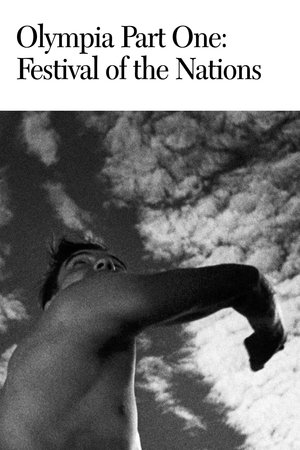
Starting with a long and lyrical overture, evoking the origins of the Olympic Games in ancient Greece, Riefenstahl covers twenty-one athletic events in the first half of this two-part love letter to the human body and spirit, culminating with the marathon, where Jesse Owens became the first track and field athlete to win four gold medals in a single Olympics.
Part two of Leni Riefenstahl's monumental examination of the 1938 Olympic Games, the cameras leave the main stadium and venture into the many halls and fields deployed for such sports as fencing, polo, cycling, and the modern pentathlon, which was won by American Glenn Morris.
When an arranged marriage brings Ada and her spirited daughter to the wilderness of nineteenth-century New Zealand, she finds herself locked in a battle of wills with both her controlling husband and a rugged frontiersman to whom she develops a forbidden attraction.
A family loaded with quirky, colorful characters piles into an old van and road trips to California for little Olive to compete in a beauty pageant.
A wife who lived a modest and happy life with her husband, a serious office worker. One day, it was discovered that her husband had access to her company's money, was having an affair with the mother of the snack shop, and was spending money on her. The two are divorced. Her wife sleeps with a loan shark to clean up her debts, and her husband's former boss ends up having a sexual relationship with her, leading to a rough life for her. I am forced to do so. One day when she is devastated, she accidentally reunites with her husband in her town. Her husband was also dumped by an unfaithful woman and their lives were in tatters, but the two decided to get back together, keeping secrets from each other about what had happened during their breakup.
Pinku distributed by Million.
The life of a Romanian Orthodox Priest, who went from a hard childhood in godless, communist Romania, to the land of all freedoms, America.
A schoolteacher in her early 40s, involved in a dead-end love affair with a married mortician, drifts into a relationship with an aging newspaperman.
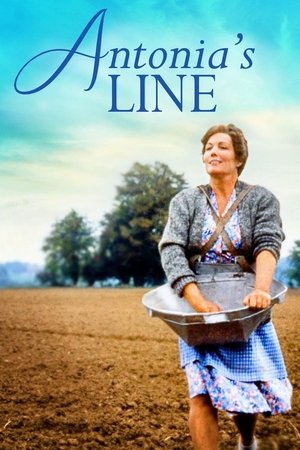
After World War II, Antonia and her daughter, Danielle, go back to their Dutch hometown, where Antonia's late mother has bestowed a small farm upon her. There, Antonia settles down and joins a tightly-knit but unusual community. Those around her include quirky friend Crooked Finger, would-be suitor Bas and, eventually for Antonia, a granddaughter and great-granddaughter who help create a strong family of empowered women.
After getting into a serious car accident, a TV director discovers an underground sub-culture of scarred, omnisexual car-crash victims, and he begins to use car accidents and the raw sexual energy they produce to try to rejuvenate his sex life with his wife.
For First Nations communities, the headdress bears significant meaning. It's a powerful symbol of hard-earned leadership and responsibility. As filmmaker JJ Neepin prepares to wear her grandfather's headdress for a photo shoot she reflects on lessons learned and the thoughtless ways in which the tradition has been misappropriated.
The film tells the story of Russian emigree and the only survivor from ship crash Yanko Goorall and servant Amy Foster in the end of 19th century. When Yanko enters a farm sick and hungry after the shipwreck, everyone is afraid of him, except for Amy, who is very kind and helps him. Soon he becomes like a son for Dr. James Kennedy and romance between Yanko and Amy follows.
Secrets, rumors and betrayals surround the upcoming marriage between a young dissolute man and virtuous woman of the French aristocracy.
A woman employs a gay man to spend four nights at her house to watch her when she's "unwatchable".