When Harvard PhD student Jennifer Brea is struck down at 28 by a fever that leaves her bedridden, doctors tell her it’s "all in her head." Determined to live, she sets out on a virtual journey to document her story—and four other families' stories—fighting a disease medicine forgot.
Private eye Philip Marlowe and his bride move to a desert town, where he uncovers a land scheme.
The man behind the legend and a knowing look at 1950s Hollywood are revealed in this dynamic biopic of the meteoric star whose troubled life echoed his gut-grabbing performances in East of Eden, Rebel Without a Cause and Giant.
Appalachian Journey is one of five films made from footage that Alan Lomax shot between 1978 and 1985 for the PBS American Patchwork series (1991). It offers songs, dances, stories, and religious rituals of the Southern Appalachians. Preachers, singers, fiddlers, banjo pickers, moonshiners, cloggers, and square dancers recount the good times and the hard times of rural life there. Performers include Tommy Jarrell, Janette Carter, Ray and Stanley Hicks, Frank Proffitt Jr., Sheila Kay Adams, Nimrod Workman and Phyllis Boyens, Raymond Fairchild, and others, with a bonus of a few African-Americans from the North Carolina Piedmont.
A retrospective of the classic game show, What's My Line, in which a four-member celebrity panel attempted to identify a contestant's occupation through yes or no questions. In addition, each episode featured a celebrity mystery guest that the panelists tried to identify the guest while blindfolded. The show ran from 1950-1967 and prominently featured John Daly, Bennett Cerf, Arlene Francis, and Dorothy Kilgallen. This documentary looked back on the show 25 years after it premiered.
Valérie, a youthful 40, is an active, exemplary woman. A psychiatrist by trade, she is also a perfect mother, wife, and parishioner. And yet, Valérie is also a murderer.
Prudence MacIntyre, the 'New York home tips' TV show presenter, is sent on holiday, by studio boss Jeffrey Symcox, to a secluded lodge in Tassajero, Wyoming. The lodge was built on the last remnant of Indian land preserved by the Andrews family. Her celebrity status and sassy charm help her quickly get acquainted with local notables, including French heir Jean Phillipe Andrews, his land trust lawyer Doug Craig and police detective Eddie Duncan. Pru is with lodge caretaker Ruth Vigil when she discovers her estranged son JR is missing from his home after leaving a message. Pru finds blood, and although it's not JR's, insists he must have been murdered. After her research assistant, a computer whiz with a minor criminal record, joins her, they soon get in danger snooping ahead of the incredulous authorities to discover several linked crimes.
Extranjeros de sí mismos
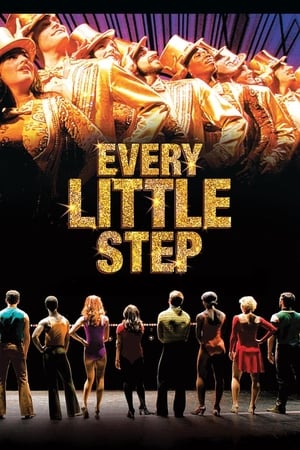
Follows the plight of real-life dancers as they struggle through auditions for the Broadway revival of A Chorus Line and also investigates the history of the show and the creative minds behind the original and current incarnations.
Tommy Kirk leads his fellow Martians to Earth on an interplanetary quest for females. Kirk proves that Martians have impeccable taste when one of his first conquests turns out to be sexy scientist Yvonne Craig.
Georgian director Otar Iosseliani prepares his film Jardins en Automne. Nothing is conventional in the filmmaker's system: Julie Bertuccelli portrays the gestation and production of a film that seems to follow the freest and most unpredictable poetic intuitions of its creator. The constant and hilarious arguments with the producer, Martine Marignac, a Michel Piccoli transformed into an old woman, and the director's peculiar filming system, in which he signals his actors to start with a whistle, paint a picture of one of the most unclassifiable cinematic experiences in contemporary cinema.
The extraordinary story of how Hollywood changed World War II – and how World War II changed Hollywood, through the interwoven experiences of five legendary filmmakers who went to war to serve their country and bring the truth to the American people: John Ford, William Wyler, John Huston, Frank Capra, and George Stevens. Based on Mark Harris’ best-selling book, “Five Came Back: A Story of Hollywood and the Second World War.”
After a quarter-century of political denial and social stigma, of stunning scientific breakthroughs, bitter policy battles and inadequate prevention campaigns, HIV/AIDS continues to spread rapidly throughout much of the world. Through interviews with AIDS researchers, world leaders, activists, and patients, FRONTLINE investigates the science, politics, and human cost of this fateful disease and asks: What are the lessons of the past, and what can be done to stop AIDS?
The Garbage Pail Kids are 30 years old. Celebrate their gross-out greatness with artist interviews, superfan collections, and more.
Orphaned and left in the desert as an infant, Evil Roy Slade grew up alone—save for his teddy bear—and mean. As an adult, he is notorious for being the "meanest villain in the West"—so he's thrown for quite a loop when he falls for sweet schoolteacher Betsy Potter. There's also Nelson L. Stool, a railroad tycoon, who, along with his dimwitted nephew Clifford (Henry Gibson), is trying to get revenge on Evil Roy Slade for robbing him.
De Madrid a la Luna
George Carlin brings his comedy back to New Jersey and this time talks about Offensive Language, Euphemisms, They're Only Words, Dogs, Things you never hear, see or wanna hear, Some people are stupid, Cancer, Feminists, Good Ideas, Rape, Life's moments, and organ donors.
A woman's plans to leave her husband and follow her lover abroad are thrown into turmoil when murder strikes.
This is a 1991 documentary film about the legendary artist and filmmaker, Joseph Cornell, who made those magnificent and strange collage boxes. He was also one of our great experimental filmmakers and once apparently made Salvador Dali extremely jealous at a screening of his masterpiece, Rose Hobart. In this film we get to hear people like Susan Sontag, Stan Brakhage, and Tony Curtis talk about their friendships with the artist. It turns out that Curtis was quite a collector and he seemed to have a very deep understanding of what Cornell was doing in his work.
New York based artist, Cindy Sherman, is famous for her photographs of women in which she is not only the photographer, but also the subject. She has contributed her own footage to the programme by recording her studio and herself at work with her Hi-8 video camera. It reveals a range of unexpected sources from visceral horror to medical catalogues and exploitation movies, and explores her real interests and enthusiasms. She shows an intuitive and often humorous approach to her work, and reflects on the themes of her work since the late 1970s. She talks about her pivotal series known as the `Sex Pictures' in which she addresses the theme of sexuality in the light of AIDS and the arts censorship debate in the United States.