Winner of the Golden Rooster for Best Film in 1992

Set in the liberation war of Hainan Island, PLA learn to sail boats and blow up enemy's warship in an encounter action.
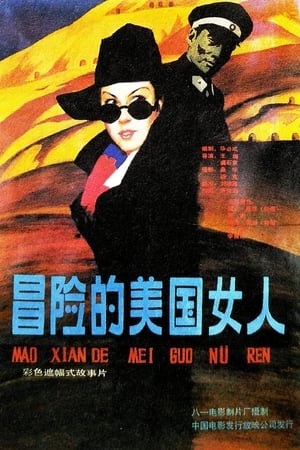
The film shows the story of Helen Snow in China. After the Xi'an incident of 1936, Helen Snow, the wife of Edgar Snow and also an American journalist, comes back to to Xi'an. With her bravery, wisdom and help of friends, Helen escapes from the surveillance of the Kuomintang Nationalist Party government and manages to be one of the only western journalists to travel to Yan'an, in the northwest of China, and report on the Communist Party and Red Army activities.
During the War of Resistance Against Japanese Aggression, the Kuomintang negotiated cooperation between the Kuomintang and the Communist Party while also asking their Ministry of Defense to secretly formulate a plan for attacking the Communist army, codenamed "A-14". Unexpectedly, Japanese spies stole this plan in a vain attempt to blackmail the Kuomintang into defecting to Japan. The Ministry of National Defense immediately organized a "Black Phoenix" operation to recapture the "A-14" plan, and sent officers under the pseudonym "Black Eagle" to carry it out.
Li, a former soldier who's family broke apart during wartime, was born in Hebei Province in China. He joined the army since youth, never about any political beliefs, but to survive by fighting for those who fed him. The war brought him to Taipei Taiwan, a place where he spent six decades to fit in. Li never had a chance to return to his hometown Hebei, but has revisited it countless times in his dreams. whenever he dreams of it, he sees blood flowing all over the place. At the age of sixty, he decided to separate from his wife and children and lived alone for 20 years. He missed all those years wasted in wartime when he was young, at the same time, he had no idea how his eventful life would come to an end...
A fly is treated to a portion of criticism.
My father was a landowner’s son and an ex-Kuomintang Air Force pilot, who remained in mainland China after 1949. For survival, he tried to transform himself from a man of the ‘old society’ to a man of the ‘new society’. As his son, I started investigating his ‘history before 1949’, which he had kept away from me. This film documents the process of my investigation over twenty years.
Five young Ukrainians discuss life following the Maidan Revolution of 2014. Not all fought in the Russian-Ukrainian war, but it, regardless, shattered their life plans. Representing 'Generation Maidan', they face the question of how to cope with experiences of violence, how to go on. A local theatre director produces Hamlet, wherein they can use Shakespeare’s tragic character as a mirror and face their traumas onstage. For them, 'to be or not to be' is not simply text but an existential dilemma with no clear answer.
The story of a group of actresses who, in the Spain of the seventies, and in the midst of the democratic Transition, decided to appear nude in the films of that time of radical political change, defying the rigid and deeply rooted social rules.
Rebel Ibrahim Hamdy assassinates a pro-colonial Prime Minister but is arrested and hides with a fellow university student, who initially refuses but eventually accepts him. Abdul Hamid Khatib meets Samia and her cousin, and Ibrahim uses the situation to hasten Samia’s marriage, which she rejects. Nawal, the youngest daughter, becomes the liaison between Ibrahim and his colleagues, helping him escape. Abdul Hamid tries to inform the political police of Ibrahim’s location, but Samia stops him. The head of the political police suspects them and punishes them to find Ibrahim. Ibrahim refuses to leave the country, returning to fight colonialism and participating in an operation.
Irena Sendler is a Catholic social worker who has sympathized with the Jews since her childhood, when her physician father died of typhus contracted while treating poor Jewish patients. When she initially proposes saving Jewish children from the Warsaw Ghetto, her idea is met with skepticism by fellow workers, her parish priest, and even her own mother Janina.
After handing in a report on the treatment of Chinese colonial labor, Kaji is offered the post of labour chief at a large mining operation in Manchuria, which also grants him exemption from military service. He accepts and moves with his newlywed wife Michiko, but when he tries to put his ideas of more humane treatment into practice, he finds himself at odds with scheming officials, cruel foremen, and the military police.
In 1918, shortly after the Soviet Socialist Revolution in October, the Red Army soldier Savelyev went to Moscow and was assassinated by counter-revolutionaries at a small station. The sons Vasya and Misha have just lost their mothers, and now they have lost their fathers, and they have no choice but to wander into Moscow. Lenin and Dzerzhinsky met the two children and took them in and took care of them.
Set against the high-stakes backdrop of the late Cold War, Adolf Tolkachev, an ordinary man who risks everything to pass thousands of pages of top-secret Soviet intelligence to the U.S. Despite repeated rejections by a wary CIA, Tolkachev persisted, embodying the courage to stand against a regime that betrayed its own people. Finally, finding an ally in CIA agent Tom Lenihan, Tolkachev was able to fundamentally shift the balance of power, proving that true patriotism lies not in blind allegiance but in the willingness to challenge a government when it strays from its ideals.
A humble and simple Takezo abandons his life as a knight errant. He's sought as a teacher and vassal by Shogun, Japan's most powerful clan leader. He's also challenged to fight by the supremely confident and skillful Sasaki Kojiro. Takezo agrees to fight Kojiro in a year's time but rejects Shogun's patronage, choosing instead to live on the edge of a village, raising vegetables. He's followed there by Otsu and later by Akemi, both in love with him. The year ends as Takezo assists the villagers against a band of brigands. He seeks Otsu's forgiveness and accepts her love, then sets off across the water to Ganryu Island for his final contest.
Diving deep into the true causes of the Great Recession, the financial crisis of the 2010s, renowned economists, investors and business leaders explain what America is facing if we don't learn from our past mistakes. Is the economy really improving or are we just blowing up another Bubble?
"The First Major Case" is a historical drama based on the first major anti-corruption case in the People's Republic of China. Set in 1951, the story follows counter-espionage officer Chen Huaibang, who uncovers the shocking corruption of Liu Qingshan, a former revolutionary hero turned corrupt official. Despite their past, Chen stays true to justice, bringing Liu and his accomplice Zhang Zishan to trial. The film highlights Chen's battle of wits with Liu, Zhang, and the enemy spy known as "Qingmang."
In the closing days of WWII, a Japanese soldier afflicted with tuberculosis is abandoned by his company and left to wander the Philippine island of Leyte.
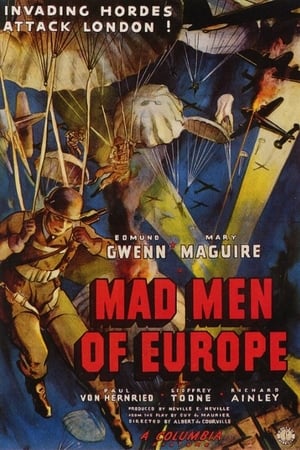
Set in the years before and during World War I, this epic tale tells the story of a rich Argentine family, one of its two descending branches being half of French heritage, the other being half German. Following the death of the family patriarch, the man's two daughters and their families resettle to France and Germany, respectively. In time the Great War breaks out, putting members of the family on opposing sides.
Joseph Joanovici, a Romanian Jew married to Eva and father of Theresa, lives in Paris in 1939, on the eve of World War II. He managed to make his place in society by trading scrap.