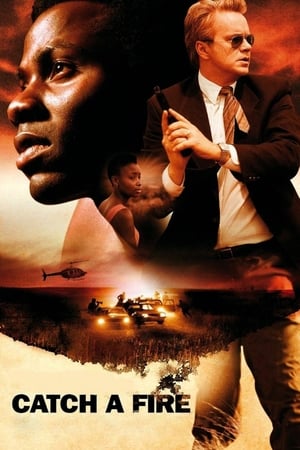
In 1980, the black Falashas in Ethiopia are recognised as genuine Jews and are secretly carried to Israel. The day before the transport the son of a Jewish mother dies. In his place and with his name (Schlomo) she takes a Christian 9-year-old boy.
In 1943, as Hitler continues to wage war across Europe, a group of college students mount an underground resistance movement in Munich. Dedicated expressly to the downfall of the monolithic Third Reich war machine, they call themselves the White Rose. One of its few female members, Sophie Scholl is captured during a dangerous mission to distribute pamphlets on campus with her brother Hans. Unwavering in her convictions and loyalty to the White Rose, her cross-examination by the Gestapo quickly escalates into a searing test of wills as Scholl delivers a passionate call to freedom and personal responsibility.
Wounded in Africa during World War II, Nazi Col. Claus von Stauffenberg returns to his native Germany and joins the Resistance in a daring plan to create a shadow government and assassinate Adolf Hitler. When events unfold so that he becomes a central player, he finds himself tasked with both leading the coup and personally killing the Führer.
Olivier Assayas, Gus Van Sant, Wes Craven and Alfonso Cuaron are among the 20 distinguished directors who contribute to this collection of 18 stories, each exploring a different aspect of Parisian life. The colourful characters in this drama include a pair of mimes, a husband trying to choose between his wife and his lover, and a married man who turns to a prostitute for advice.
In a village on the edge of the Sahara, Rima, a 19-year-old orphan, dreams of learning, of discovering, of living free while the men of the salt mine go on strike. The authorities react by sending the army, Rima decides to help the strikers by trapping the soldiers. Co-produced with the Office des Actualités Algériens and shot in the region of Téhouda, 50 kilometers from Biskra, this Franco-Algerian film is fully part of the cinematographic heritage of both shores of the Mediterranean. Bertuccelli adopts the technique of cinema verite, with non-professional actors from the village itself, giving the film a striking documentary texture and a rare force of authenticity. Carried by the moving interpretation of Leila Shenna in the role of Rima, the actor Krikèche and lulled by the music of Taos Amrouche, the film questions female emancipation, social resistance and the relationship with the territory.
On the one hand, there’s the desert eating away at the land. The endless dry season, the lack of water. On the other there’s the threat of war. The village well has run dry. The livestock is dying. Trusting their instinct, most of the villagers leave and head south. Rahne, the only literate one, decides to head east with his three children and Mouna, his wife. A few sheep, some goats, and Chamelle, a dromedary, are their only riches. A tale of exodus, quest, hope and fatality.
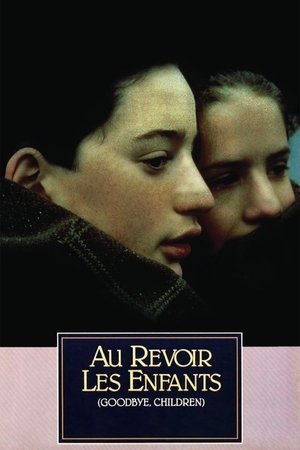
Au revoir les enfants tells a heartbreaking story of friendship and devastating loss concerning two boys living in Nazi-occupied France. At a provincial Catholic boarding school, the precocious youths enjoy true camaraderie—until a secret is revealed. Based on events from writer-director Malle’s own childhood, the film is a subtle, precisely observed tale of courage, cowardice, and tragic awakening.
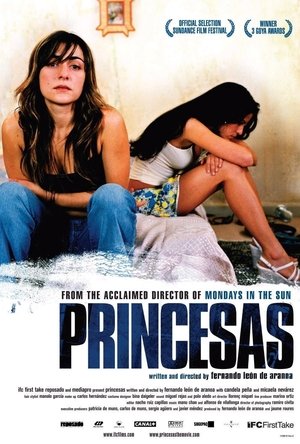
Mateo, 17, prepares to migrate to Los Angeles in order to support his humble family in their small Zapotec village in southern Mexico, yet before he can depart, the leader of the local gang demands that he commit murder to become a member.
60 years ago, in the Algerian desert, an atomic bomb, equivalent to three or even four times Hiroshima, exploded. Named the “Blue Gerboise”, it was the first atomic bomb tested by France, and of hitherto unrivaled power. This 70 kiloton plutonium bomb was launched in the early morning, in the Reggane region, in southern Algeria, during the French colonial era. If this test allowed France to become the 4th nuclear power in the world, it had catastrophic repercussions. France had, at the time, certified that the radiation was well below the standard safety threshold. However, in 2013, declassified files revealed that the level of radioactivity had been much higher than announced, and had been recorded from West Africa to the south of Spain.
Set amidst the civil war of Algeria in the 1990s, Enough! is the story of two women. Emel is a Westerner whose husband, a journalist, is missing - perhaps kidnapped or even killed for articles he's written.
Prêtres interdits
An Algerian social satire that tells the story of Boujemaa, who marries a second wife in addition to his first wife, who is ill and with whom he has a son and a daughter. Living all under the same roof, the new wife imposes her authority in the house. The lives of the family members are then turned upside down.
Abderrahim is a mechanic and singer in his spare time. One day, he receives a car to repair, driven by a very beautiful girl. It's love at first sight. They want to get married and start a family, but the girl's parents do not view this love favorably. They decide to marry their daughter to another man. Subsequently, Abderrahim became a famous singer. The loss of her love leaves the young girl in a state of silence from which only Abderrahim can break her.
A failed track coach finally finds someone who he believes has what it takes to win. The Comrades Marathon is a 90-k race in South Africa. An aging running coach, Barry, wants to field a winner; he's working with four men from a factory, but when he's fired to make way for a smooth, corporate type, he's at loose ends. Then he sees Christine, a Namibian immigrant who runs to forget her troubles. He offers to coach her and soon she's living at his house, following his diet and training regimen. But his single-mindedness gets to her: she wants a job and a place of her own. Plus, the man who replaced Barry likes her and wants her away from Barry. Can runner and coach (woman and man, African and European) sort out their complex relationship before the race? Written by
During the Nazi occupation of 1944 Rome, Resistance leader Giorgio Manfredi is pursued by the Nazis as he seeks refuge and a means of escape.
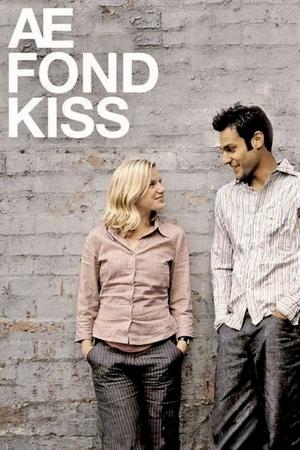
Jess Bhamra, the daughter of a strict Indian couple in London, is not permitted to play organized soccer, even though she is 18. When Jess is playing for fun one day, her impressive skills are seen by Jules Paxton, who then convinces Jess to play for her semi-pro team. Jess uses elaborate excuses to hide her matches from her family while also dealing with her romantic feelings for her coach, Joe.
The story of a German singer named Willie, who while working in Switzerland, falls in love with a Jewish composer named Robert, whose family is helping people to flee from the Nazis. Robert’s family is skeptical of Willie, thinking she could be a Nazi as she becomes famous for singing the song “Lili Marleen”.
In Casablanca, Morocco in December 1941, a cynical American expatriate meets a former lover, with unforeseen complications.
Gabriel, Bobby and Costa are old friends from Altona, a multicultural hood in Hamburg. Just out of prison, Gabriel wants to turn his back on crime, but the others continue to operate as petty criminals. Friendships are tested as the trio navigate a dark world of mafia bosses and deals gone wrong.
The true story of pianist Władysław Szpilman's experiences in Warsaw during the Nazi occupation. When the Jews of the city find themselves forced into a ghetto, Szpilman finds work playing in a café; and when his family is deported in 1942, he stays behind, works for a while as a laborer, and eventually goes into hiding in the ruins of the war-torn city.