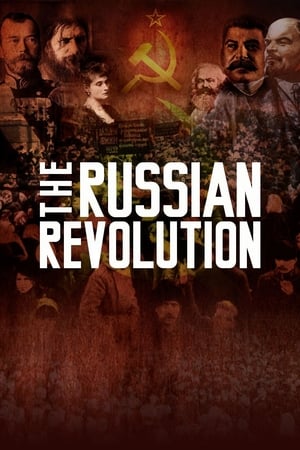
Starting in 1881 this film shows the personal battle between Lenin's Ulyanov family and the royal Romanovs that eventually led to the Russian revolution.
In the 19th century, China held the monopoly on tea, which was dear and fashionable in the West, and the British Empire exchanged poppies, produced in its Indian colonies and transformed into opium, for Chinese tea. Inundated by the drugs, China was forced to open up its market, and the British consolidated their commercial dominance. In 1839, the Middle Empire introduced prohibition. The Opium War was declared… Great Britain emerged as the winner, but the warning was heeded: it could no longer depend on Chinese tea. The only alternative possible was to produce its own tea. The East India Company therefore entrusted one man with finding the secrets of the precious beverage. His mission was to develop the first plantations in Britain’s Indian colonies. This latter-day James Bond was called Robert Fortune – a botanist. After overcoming innumerable ordeals in the heart of imperial China, he brought back the plants and techniques that gave rise to Darjeeling tea.
Ken Russell revisits the life of Elgar, with musical background provided by the composer's works.
Miras (Heritage) looks at the activities of the Nobel Brothers in the oil industry of Azerbaijan, one of the world’s oldest oil producers. After founding the first foreign company in the city of Baku at the end of the 19th century, the Nobel brothers name was glorified; yet few people know about the deep connection of the Nobel Prizes with Baku’s oil.
The epic life story of Alice Guy-Blaché (1873–1968), a French screenwriter, director and producer, true pioneer of cinema, the first person who made a narrative fiction film; author of hundreds of movies, but banished from history books. Ignored and forgotten. At last remembered.
Photo sequence of the rare transit of Venus over the face of the Sun, one of the first chronophotographic sequences. In 1873, P.J.C. Janssen, or Pierre Jules César Janssen, invented the Photographic Revolver, which captured a series of images in a row. The device, automatic, produced images in a row without human intervention, being used to serve as photographic evidence of the passage of Venus before the Sun, in 1874.
Docudrama telling the story of a building with a breath taking career that began in the empire, flourished in the Weimar Republic, perished in the Nazi dictatorship, and was rebuilt after its partial destruction.
Waterloo Dead
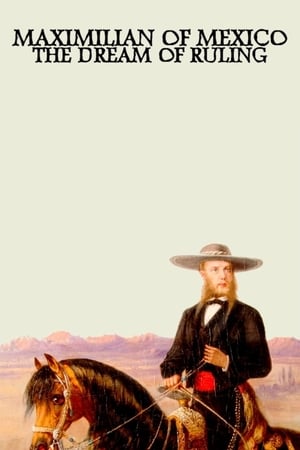
The life and struggles of Ferdinand Maximilian Joseph Maria of Habsburg-Lorraine (1832-1867), emperor of the Second Mexican Empire as Maximilian I of Mexico from 1864 to 1867 (under the wing of Emperor Napoleon III and the French Empire), his tragic confrontation with Mexican leader Benito Juárez, the defeat of the will and the end of a dream.
A parade of Gordon Highlanders in dress uniform march through the centre of Aberdeen on their way to the Boer War. Small children run around in excitement but are moved aside by a member of the regiment. Directed by Robert W. Paul.
Formerly lost film rediscovered in 1996, directed by William Friese-Greene.
A brief account of the Spanish-American War (1898) and the end of the Spanish Empire in the Caribbean Sea and the Pacific Ocean.
Dealing heavily with perceptions of time, Aeon documents the urban cityscape as Wellington transforms through a zen-influenced eternal cycle of birth, life, death and rebirth within a 24-hour period.
A new look at the public and private life of one of the most important statesmen in the history of Europe: Winston Churchill (1874-1965), soldier, politician, writer, painter, leader of his country in the darkest hours, winner of the Nobel Prize in Literature, a myth, a giant of the 20th century.
Charles Louis Schulmeister (1770-1853) was a smuggler and a revolutionary, but also a chief of police and Napoleon Bonaparte's favorite spy. A look back on his adventurous life with the purpose of unraveling the many mysteries of his unique path.
The sarcastic account of the assassination of five Spanish politicians between 1870 and 1973 is mixed with the narration of five short stories by Edgar Allan Poe illustrated by five skillful pencil artists. A documentary, a video essay, a collage, a provocative experiment where various pop culture figures and icons perform unexpected cameos. The macabre joke of a jester. Never more.
Germans colonized the land of Namibia, in southern Africa, during a brief period of time, from 1840 to the end of the World War I. The story of the so-called German South West Africa (1884-1915) is hideous; a hidden and silenced account of looting and genocide.
An account of the last two centuries of the Anthropocene, the Age of Man. How human beings have progressed so much in such a short time through war and the selfish interests of a few, belligerent politicians and captains of industry, damaging the welfare of the majority of mankind, impoverishing the weakest, greedily devouring the limited resources of the Earth.
Le Baron et l'Empereur : Japon, la voie de la guerre
Sir John Franklin set off from England in 1845 with two ships and 129 men to be the first to navigate the Northwest Passage, a new trade route over the top of the world, when Franklin’s ships vanished without a trace. Now, a team of explorers attempts to solve the mystery by retracing Franklin’s route in search of his long-lost tomb.