In the mid-20th century, in Fucecchio, near Florence, Buoso Donati, an elderly collector and wealthy antique dealer, has just passed away. He lies in his bed, surrounded by relatives feigning grief. They are all worried, as the deceased has bequeathed his entire fortune to a monastery. They search frantically for the will. The young Riniccio, Donati’s nephew, finds it but agrees to show it to the family only if they promise to let him marry Lauretta, the daughter of Gianni Schicchi, a local figure of dubious reputation. Everyone accepts the condition and discovers to their horror that the rumour was true: the monks are set to inherit the fortune. Riniccio suggests calling on Schicchi for help, much to the family’s disgust. Summoned, Riniccio arrives at the house accompanied by his daughter. He proposes keeping the death a secret, taking his place, and instructing a doctor and a notary to alter ‘his’ testamentary dispositions. But has the hunter become the hunted? Not so sure...
In late 18th-century Italy, in the mansion of Don Magnifico, the young and pretty Angelina works as a maid. Teased by her two frivolous half-sisters, Clorinda and Tisby, Angelina believes she is in love with a young valet and goes to the ball. Dressed in her finest finery, she meets the man who is in fact the Prince and flees from him after giving him a bracelet that will allow him to recognise her a little later. The masks come off, and kindness and love triumph! ‘La Cenerentola’ is the last opera buffa composed by Gioachino Rossini for an Italian audience. A dramma giocoso in two acts, with a libretto by Jacopo Ferretti, freely adapted from Charles Perrault’s fairy tale ‘Cinderella’ (1697), omitting the magic in favour of a realism tinged with humour and social criticism. Premiered for the Rome Carnival at the Teatro Valle in Rome on 28 January 1817. Recorded live at Glyndebourne Opera, Lewes, East Sussex, on 2 and 4 June 2005.
The writer Dario Fo applies his inventive genius to Rossini's comic opera in its premiere DVD release. Recorded in 2005 under the musical direction of Maurizio Barbacini, Fo's production brings fresh vitality and colour to the story of Lisetta, and of her father Don Pomponio's increasingly ridiculous attempts to find a husband for her through an advertisement in the newspaper LA GAZZETTA. Filmed using high definition cameras with multitrack sound.
Legendary opera house, La Scala is more than just a stage— it’s a dream factory. And this year, over the course of four intensive months, 900 people will work relentlessly to incarnate Verdi’s opera masterpiece, ‘‘The Force of Destiny”. Under the masterful eyes of director Léo Muscato, we will follow set designer Federica Parolini, as her sketches evolve into towering architectural marvels crafted by dedicated artisans. In the costume workshop, Silvia Peroni and her team weave magic with fabric and thread through their expert hands. Then, a stellar international cast of virtuosos arrives in Milan, ready to fill La Scala’s hallowed halls with their soaring voices. But with the clock ticking, and expectations going through the roof, tensions unfold like an opera of its own. As Milan holds its breath for the legendary Prima on the 7th of December, the stakes couldn’t be higher. Will they be ready in time for curtain rise?
Arabella, Op. 79, is a lyric comedy or opera in three acts by Richard Strauss to a German libretto by Hugo von Hofmannsthal, their sixth and last operatic collaboration.
Rusalka
Grétry: Richard Coeur de Lion
This was Domingo's last set of performances as Otello in La Scala. In spite of his relatively advanced age, he is still in excellent form, both vocally and in terms of stage presence. Nucci is also his usual self, delivering a performance of very high standard. Barbara Frittoli is an excellent Desdemona, in good voice and gives a very moving performance. Muti conducts with great emotion and tight accuracy, conveying the full orchestral drama of the score.
In Rigoletto, the deformed figure of the hunchbacked jester at the Mantuan court acts as a foil to his cynical and powerful master, an unscrupulous philanderer contrasted with his cruel and unforgiving fool. Rigoletto encourages and welcomes the Duke's conquests, pitilessly mocking his victims until he discovers that the Duke has abducted the one person he genuinely loves, his own daughter. As a result, the character of the court jester is transformed into a tragic figure who, in spite of his evident immorality and malice, allows us to sense the devotion he feels for his daughter and his horror at being destroyed by the same despotic world as that which he himself has helped to create.
A lonely mother and her son go to the opera where a performance of Cherubini’s opera Medea is given. It is the mother’s birthday and she wanted to surprise her son by inviting him to the opera. But, the son’s plan were different and he is quite upset about it. His mother tries to break the silent barrier behind which he hides. A semblance of discussion begins, not without humour. Tension is present but, as the performance goes on, both find themselves astounded, captured, alone in the opera house.
This filmed version of Strauss' shocker features Teresa Stratas as opera's most depraved teenager, and she's as perfect a Salome as one would ever hope to see or hear. Stratas inhabits the role, exploring the character's sensuousness as she vainly woos Jochanaan, her venomous hatred when she's rejected, the crazed look in her eyes when she demands his head--on a silver platter, no less. Such complete identification with a role, especially of a character so malignant helps make this 1974 Salome stand out among the many fine DVDs of the opera.
Without question, this is an incredibly bizarre production. The revised storyline makes little sense, and there is a surprising amount of violence and sexual innuendo. However, the singers are superb, both vocally and in regard to their stage presence and acting, the orchestra plays beautifully, the chorus is wonderful, and the set is as clever as it is strange. It's definitely not for purists, or for someone new to this particular opera. But for someone who's seen Die Entfuhrung before, and is familiar enough with the original story to not miss it, watching Belmonte, Constanze, Blonde, Pedrillo, and Osmin embark on an entirely new adventure -- and push the boundaries of good taste -- is rather enjoyable.
Shortly before his death, Romitelli together with his friend Paolo Pachini and the poetess Kenka Lèkovich, resurrected the dream of a total scenic art (a furnace of sensations, they called it, an_ initiation rite_) in the manner of the Futurists: rhythms and gleams of light striking metals (for the video part), poems in iron and chrome singing of fusion with matter (Kenka Lekovich), acoustic/electric music highly amplified, filtered, spatialised, in as artificial a manner as possible. An Index of Metals bears vigorous witness to this determination to go beyond: sizzling orchestration, electric and psychedelic; a voice which plays on effects, murmurs with reverb, cackles into a megaphone, screams like a pop star; and an electric guitar score of a kind that no ‘serious’ composer has ever written, sliding across an infinite range of tones with a lightness of touch and blurring of contours.
By the year 2056, an epidemic of organ failures has devastated the planet. The megacorporation GeneCo provides organ transplants on a payment plan — and those unable to fulfill their plans have their organs repossessed. In the midst of this, a sickly teenager discovers a shocking secret about herself, her father, and their connection to GeneCo.
In Benjamin Britten's operatic adaptation of Henry James' masterwork, a naive governess (Helen Field) arrives at a country manor and soon discovers that it holds a murky secret involving her charges and two ghostly servants who wield a sinister influence on them. The taut, atmospheric production also stars Sam Linay, Machiko Obata, Menai Davies and Phyllis Cannan, with the Stuttgart Radio Symphony Orchestra providing accompaniment.
Recorded at the Glyndebourne Festival Opera in 1995, this acclaimed presentation of composer Gioachino Rossini's epic opus ERMIONE is based on Jean Racine's play "Andromache." Set in Troy after the city fell to the Greeks, the production recounts the rancorous battle between widow Andromache and Helen of Troy's green-eyed daughter, Ermione for the love of Pyrrhus
Glyndebourne's pulsating new production of the Waltz King's much-loved comic operetta. Its story centers on a magnificent masked ball, given by a Russian prince, that brings together all the main characters in various disguises. The three-act journey from boudoir to ballroom to jail provides ample opportunities for farce and humor, but also for genuine human emotion and a surprisingly realistic view of urban life.
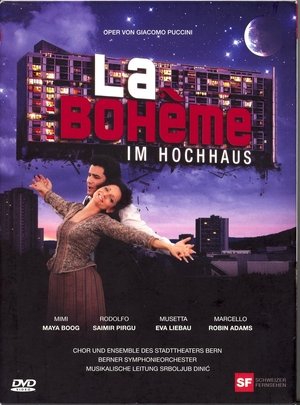
"La Bohème" is one of Giacomo Puccini's most popular and timeless works and the second-most performed opera at New York's Metropolitan Opera. This production, directed by the legendary Franco Zeffirelli, features José Carreras, Teresa Stratas, Renata Scotto and Richard Stilwell. The opera is replete with extraordinary visual beauty as it presents the tragic story of young bohemians struggling to make it in the world.
Armida
Astrologové