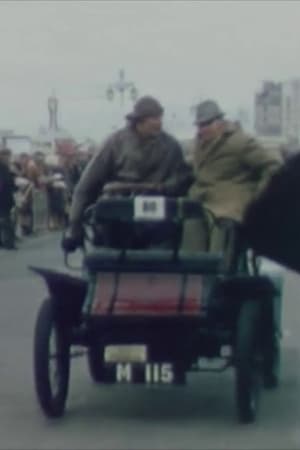
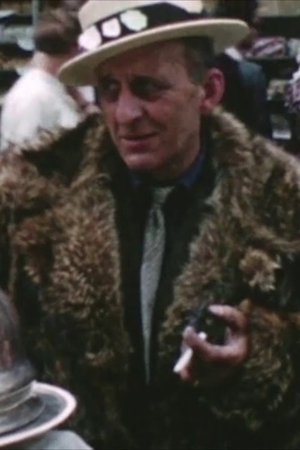
Incident at Restigouche is a 1984 documentary film by Alanis Obomsawin, chronicling a series of two raids on the Listuguj Mi'gmaq First Nation (Restigouche) by the Sûreté du Québec in 1981, as part of the efforts of the Quebec government to impose new restrictions on Native salmon fishermen. Incident at Restigouche delves into the history behind the Quebec Provincial Police (QPP) raids on the Restigouche Reserve on June 11 and 20, 1981. The Quebec government had decided to restrict fishing, resulting in anger among the Micmac Indians as salmon was traditionally an important source of food and income. Using a combination of documents, news clips, photographs and interviews, this powerful film provides an in-depth investigation into the history-making raids that put justice on trial.
The story of five girls and one epic night. The girls will find love, lust, girl-fights, rock and roll, and a whole lot of stoned sorority girls.
Denise, a botanist, is working in the swamps in a part of Turkey, planting and researching local flora. In her evenings she sometimes meets with her lover Hamit, a simple man at first glance. But he is making his living with human trafficking which he keeps a secret from Denise. When Hamit learns that Denise is being sent back to her home country soon, one final trafficking job takes a dark outcome.
As the Icelandic economy collapses, Gudfinna (58) struggles to retain her dignity.
Valia is a young woman used to observing others as part of her work, and so reality is becoming a canvas where characters live out a kind of life. She records the same shot with a small video camera: the street in front of her apartment where there is a restaurant. Some days later, she meets Guido, the owner of the Italian restaurant. Guido is her antithesis, perfectly adapted to daily life and conscious of his own social dimension. Valia, on the other hand, lives in this two-dimensional world, separated from what is actually happening and what she observes. Valia's life changes when she discovers a small lump on her breast and she is diagnosed with breast cancer. With Guido, Valia recovers her otherness while facing her end.
"If buildings could talk, what would they say about us?" CATHEDRALS OF CULTURE offers six startling responses. This 3D film project about the soul of buildings allows six iconic and very different buildings to speak for themselves, examining human life from the unblinking perspective of a manmade structure. Six acclaimed filmmakers bring their own visual style and artistic approach to the project. Buildings, they show us, are material manifestations of human thought and action: the Berlin Philharmonic, an icon of modernity; the National Library of Russia, a kingdom of thoughts; Halden Prison, the world's most humane prison; the Salk Institute, an institute for breakthrough science; the Oslo Opera House, a futuristic symbiosis of art and life; and the Centre Pompidou, a modern culture machine. CATHEDRALS OF CULTURE explores how each of these landmarks reflects our culture and guards our collective memory.
A group of passionate young environmentalists spend 100 days in the jungles of Borneo in effort to save the rainforests and its endangered orangutans in this Australian documentary...
The arrival of a handsome new farmhand threatens the balance between a farmer and his daughter.
Agnes, a teacher from the Hessian provinces, has come to Berlin to identify a dead girl who might be Lydia, her runaway daughter. It turns out not to be Lydia, but Agnes stays in the city anyway. Still frantically looking, she comes a young stray called Ines who no longer leaves her side...
This short documentary is the portrait of an 88-year-old woman who lives alone in a log cabin without running water or electricity in the Williams Lake area of British Columbia. The daughter of a Shuswap chief, Augusta lost her Indian status as the result of a marriage to a white man. She recalls past times, but lives very much in the present. Self-sufficient, dedicated to her people, she spreads warmth wherever she moves, with her songs and her harmonica.
Documentary that highlights 18 women and covers a period of time from the 50's to the 90's. The women chosen were selected because they represent the real diversity within both feminism and independent film and video. They range in age from 65 to 25. They are black, white, Puerto Rican, Yugoslavian, Asian American, biracial. They are straight, gay and bisexual. What they share is a need to express their own interpretations of what American culture is and could be and a belief that this work is made particularly powerful through the media.
A fatally ill mother with only two months to live creates a list of things she wants to do before she dies without telling her family of her illness.
A solitary nurse bonds with a badly burned patient who survived an accident on an oil rig.
The strange comedy film of two close brothers; one, Wilbur, who wants to kill himself, and the other, Harbour, who tries to prevent this. When their father dies leaving them his bookstore they meet a woman who makes their lives a bit better yet with a bit more trouble as well.
Based on a true story, Angels and Ghosts tells the emotive journey of Amber, a young girl who is on a quest to find her brothers who have disappeared. It's a gripping animated adventure exploring the potent themes of mental health and family bonds. The story, told as a monologue from Amber's perspective, is narrated by Oscar nominated actress Samantha Morton.
In the last days of 1999, ex-cop turned street hustler Lenny Nero receives a disc which contains the memories of the murder of a prostitute. With the help of bodyguard Mace, he starts to investigate and is pulled deeper and deeper in a whirl of murder, blackmail and intrigue.
A boy named Harley and his family attend a taping of The Banana Splits TV show, which is supposed to be a fun-filled birthday for young Harley and business as usual for Rebecca, the producer of the series. But things take an unexpected turn - and the body count quickly rises. Can Harley, his mom and their new pals safely escape?
Film adaptation by Straub and Huillet of Hölderlin’s 1798 tragedy on the symbolic death of Empedocles, the legislator in Ancient Greece.
In the days leading up to a possibly career-changing exhibition, a sculptor navigates her relationships with family, friends, and colleagues.
After Xiao Yu's mother died in an accident, she moved back to live with her birth father who she knows little about. Gradually, they grew to know each other and to accept each other for who they are.