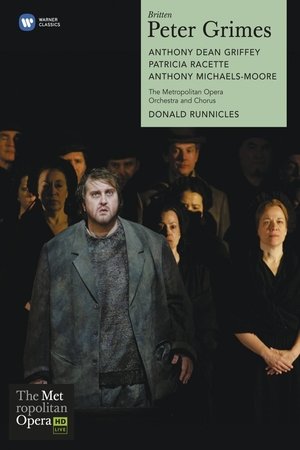
Anthony Dean Griffey creates a haunting portrait of the outcast fisherman who struggles under the burden of presumed guilt. This chilling production by Tony Award-winning director John Doyle also features the superb Patricia Racette as the sympathetic Ellen Orford and the Met chorus in a truly hair-raising performance as the oppressively judgmental fishing village.
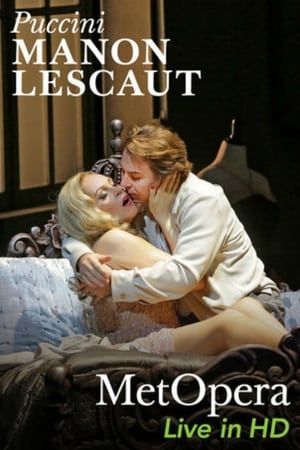
Kristine Opolais is the young woman whose conflicting desires for love and luxury lead to her tragic end, and Roberto Alagna plays the man who falls for her in Puccini’s early hit. Richard Eyre’s elegant production, which sets the action in 1940s occupied France, was one of the highlights of the Met’s 2015–16 season. Massimo Cavalletti as Manon’s brother and Brindley Sherratt as her aging admirer co-star, and Principal Conductor Fabio Luisi is on the podium.
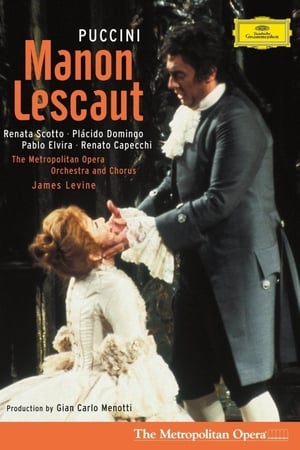
All the throbbing eroticism—and ultimate heartbreak—of Puccini’s youthful score is unleashed by James Levine and his top-flight cast. Plácido Domingo is Des Grieux, the handsome, headstrong young aristocrat who falls head over heels for the enticing, impetuous Manon Lescaut (Renata Scotto). Manon returns his love, but her obsession with luxury ruins them both. Gian Carlo Menotti’s opulent production, with sets and costumes by Desmond Heeley, superbly captures the colorful world of 18th century France.
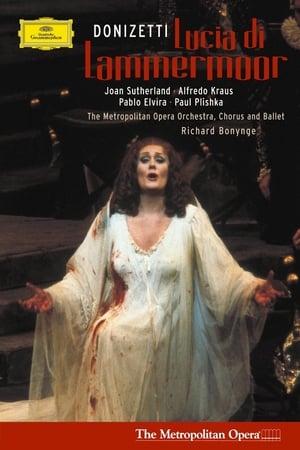
This telecast offers a rare opportunity to see the legendary Joan Sutherland in the role that first catapulted her to international stardom. She drove audiences wild by the way her opulent voice caressed the music’s long phrases and sprinted effortlessly through the fiendish runs, trills, embellishments and stratospheric high notes. One of the glories of the operatic world, her portrayal of Donizetti’s hapless heroine is a multifaceted and moving characterization. The incomparable tenor Alfredo Kraus is Edgardo, the man Lucia loves but cannot have. (Performance taped November 13, 1982. Broadcasted September 28, 1983.)
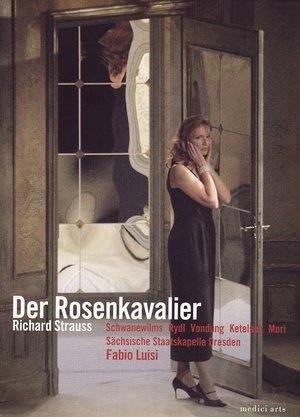
The Semperoper caused a sensation in November 2007 when it visited Japan for the first time in twenty-six years. The demand for tickets and the audience's enthusiasm were unprecedented, not least because the company was staging a piece that is performed more authentically in Dresden than anywhere else in the world: Richard Strauss' Der Rosenkavalier, which received its first performance in Dresden in 1911. Leading the ensemble was the radiant-voiced and profoundly thoughtful Marschallin of Anne Schwanewilms.
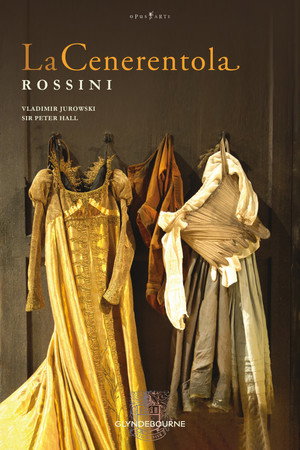
In late 18th-century Italy, in the mansion of Don Magnifico, the young and pretty Angelina works as a maid. Teased by her two frivolous half-sisters, Clorinda and Tisby, Angelina believes she is in love with a young valet and goes to the ball. Dressed in her finest finery, she meets the man who is in fact the Prince and flees from him after giving him a bracelet that will allow him to recognise her a little later. The masks come off, and kindness and love triumph! ‘La Cenerentola’ is the last opera buffa composed by Gioachino Rossini for an Italian audience. A dramma giocoso in two acts, with a libretto by Jacopo Ferretti, freely adapted from Charles Perrault’s fairy tale ‘Cinderella’ (1697), omitting the magic in favour of a realism tinged with humour and social criticism. Premiered for the Rome Carnival at the Teatro Valle in Rome on 28 January 1817. Recorded live at Glyndebourne Opera, Lewes, East Sussex, on 2 and 4 June 2005.
The writer Dario Fo applies his inventive genius to Rossini's comic opera in its premiere DVD release. Recorded in 2005 under the musical direction of Maurizio Barbacini, Fo's production brings fresh vitality and colour to the story of Lisetta, and of her father Don Pomponio's increasingly ridiculous attempts to find a husband for her through an advertisement in the newspaper LA GAZZETTA. Filmed using high definition cameras with multitrack sound.
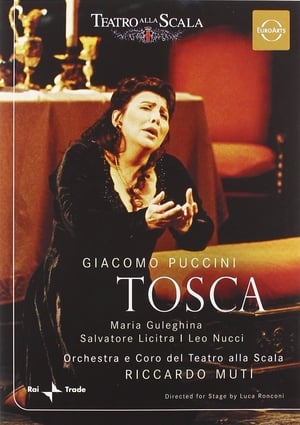
Tosca is an opera in three acts by Giacomo Puccini to an Italian libretto by Luigi Illica and Giuseppe Giacosa. It premiered at the Teatro Costanzi in Rome on 14 January 1900. This version is conducted by Riccardo Muti at La Scala, Milan.
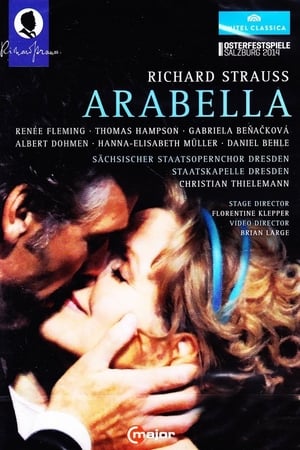
2014 marks a year of celebration recognizing the 150th birthday year of the German late-Romantic orchestral, operatic and lied master composer, Richard Strauss (1864-1949). Arabella (premiered 1933, Dresden) was the last of the half dozen Strauss works to feature a libretto by the great Austrian writer Hugo von Hofmannsthal. This production, from the most recent Salzburg Easter Festival is, after Capriccio, the second of three Richard Strauss operas C Major is releasing in honor of the composers birth, life and work. The star-laden cast includes soprano Renèe Fleming, baritone Thomas Hampson, Albert Dohmen (Covent Garden, Wiener Staatsoper, MET) and Gabriela Beaková (Wiener Staatsoper, Covent Garden). With Christian Thielemann and the Staatskapelle Dresden, the music of Richard Strauss is in the best of hands. (ORF) Thielemann gets the best out of the cast...especially Renée Fleming with her luxurious soprano FAZ
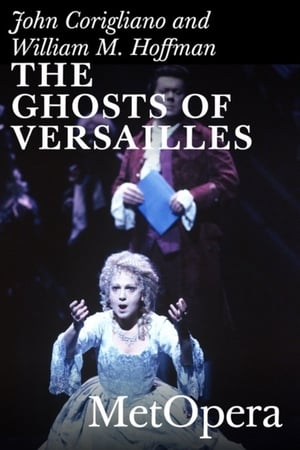
What happened to Figaro and his friends after the events told in Rossini’s and Mozart’s operas? One possible sequel is told in John Corigliano’s “grand opera buffa” The Ghosts of Versailles—an uproariously funny and deeply moving work inspired by Beaumarchais’s third Figaro play, La Mère Coupable, and commissioned by the Met to celebrate its 100th anniversary. This telecast captures its world premiere run, conducted by James Levine. Håkan Hagegård is Beaumarchais, Figaro’s creator, who is deeply in love with Marie Antoinette (Teresa Stratas in a heart-searing performance) and determined to rewrite history and save her from the guillotine. A young Renée Fleming, at the beginning of her international career, sings the unfaithful Rosina. Gino Quilico is the wily Figaro who tries to take matters in his own hands, and Marilyn Horne stops the show as the exotic entertainer Samira.
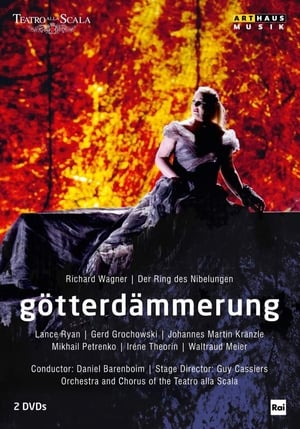
Götterdämmerung, the final instalment of Wagner’s Ring of the Nibelung, is a story of human passions. Two essentially benevolent creatures, involved with and possibly doomed by their traffic with the gods, find treachery and evil in the world of the humans, and are ruined by the dark side of humanity. Iréne Theorin, acclaimed worldwide for her portrayal of Wagner’s heroines, stars as Brünnhilde opposite Lance Ryan, who continues his radiant portrayal of the tragic hero Siegfried. The strong cast also includes Mikhail Petrenko as the dark antagonist Hagen and Johannes Martin Kränzle, who once again shines as his father Alberich. Waltraud Meier has a memorable appearance as Brünnhilde’s sister Waltraute. With this 2013 recording of Götterdämmerung, the musically and visually compelling Scala Ring Cycle by Daniel Barenboim and Guy Cassiers was completed and proved to be one of the highlights of the Richard Wagner bicentenary.
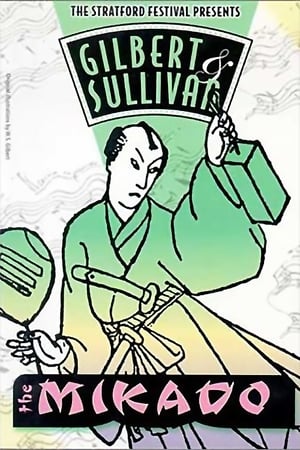
In a small Japanese town, Ko-Ko is appointed to the unenviable position of executioner. Knowing he must successfully perform before the appearance of the Mikado in a month's time, Ko-Ko finds a suitable victim in Nanki-Poo, who is distraught over his unrequited love for the maiden Yum-Yum. Nanki-Poo agrees to sacrifice his life if he is allowed to spend his remaining days with Yum-Yum, who is betrothed to Ko-Ko. Filmed live from the 1982 Stratford Festival in Ontario.
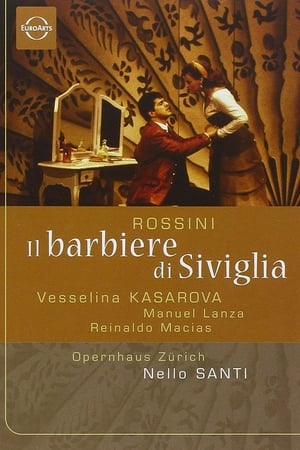
Live performance from Zürich Opera House, 2001. “Vesselina Kasarova’s Rosina turned this Barber into a major event. Pearling coloratura, endless resources of vocal colour and nuance and phenomenal acting versatility became mere means to an end: that of making Rosina into a human being of flesh and blood, with heart, humour and considerable brains.
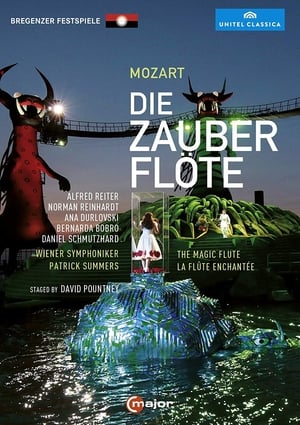
What begins like a fairy-tale turns into a whimsical fantasy halfway between magic farce and Masonic mysticism: The Magic Flute links a love story with the great questions of the Enlightenment, juxtaposes bird-catcher charm with queenly vengeance, and bewitches the listener with music that mixes cheerful melodies, lovers’ arias, showstopping coloraturas and mysterious chorales. W. A. Mozart’s opera premiered in 1791 and is one of the most often performed operas in the world. The production on the Bregenz Festival lake stage impresses the audience with a fantastic setting framed by three dog-dragons, each of them more than twenty meters in height. “David Pountney finds stunning answers to the everlasting questions surrounding ‘The Magic Flute’.” (Tagesspiegel) “The ‘play on the lake’ in Bregenz takes the audience into a fantasy world.” (Salzburger Nachrichten)
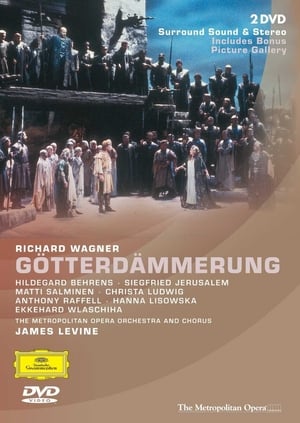
The stupendous climax to Wagner’s four-part Ring cycle is brilliantly realized by the Otto Schenk/Günther Schneider-Siemssen production and byJames Levine’s monumental conducting. The Met orchestra, chorus, and an all-star cast make this Götterdämmerung one that truly rises to the occasion. Hildegard Behrens’s Brünnhilde must be experienced to be believed, as does Matti Salminen’s richly sung, domineering Hagen. At the center of the drama is Siegfried Jerusalem as Siegfried, who does not realize he has been drawn into a plot of betrayal until it is too late. Christa Ludwig is magnetic as Waltraute and Ekkehard Wlaschiha is a compelling Alberich.
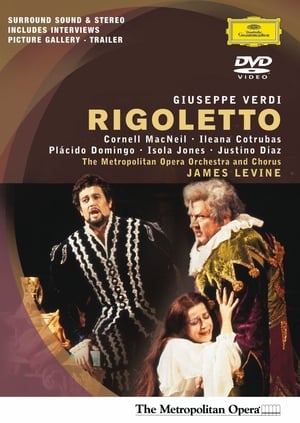
A Victor Hugo play, haunting and scandalous, provided the inspiration for Verdi’s mid-career masterpiece. A vengeful but misguided court jester strives to save his daughter from a duke’s licentious clutches, but can't part with the feeling that a curse looms over all of his actions. In Rigoletto, the composer introduces several of his most iconic arias and duets—as well as an 11th-hour quartet that counts among the finest moments in opera.
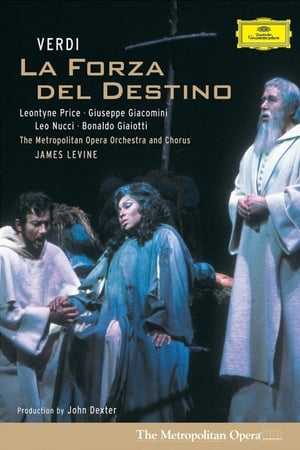
Leonora plans to elope with Don Alvaro, but he accidentally shoots and kills her father, who curses them as he dies. The lovers go on the run, but get separated. Bent on revenge, Leonora's brother Don Carlo, hunts them down. Verdi painted an immense canvas with this dark but tuneful opera, vividly brought to life in John Dexter’s production, with sets by the great Eugene Berman. The legendary Leontyne Price is seen in one of her greatest roles, Leonora. Price’s soaring voice encompasses every nuance of Leonora’s emotion as she moves from joy through resignation to ultimate heartbreak. James Levine’s brilliant leading of the Met orchestra and chorus is a lesson in Verdi style. Giuseppe Giacomini is Alvaro, the man Leonora loves, and Leo Nucci is Don Carlo, the dark instrument of their Fate.
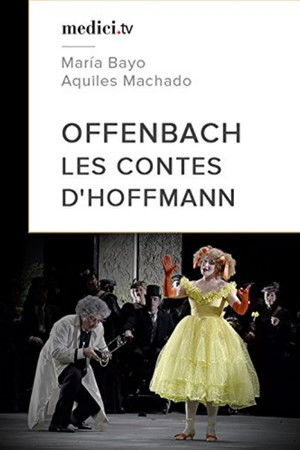
Giancarlo Del Monaco's passionate and intelligent production of Jacques Offenbach's magnum opus creates a climactic kaleidoscope of deep and convincing emotions. A highly credible incarnation of the pitiable Kleinzach he sings about, Aquiles Machado is the poet who loses his romantic idealism, his reflection and finally his soul to a 'trio of charming enchantresses'.
“Let us assume that Switzerland is truly a paradise. The music hereto was written long ago. We have merely forgotten it.” (Daniel Schmid) This is the material from which the most Swiss of all operas is made: the legendary Wilhelm Tell – a Swiss hero: straightforward, a primus inter pares of the indomitable freedom fighters, a good shot, surefire. A myth that becomes a poetic playground: nature in turmoil, the struggle for freedom and forbidden love. A legendary overture at a gallop with an iconic post horn motif – all this and much more in the thirty-seventh and last opera by Rossini.
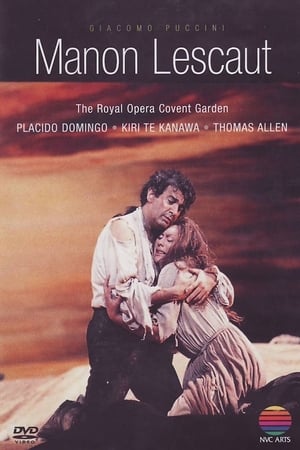
"Manon", wrote Puccini to his publisher Giulio Ricordi in 1889, "is a heroine I believe in and therefore she cannot fail to win the heart of the public." This turned out to be a truly prophetic statement since none of Puccinis other world successes were received on their first nights as rapturously as Manon Lescaut. The popularity of Puccinis great masterpiece has never waned and the highly acclaimed Götz Friedrich production at Covent Garden was hailed as an operatic milestone. Two of the worlds leading stars--Kiri Te Kanawa and Placido Domingo--head a strong cast conducted by the brilliant Italian conductor Giuseppe Sinopoli.