Commissioned by Opera North, the Brothers Quay created the installation and film 'She, So Beloved' inspired by Rainer Maria Rilke’s poem ‘Orpheus. Eurydice. Hermes.’ The Orfeo myth is re-told through a combination of art forms; film, dance, music and visual art contained within a contemporary staged installation to provide an intimate sensory experience.
A cinematic version of the Royal Winnipeg Ballet's adaptation of Bram Stoker's gothic novel Dracula. Filmed in a style reminiscent of silent Expressionist cinema of the early 20th century (complete with intertitles and monochrome photography), it uses dance to tell the story of a sinister but intriguing immigrant who preys upon young English women.
In County Durham, England, 1984, a talented young dancer, Billy Elliot, stumbles out of the boxing ring and onto the ballet floor. He faces many trials and triumphs as he strives to conquer his family’s set ways, inner conflict, and standing on his toes in a musical that questions masculinity, gender norms and conformity.
The extraordinary life of Carla Fracci, the greatest Italian ballerina of all time, told from her first steps at the Accademia del Teatro alla Scala in Milan to the stages of the most prestigious international theaters, passing through the controversial choices, difficult sacrifices, and important satisfactions that marked her rise. Freely inspired by the autobiography “Passo dopo passo – La mia storia” (Step by Step – My Story).
Dancer Vera Grabinska performs choreography by Pierre Michailowsky for the piece "Le Cygne", by Saint-Saëns, next to the artificial fountain on the grounds of the International Sample Fair in Rio de Janeiro. The dance movements alternate with images of swans in the water.
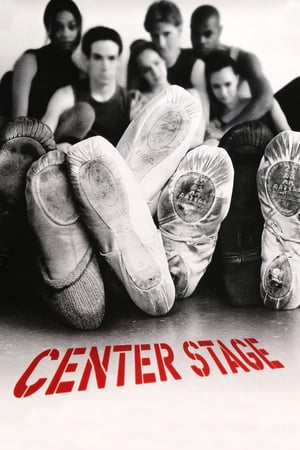
Ensemble drama centered around a group of ballet dancers, with a focus on one young dancer who's poised to become a principal performer.
Eikichi Yamashiro, who is a former contender for the boxing title, works as a manager at a Club Champion owned by his fiancé Natsuko’s father. He lost a title match five years ago as he was besotted by Natsuko, but Eikichi actually cannot give up the dream of the championship. One day, he meets Shuntaro Fuma, who is a punk kid but a promising boxer, and realizes the dream that he himself could never fulfill. Then, they together start to train with the aim of the title. Mari Shiraki is an up-and-coming ballerina under the patronage of Eikichi as well. Eikichi forbids Shuntaro and Mari to be romantically involved with someone during their training, however, they start to go on a date.
The Royal Ballet Company brings Squirrel Nutkin, Tom Thumb, Hunca Munca, Jemima Puddle-Duck, Jeremy Fisher, Pigling Bland, and Pigwig to the screen doing pirouettes and pas de deux in this filmed ballet production directed by Reginald Mills. The film more properly belongs, however, to choreographer Frederick Ashmore, composer John Lanchbery, and costume designer Rostislav Douboujinsky. This literal adaptation concerns the shy Beatrix Potter and how, when all of the toy animals in her room come to life, she emerges from her shell and begins to enjoy life. Sequences include a rowdy dance with Tom Thumb and Hunca Munca destroying a collection of plaster food, a midnight pas de deux between Pigling Bland and Pigwig, and a corps de ballet of dancing mice.
Jerome Robbins considered the Paris Opera Ballet as his second home after the New York City Ballet. This production in his honour brings together works displaying the infinite diversity of his sources of inspiration and his genius on stage. Be it in the energy of the large-scale Glass Pieces or the intimate sweetness of Afternoon of a Faun and A Suite of Dances, there emerges that rare capacity to make bodies follow the flow in a living comprehension of music. As the celebrated ballet Fancy Free, a veritable theatrical portrait of an era, enters the repertoire, Robbins reveals another facet of his talent.
This recording of all six cantatas from the Salle Henry Le Bœuf in the Palais des Beaux-Arts in Brussels, Belgium, in December 2012 features internationally renowned Bach expert Philippe Herreweghe and the Collegium Vocale Gent.
In 1920s Vienna, a young girl receives a magical doll on Christmas Eve.
Maiko Misono, who had been working abroad to become a professional ballet dancer, gave up on her dream and returned to Japan. With nothing else to do but ballet, she starts working as a Japanese language teacher at a high school near her parents' home. But for Maiko, who has just given up on her dream, high school is an ironic place full of dreams and hopes. In addition, she is made the advisor of the volleyball team, a position she has no experience in, and her homeroom class is full of unique students, which only adds to her anxiety.
The story follows the destruction of a marriage through consuming jealousy, the abandonment of a child and a seemingly hopeless love. Yet, through remorse and regret – and after a statue comes miraculously to life – the ending is one of forgiveness and reconciliation. Wheeldon continues his highly successful collaboration with designer Bob Crowley and composer Joby Talbot, the team behind Alice, in one of the highlights of The Royal Ballet Season.
Don Quixote is a 19th century work, choreographed by Petipa in 1869. Rudolf Nureyev revived it in 1966 and it is his version in La Scala Ballet’s repertoire, much loved by ballet audiences for its winning mix of technical bravura, exuberance and comic touches. La Scala Ballet brought the world of a fantastical Spain brilliantly to life with their sophisticated dance, music, costumes and sets, energetically accompanied by the Queensland Symphony Orchestra, conducted by David Coleman.
A melancholy poet reflects on three women he loved and lost in the past: a mechanical performing doll, a Venetian courtesan, and the consumptive daughter of a celebrated composer.
Ten short pieces directed by ten different directors, including Ken Russell, Jean-Luc Godard, Robert Altman, Bruce Beresford, and Nicolas Roeg. Each short uses an aria as soundtrack/sound, and is an interpretation of the particular aria.
Short Polish dance film
A dramatic, energetic adaptation of Heinz Spoerli's ballet based on Grieg's Peer Gynt by the Zurich ballet. Marijn Rademaker is excellent as the title character, clearly telegraphing the emotional range required. Each of the characters and the dramatic scenes are supported by the orchestral passages and songs provided by Grieg; some spoken word passages extracted from the Ibsen play.
La Esmeralda is a ballet in three acts and five scenes, inspired by the novel Notre-Dame de Paris by Victor Hugo, originally choreographed by Jules Perrot to music by Cesare Pugni, with sets by William Grieve and costumes by Mme. Copère.
Dance film inspired by the life and work of the artists Camille Claudel and Auguste Rodin.