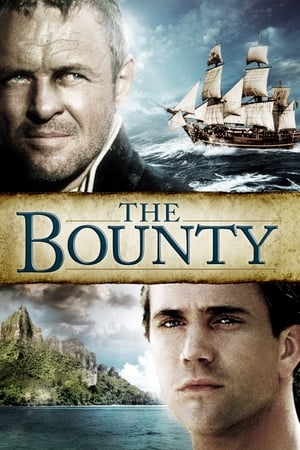
An idyllic voyage to Tahiti in 1789 turns a crew aboard the H.M.S. Bounty against its captain when they find a tropical paradise.
LSD: Trip to Where? is a 1968 film depicting the experiences of three sailors who experiment with LSD and marijuana. The film explores the impact of their drug use on themselves and their peers aboard a military vessel, highlighting the perceived dangers associated with these substances during that era.
Ramón Sampedro is a ship mechanic and part-time poet left a quadriplegic following a diving accident. Ramón fought for 30 years for the legal right to end his own life. He develops close relationships with his long-term lawyer Julia and his friend Rosa, who tries to convince him that his life is worth living. Despite his situation, Ramón manages to inspire those around him to live life to the fullest.
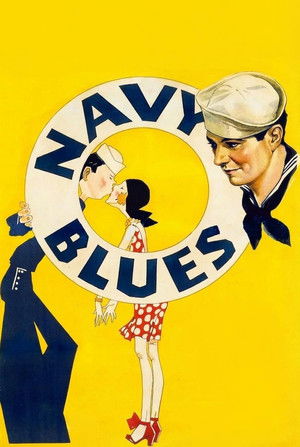
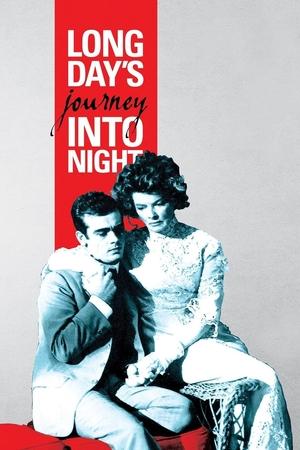
On shore leave, a young sailor meets and falls in love with a pretty young blonde. He goes home with her to meet her parents, but they don't approve of him at all. Their daughter takes offense at this, and in the ensuing argument she storms out of the house determined to live on her own.
A German submarine hunts allied ships during the Second World War, but it soon becomes the hunted. The crew tries to survive below the surface, while stretching both the boat and themselves to their limits.
A dramatized account of a great Russian naval mutiny and a resultant public demonstration, showing support, which brought on a police massacre.
Jewel thieves, murder, and a manhunt swirl around a sailor off a cargo ship in post-war London.
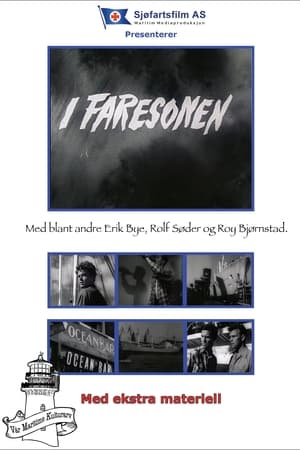
I Faresonen is a combination of a documentary and fictional approach to the problem of alcoholism -- or alcohol dependency. Tackling a problem common to other Nordic countries as well, director Bjoern Breigutu has focused on the life of sailors, among others, and how alcohol is used or abused in that sector of the population. This was the Norwegian entry at the 1961 Berlin Film Festival.
In 2003, a 16-year-old Filipino kid from the inner city is forced to leave his old life behind for the terrifying new world of Santa Barbara, California.
Shanghai nightclub singer Jean falls in love to a sailor, but after his ship left Shanghai, he is of the opinion that he cannot support her in the States, so he writes her in a letter, that he will not see her again, but two practical jokers intercept it and write another with an opposite content. Jean comes to the states, but her sailor doesn't acknowledge her, but the two don't give up trying to bring Jean and sailor back together.
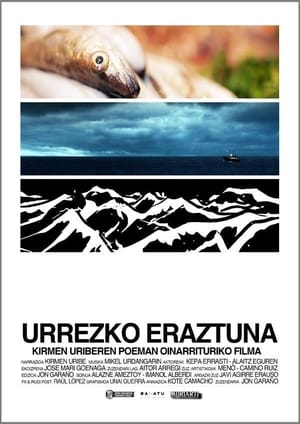
Father lost his wedding ring in the ocean once. Like all the sailors, he’d take it from his finger to put on a neck chain, not to lose the finger as the net went out.
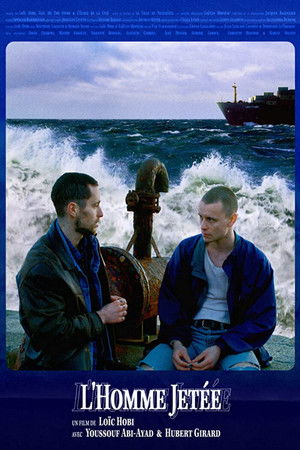
Theo is a young docker languishing in his native port. His life flows at the monotonous rhythm of cargo ships passing by. Through his encounter with Giuseppe, a disillusioned sailor ashore for a while, Theo will gather the courage to face the waves to escape his dull existence by trying to get into Giuseppe's gruff crew.
French sailor Querelle arrives in Brest and starts frequenting a strange whorehouse. He discovers that his brother Robert is the lover of the lady owner, Lysiane. Here, you can play dice with Nono, Lysiane's husband: if you win, you are allowed to make love with Lysiane; if you lose, you have to make love with Nono... Querelle loses on purpose.
George Raft plays a sailor who sets out to solve his father's mysterious death.
Águst Guðmundsson directed this Icelandic period drama, adapted from the short story We Must Dance by William Heinesen, and set on an island in 1913. Pétur (Gunnar Helgason) narrates, recalling the days when mainlanders arrived for a wedding. Flirtatious Sirsa (Pálína Jónsdottir) marries Harald (Dofri Hermannsson), son of a wealthy landowner on the island. Offshore, a ship is sinking, so the men form a rescue party, returning with the captain, the engineer, and several sailors. With a storm gathering, the engineer dies. The clergyman requests an end to the festivities as a mark of respect. Sirsa protests, but her new husband brings the celebration to a halt. The group then fragments into different activities, drunken or otherwise, and the sensual Sirsa directs her attention toward the handsome Ívar (Baldur Trausti Hreinsson). The film's score features traditional folk music.
Two stranded sailors get to know each other as they share their last moments together.
A sailor prone to violent outbursts is sent to a naval psychiatrist for help. Refusing at first to open up, the young man eventually breaks down and reveals a horrific childhood. Through the guidance of his doctor, he confronts his painful past and begins a quest to find the family he never knew.
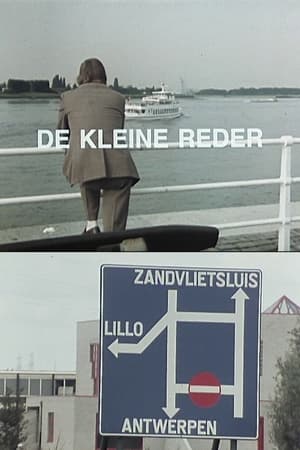
A film made for television, based on the book of the same name by Libera Carlier. A Flemish family decides to spend the summer holidays on de Schelde. Father Janssen buys a second-hand boat and together with his wife and two sons he sets sail. What follows is a sequence of pleasant moments and disappointments, watched by the sceptical mother Janssen.
During her holiday in Brest, a young Parisian falls in love with a sailor. But autumn comes and the two lovers have to part. They write to each other. Will their love resist at a distance, each living his life, him in Brest with his friends, she in Paris who keeps waiting for him? An impossible love story and the cross-portrait of two cities, Paris and Brest, between the realism of the color images and the poetry infused by the sepia black and white images, lives to the rhythm of the nostalgia of the two lovers...
Juca, a black kid, sees his friends and his mother being hit by his stepfather, without being able to do anything against it, but when he knows that he is the great-grandson of João Cândido, the leader of the sailors rebellion against the chibata hits adopted by Brazilian Navy till 1910, he takes an extreme attitude towards changing the course of his life.