After the Hungarian army was annihilated by the Mongols at the battle of Mohi, only the castle of Esztergom stood in the Mongolians' way of invading the rest of Europe. Batu Khan, the grandson of Genghis Khan, reaches the walls of Esztergom with his invincible troops. The castle's defenders, led by Eusebius, the canon of Esztergom, and a Spanish mercenary, Captain Simon, are preparing for the final battle. The sudden arrival of Cardinal Cesareani, the Papal Legate, coinciding with the Mongol Lunar New Year celebrations and the mystical practices of Eusebius, combine to offer the defenders a small glimmer of hope.
The TARDIS crew lands in the Himalayas of Cathay in 1289, their ship badly damaged, and are picked up by Marco Polo's caravan on its way along the fabled Silk Road to see the Emperor Kublai Khan. The story concerns the Doctor and his companions' attempts to thwart the machinations of Tegana, who attempts to sabotage the caravan along its travels through the Pamir Plateau and across the treacherous Gobi Desert, and ultimately to assassinate Kublai Khan in Peking, at the height of his imperial power.
Rajputana, India, 13th century. The tyrannical usurper Alauddin Khilji, sultan of Delhi, becomes obsessed with Queen Padmavati, wife of King Ratan Singh of Mewar, and goes to great lengths to satisfy his greed for her.
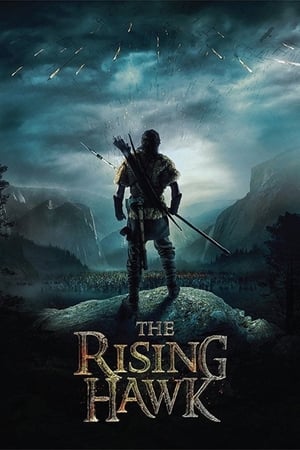
On his deathbed, the reigning king bestows power to an unexpected heir who must find strength within himself to unite his people against the violent crusades which threaten their freedom.
In the 1200s, a man arose whose ruthlessness was so feared, he emerged as the greatest empire builder ever known to mankind. Inspired by true historical events.
Devout Christians Töre and Märeta send their only daughter, the virginal Karin, and their foster daughter, the unrepentant Ingeri, to deliver candles to a distant church. On their way through the woods, the girls encounter a group of savage goat herders who brutally rape and murder Karin as Ingeri remains hidden. When the killers unwittingly seek refuge in the farmhouse of Töre and Märeta, Töre plots a fitting revenge.
Mikolás and his brother Adam end up with a young German hostage of noble blood during a robbery. While their clan prepares for the wrath of the German king, Mikolás is sent to pressure his neighbor Lazar into a defense pact. Persuasion fails and he abducts Lazar's daughter Marketa on the eve of her initiation as a nun in an act of vengeance.
Cast out by his father, young Ondrej joins the Order of the Teutonic Knights, where he is raised by strict monk Armin. After years of hardship, Ondrej escapes from the Order when he is wrongly punished, and sets out for his former home. Arriving to discover his father to be dead, Ondrej now not only assumes control of his father's properties, but seeks to marry his former stepmother.
Falkenštejn
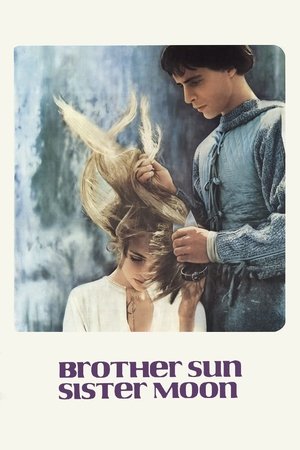
In his delirium from his return from war, Francesco Bernardone goes back in his memories to the days when he lived for parties and carnal pleasures. He slowly recovers, but after the illness he is no longer the Francesco that everybody knew. Instead of spending hours in taverns, he meditates on the beauty of God's creatures, soon renouncing his riches and his family with plans to rebuild an abandoned church and his life.
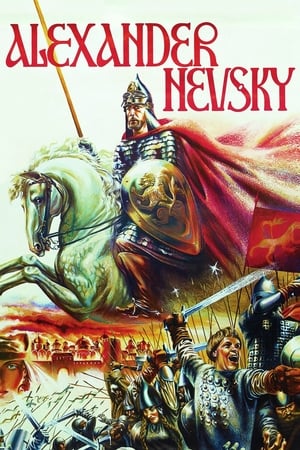
When German knights invade Russia, Prince Alexander Nevsky must rally his people to resist the formidable force. After the Teutonic soldiers take over an eastern Russian city, Alexander stages his stand at Novgorod, where a major battle is fought on the ice of frozen Lake Chudskoe. While Alexander leads his outnumbered troops, two of their number, Vasili and Gavrilo, begin a contest of bravery to win the hand of a local maiden.
In the early 1200s, Dogen brought Chinese Zen philosophy to Japan, and established the Japanese Zen school of Buddhism. He taught that a person was capable of realizing Buddhahood within himself, by way of Zazen. Zazen is extended hours of sitting and meditating to achieve a state of “Mu” (nothingness, or empty existence).
On 16 July 1212, a Crusader army made up of Castilians, Aragonese and Navarrese (but also French, English and Germans) confronted the army of the Almohad Caliph an-Nasir at the foot of the Sierra Morena mountain range. The Battle of Las Navas de Tolosa, as the battle is known, is considered the most important battle of the Middle Ages on the Iberian Peninsula and is a key event in the history of Spain. More than 800 years later, a group of archaeologists and specialists have begun an archaeological study of the battlefield. Is everything that has been said about the battle true? What secrets does the terrain hide? And, above all, what can we learn today about events that took place hundreds of years ago and that pitted tens of thousands of people against each other in the south of our country?
During the 13th century, a small village fights for freedom in the frontier landscape of the Carpathian Mountains against Mongolian invaders.
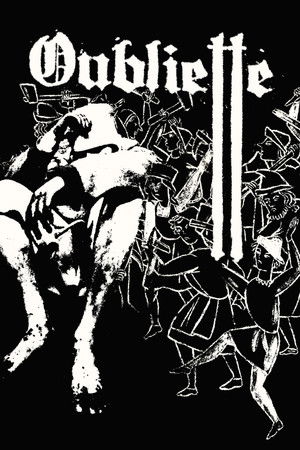
13th century France. To live, to survive, requires weapons. Which do you choose? Weapons of war, which give the power to punish and kill? Or the sword of knowledge, which gives the power to read and heal? Two brothers, separated long ago, must do battle. Alongside, and coming between them, a woman... Thomas, the mercenary, his body marked by scars of varying degrees of valor, left the family farm many years ago. When he returns, his mother, the local healer, is dead. She passed on her skills to her younger son, Arnaud. But he has lost his memory after a beating from a gang of ruthless outlaws. And so, Arnaud's young and defiantly resourceful wife, Guillemette, must persuade Thomas to help her in the quest for lost knowledge.
Assigned to accompany two priests on a mission to convert the court of Kublai Khan to Christianity, Marco Polo is abandoned in the mountains when the priests, doubting the very existence of China, turn back. Polo eventually pushes bravely forth alone toward the fabled country where he is accepted as an envoy into Khan's court. Marooned on the far side of the world, Polo, accompanied by his servant, Pedro, advances as a Mongol grandee for twenty extraordinary years. What he eventually brings back with him to the West is a chronicle that changed history forever.
Born Fernando de Bulhões, he was a precocious Portuguese youth, concerned with the suffering of the poor. Grown into a contemplative young man he renounces the world to join first the Augustinian Order and then the Franciscans order (where he takes the name Anthony) in his dedicated service to the faith.
Wenceslas II, who already has adult children Eliška and Václav, refuses to marry the young Alžběta Rejčka. In the end, he succumbs to the insistence of Abbot Konrád. The queen brings him Poland as a dowry, and Wenceslas II thus expands his empire. He still lives in the shadow of his great father, Přemysl Otakar II, and his lords reproach him for his weakness and inability to fight. Wenceslas is truly afraid of the moment when he will have to lead an army into the field and prefers to settle disputes diplomatically. His fencing teacher Hynek of Dubá and his mistress Anežka know about the king's weakness, and Václav seeks their company rather than his young wife. However, Rejčka admires the king and trusts him with the charm of a young girl. The enemy invades the country and advances quickly. It is necessary to confront him in the field, but the king hesitates and postpones the decision.
The life story of Blessed Zdislava of Lemberk, about whom legends rather than sparse historical references tell us that she was a deeply religious woman with healing powers who devoted herself entirely to the humble service of her sick and suffering neighbors.
In the year 1215, the rebel barons of England have forced their despised King John to put his royal seal on the Magna Carta, a seminal document that upheld the rights of free men. Yet within months of pledging himself to the great charter, the King reneged on his word and assembled a mercenary army on the south coast of England with the intention of bringing the barons and the country back under his tyrannical rule. Barring his way stood the mighty Rochester castle, a place that would become the symbol of the rebel's momentous struggle for justice and freedom.