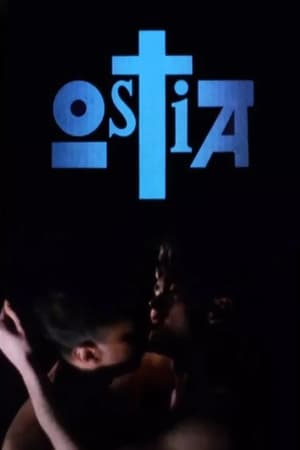
Ostia is a fascinating short film directed by Julian Cole and produced for the Royal College of Art, which reconstructs the events leading up to the murder of Pier Paolo Pasolini. Ostia relocates the proceedings to London and stars Derek Jarman as Pasolini. The film features an evocative dream sequence which is accompanied by poignant excerpts from Pasolini’s own poetry, as read by Jarman.
A short documentary exploring the ongoing relevance and power of 'Salò o le 120 giornate di Sodoma'.
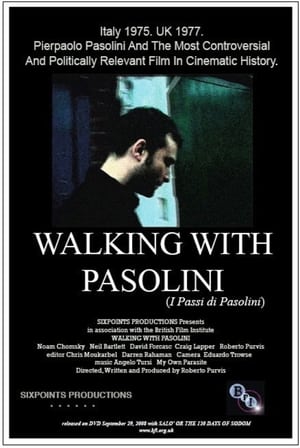
A documentary about Pier Paolo Pasolini and his film 'Salò o le 120 giornate di Sodoma'.
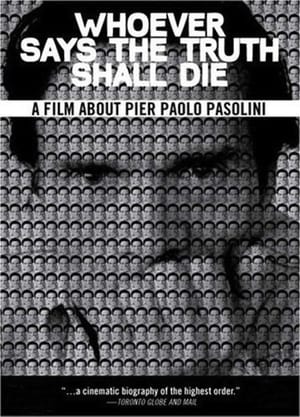
Philo Bregstein tells us this film looks at Pasolini's life and art to explain why he died. The film traces Pasolini's life chronologically - family roots, hiding during World War II, teaching, moving to Rome, being arrested and acquitted many times, publishing poems, getting into film, being provocative, and being murdered. Interviews with Alberto Moravia, Laura Betti, Maria Antonietta Macciocch, and Bernard Bertolucci are inter-cut with readings of Pasolini's poems and with clips from four films - primarily the Gospel According to St. Matthew - to illustrate his changing ideas and points of view. Bregstein makes a case for Pasolini's being lynched.
Portrait of Pier Paolo Pasolini and his literary and cinematographic activity in the proletarian Rome.
Behind the scenes footage of Pasolini and crew filming 'Salò o le 120 giornate di Sodoma'.
Based on the novel by Güzide Sabri Aygün, the film tells the relationship of a mentally-ill woman and the doctor whom she loved in her youth.
In "The Bride with the Black Veil" (1975), director Süreyya Duru continues to focus on social issues, exposing problems of the peasants and feodal relations.
A Russian Police Major is enlisted by the LAPD to help solve a series of gruesome murders perpetrated against young women by a sadistic sociopathic killer on the mean streets of Hollywood.
Based on Yılmaz Güney's script and filmed in semi-documentary style, the movie provides a fresh perspective on the history of labor issues in 1970s.
The film traces the destiny of Kapila, an outcast child who had been deemed by his fellow villagers to have supernatural powers of destruction, because of the timing of his solar eclipse birth.
A brothel disguised as a teahouse is staffed with old ladies long past their prime. However, things begin to change and become chaotic when the owner takes in a young girl.
With the help of his assistant Anja, Ottocaro Weiss intends to put the plague on stage: circumstances beyond his control and a lack of fresh talent have forced him to close down his flea circus. For Weiss, the plague means the «extinction of everything that makes life miserable and low and freedom along with it. Unbeknownst to him, he has won the support of a patron who is of the exact opposite opinion: for Johannes Wagner, the plague is an organising principle, and, aided by his agent Moosbrugger, he is able to smuggle a new number onto the programme. Whereas Ottocaro Weiss means to represent the plague theatrically, what appears on stage is the scientific reality of the rat-borne infestation.
The film tells the story of Pir Sultan Abdal, a famous folk poet in Turkey, who criticized some Ottoman governors, Hizir Pasha in particular and as a result was hung by him.
Four junkyard kids go into town looking for something to cure their hero, Grand Batche. On the way, they come across various symbols of society: the cop, the mayor, the postman, the madman, the artist...
An otherworldly evil is slipping into a small town in Sweden. Six unrelated girls have been chosen to fight this evil. Together they must overcome their differences in order to save themselves and the world.