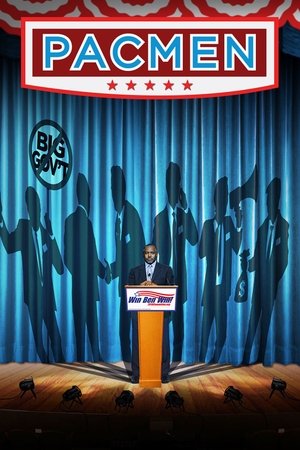
This observational documentary follows the men behind the Super-PACs that persuaded Dr Ben Carson to run for President. Believing Carson can save the Republican Party, they successfully draft him to run, raise millions of dollars and catapult him to the top of the polls. However, as Carson's political inexperience begins to show, his constant media gaffes make fundraising increasingly difficult. Donors and voters abandon Carson's campaign as wallets close, hearts open and faith is tested. As Trump inexplicably rises, the campaign descends into chaos and the PACmen begin to wonder - did they pick the wrong savior?
Let's look back at the 18th presidential vote. The 13,500 ballot boxes were taken to 251 ballot count locations and were sorted by 1,300 automatic ballot openers. The chairman announced the sorted data and soon it was announced to the public. But something strange happened. The 251 ballot count locations found 'a number' that have the same pattern. Scientists, mathematicians, statistician and hackers from all over the country start looking into the secret of 'this number'. The result is tremendously shocking...
In this sequel to the award-winning You’ve Been Trumped, director Anthony Baxter once again follows American billionaire Donald Trump and a cast of other greedy characters who want to turn some of the Earth’s most precious places into golf courses and playgrounds for the super rich. From the historic site of Dubrovnik to the ancient sand dunes and rolling green hills of the seaside town of Balmedie, these tycoons bully local residents, influence governments, ignore local referendums and even meddle in national environmental policies to acquire their latest trophies. With in-depth interviews and Baxter’s expert storytelling, we learn just how devastating these golf courses can be to the surrounding countryside and water tables. In this funny, inspiring and at times heartbreaking David and Goliath story for the 21st century, the locals don’t give in easily. But will their fight be enough to protect their land and traditional way of life?
Michael Moore visits colleges in swing states during the 2004 election with a goal to encourage 18–29 year olds to vote.
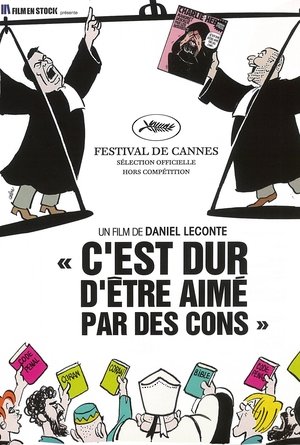
The murder of Dutch filmmaker Theo van Gogh by an Islamic extremist in 2004, followed by the publishing of twelve satirical cartoons depicting the prophet Mohammed that was commissioned for the Danish newspaper Jyllands-Posten, provides the incendiary framework for Daniel Leconte's provocative documentary, It's Hard Being Loved by Jerks.
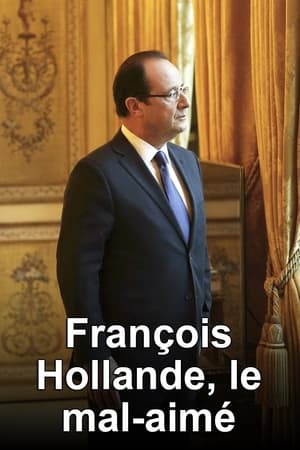
François Hollande, le mal-aimé
In May 1974, Valéry Giscard d'Estaing became the third President of the Fifth Republic. An alternation of power that did not speak its name opened the doors of power to a reforming president. Abortion, divorce by mutual consent, lowering the age of majority to 18 - in less than two years, the youngest President of the Republic - at the time - carried out reforms with a vengeance, without a united majority in Parliament, before failing in the economic sphere and losing the battle against unemployment. At the age of 90, the former President of the Republic has agreed to look back on these years and gives us a valuable account of his time in power.
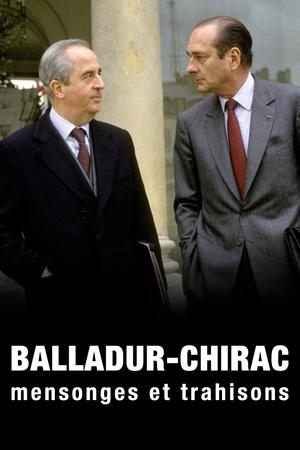
Balladur-Chirac, mensonges et trahisons
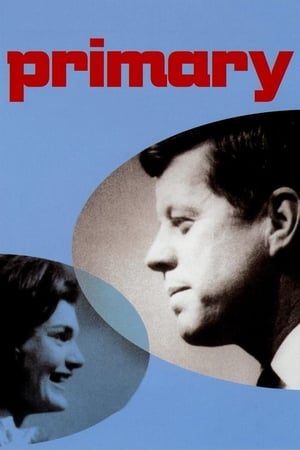
Primary is a documentary film about the primary elections between John F. Kennedy and Hubert Humphrey in 1960. Primary is the first documentary to use light equipment in order to follow their subjects in a more intimate filmmaking style. This unconventional way of filming created a new look for documentary films where the camera’s lens was right in the middle of what ever drama was occurring. Preserved by the Academy Film Archive in partnership with The Film Foundation in 1998.
November 5, 2024 is election day and the USA is facing a momentous decision linked to the questions: Will Kamala Harris succeed in becoming the first woman President of the USA? Or will Donald Trump return to the White House? What consequences would a Trump victory have for the USA, the world and especially for Germany? Ingo Zamperoni, together with filmmaker Birgit Wärnke, embarks on a multifaceted journey through a country that seems more irreconcilable and polarized than ever before. The well-known Tagesthemen anchorman discusses the election-deciding issues such as inflation, migration, abortion and the Ukraine war during visits to members of his partly American family and their acquaintances, but also with celebrities such as pop star and Trump friend Kid Rock, football legend Jürgen Klinsmann, who lives in California, and the former commander of the US Army in Europe, Ben Hodges.
After tasteless tweets about the Trump assassination, Sebastian "El Hotzo" Hotz was the butt of everyone's jokes. Now he has the chance to make amends: he is to travel to the USA and apologize to the Americans in person.
"What if someone wrote your biography? Would there be horns and halos involved?"
Fall Of The Republic documents how an offshore corporate cartel is bankrupting the US economy by design. Leaders are now declaring that world government has arrived and that the dollar will be replaced by a new global currency.
Is the solution to Switzerland's future to integrate Germany into the confederation? After all, like Michael Ringier, CEO of the Ringier media group, says, blithely ignoring all minorities, we're very close in culture and language. Oskar Freysinger takes out his guitar and sings his answer. Politicians from French-speaking Switzerland and Ticino think expanding will help the country survive. The former German foreign minister thinks the two countries' traditions are too different. The banker Oswald Grübel is worried about Germany's debts, although he'd be prepared to take over its assets. With serious interviews interspersed with gags (boat people on Lake Constance, the last Habsburger as a peasant), Giaccobbo gathers off-the-cuff reactions which reveal a lot about the different mentalities. The movie laughs at preconceived notions, redefines neutrality and reflects on what designates a nation. Switzerland, which loves to teach the world a lesson, will soon helvetize the planet, oder?
In South Korea, 2002, the Democratic Party put the presidential nomination to a plebiscite for the first time. Amongst numerous candidates, the one who brought about the most unexpected result was a fringe candidate named Roh Moo-hyun.
Ross Perot, the Texas billionaire who could be America's next president, gives the straight answers he's famous for in a 1-hour interview with Emmy Award-Winning journalist David Frost. Questioned on topics ranging from the federal budget deficit (he says he knows how to eliminate it), to his views on his employee's marital fidelity ("If your wife can't trust you, how can I?"), to abortion, Perot speaks his mind on today's most important issues. Perot has made himself one of the country's most successful men. Now he is attracting unprecedented support for his presidential bid. You must know about this man, here is a revealing portrait of the philosophy, character, and personality of this most independent candidate.
An enduring myth in U.S. presidential election history is that George H.W. Bush only lost his re-election bid in 1992 because a peculiar independent candidate from Texas, Ross Perot, drew more voters away from Bush than from Democratic candidate Bill Clinton. Perot ran a quirky "outsider" campaign that in many ways presaged the Donald Trump phenomenon of 2016. It all amounted to one of the most successful third-party bids in U.S. history; Perot won 19 percent of the popular vote.
10 mai 1981, le jour du grand soir
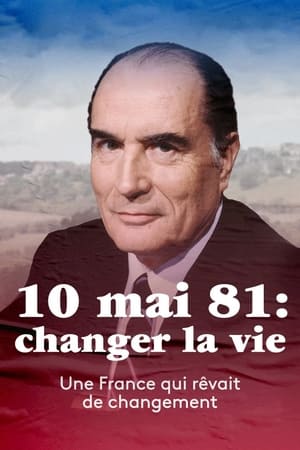
Fourty years ago, in May 1981, with François Mitterrand's election, some people were letting themselves dream about a better life while others were predicting the coming of soviet tanks upon the Champs-Élysées. If we gladly remember the turning point of austerity in 83, there were also the wage rises, the fifth week of paid leave, the abolition of death penalty, the decriminalisation of homosexuality, or the advent of independent radio stations. Rare archives and accounts by those who were at the heart of this story give an overview of it and shed light on lesser-known aspects.
A documentary that investigates the complexity of a nation, Albania, through the narration of the convoluted history of its monuments. What happens to the statues when they are destroyed, what are they replaced with and where do their marble shreds end up? What happens to their expensive bronze? And again: what do the sculptors who made these statues think of these destructions, what is their opinion. And today? Which statues are being destroyed in Albania today?