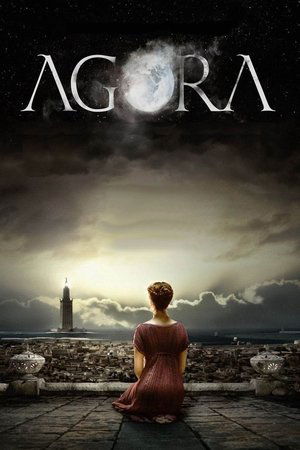
As the Roman empire crumbles, young Romulus Augustus flees the city and embarks on a perilous voyage to Britain to track down a legion of supporters.
In year 1250 B.C. during the late Bronze age, two emerging nations begin to clash. Paris, the Trojan prince, convinces Helen, Queen of Sparta, to leave her husband Menelaus, and sail with him back to Troy. After Menelaus finds out that his wife was taken by the Trojans, he asks his brother Agamemnon to help him get her back. Agamemnon sees this as an opportunity for power. They set off with 1,000 ships holding 50,000 Greeks to Troy.
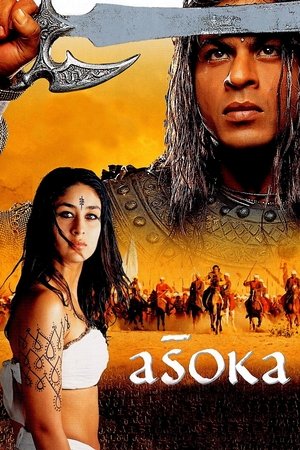
A young Prince Asoka works to perfect his skills in battle and also deals with family conflict. During a struggle with one of his step-brothers, his mother urges Asoka to escape to stay alive. While away, Asoka meets Kaurwaki and falls in love, but must use his skills as a warrior to protect her. A dangerous and heartbreaking web of conspiracy follows, which leads Asoka to embrace a Buddhist path.
The work-shy, lazy Germanicus is taken to Rome by slave traders and sold straight to the nouveau riche Roman Tusnelda. He manages to escape, but only to end up in the next misery as a taster at the imperial court. When the emperor dies, he is arrested as an emperor's assassin and is to be thrown to the tigers in the arena.With the help of the black slave Saba, he manages to win the deadly fight and is proclaimed - against his will - the new emperor of the Roman Empire.His pragmatic ideas as a statesman explain why the Roman Empire ended so abruptly. At the side of Saba, who is elevated to empress, he returns to his home village of Sumpfing, where he now promises himself completely new perspectives ...
After the death of Emperor Marcus Aurelius, his devious son takes power and demotes Maximus, one of Rome's most capable generals who Marcus preferred. Eventually, Maximus is forced to become a gladiator and battle to the death against other men for the amusement of paying audiences.
A 6th-century Scandinavian warrior named Beowulf embarks on a mission to slay the man-like ogre, Grendel.
The rebellious Thracian Spartacus, born and raised a slave, is sold to Gladiator trainer Batiatus. After weeks of being trained to kill for the arena, Spartacus turns on his owners and leads the other slaves in rebellion. As the rebels move from town to town, their numbers swell as escaped slaves join their ranks. Under the leadership of Spartacus, they make their way to southern Italy, where they will cross the sea and return to their homes.
Alexander, the King of Macedonia, leads his legions against the giant Persian Empire. After defeating the Persians, he leads his army across the then known world, venturing farther than any westerner had ever gone, all the way to India.
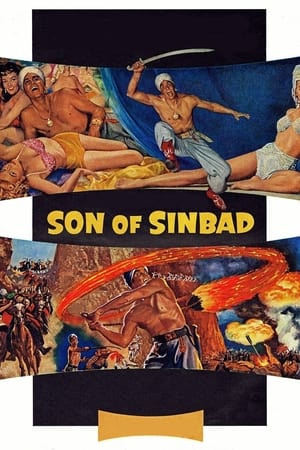
Legendary pirate and adventurer Sinbad is in single-minded pursuit of two things: beautiful women and a substance called Greek Fire--an early version of gunpowder.
Britain, A.D. 117. Quintus Dias, the sole survivor of a Pictish raid on a Roman frontier fort, marches north with General Virilus' legendary Ninth Legion, under orders to wipe the Picts from the face of the Earth and destroy their leader, Gorlacon.
A series of bawdy and satirical episodes written during the reign of the emperor Nero and set in imperial Rome. Like the more famous version made by Federico Fellini, an adaptation of Petronius' Satyricon.
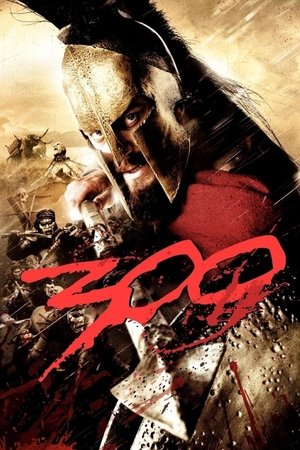
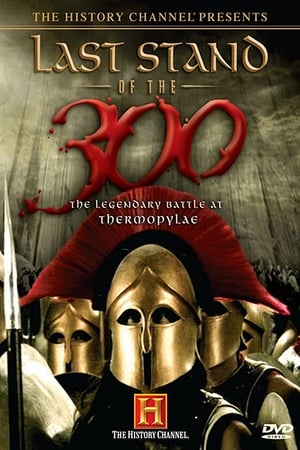
A story very loosely based the 480 B.C. Battle of Thermopylae, where the King of Sparta led his army against the advancing Persians.
Sentenced to spend out the rest of his adult life laboring in the harsh deserts of Egypt, the Thracian slave Spartacus gets a new lease on life when he is purchased by the obese owner of a Roman gladiator school. Moved by the defiance of an Ethiopian warrior, Draba, Spartacus leads a slave uprising which threatens Rome's status quo. As Spartacus gains sympathy within the Roman Senate, he also makes a powerful enemy in form of Marcus Lucinius Crassus, who makes it a matter of personal honor to crush the rebellion.
In this visually compelling and thought-provoking documentary, author, scholar and modern-day Indiana Jones, Jay Weidner uncovers some of the deepest secrets of the ancient western tradition of Alchemy - the knowledge of the fatal season of the apocalypse, the end of time and the great and imminent transformation of humanity. Using the work of the mysterious twentieth century French Alchemist, Fulcanelli, as his foundation, and his discovery of a three hundred fifty year old Alchemical Cross in the South of France, Jay Weidner describes the experiences, insights and powerful evidence that opens the door to a new view of the intimate relationship between myth, history, science and the true destiny of humanity. In doing so, he reveals the ultimate meaning underlying the resurrection of Christ, the message of the Book of the Revelations, the vision of Ezekiel and the Kabbalistic concept of the "Restoration of the World."
5000 years ago the ancient Elamites established a glorious civilization that lasted about three millennia. They created marvelous works in architecture and craftsmanship. These works of art depict the lifestyle, thoughts, and beliefs of the Elamites.
Since ancient times, many troubles began with disobedience. This happened to Varzeyn, the youngest son of the chieftain of a mountain tribe.
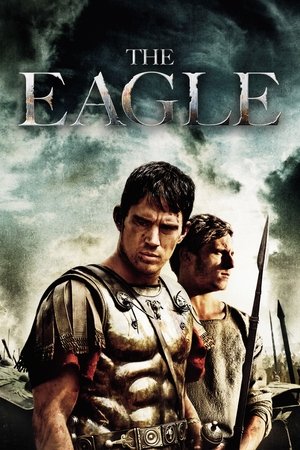
In 140 AD, twenty years after the unexplained disappearance of the entire Ninth Legion in the mountains of Scotland, young centurion Marcus Aquila arrives from Rome to solve the mystery and restore the reputation of his father, the commander of the Ninth. Accompanied only by his British slave Esca, Marcus sets out across Hadrian's Wall into the uncharted highlands of Caledonia - to confront its savage tribes, make peace with his father's memory, and retrieve the lost legion's golden emblem, the Eagle of the Ninth.
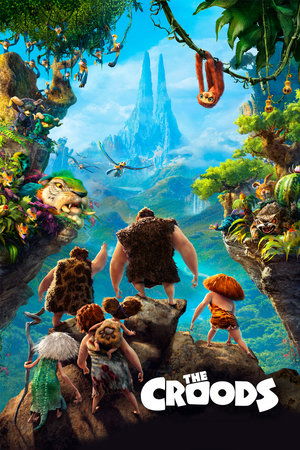
The prehistoric Croods family live in a particularly dangerous moment in time. Patriarch Grug, his mate Ugga, teenage daughter Eep, son Thunk, and feisty Gran gather food by day and huddle together in a cave at night. When a more evolved caveman named Guy arrives on the scene, Grug is distrustful, but it soon becomes apparent that Guy is correct about the impending destruction of their world.
This program presents the stories of the works of architecture regarded by the Greeks and Romans as the most extraordinary structures of antiquity: the Hanging Gardens of Babylon, The Statute Of Zeus, the Temple of Artemis, the Mausoleum of Halicarnassus, the Pharos of Alexandria and the Pyramids of Egypt and more.
How did the Romans produce some of the most impressive gladiatorial games ever seen in Europe? How did the Colosseums mysterious roof really work? And how does the mighty Colosseum compare to the popular sports venues of the 21st century? Structural engineer Steve Burrows and his team of laser-scanning experts head to Rome on a quest to answer these questions and uncover some of the oldest mysteries of the ancient stadium.