A story set during the famous WWII air battle between the British Royal Air Force and the German Luftwaffe.
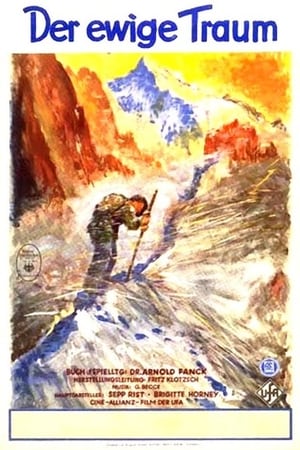
At the end of the 18th century, the wealthy French scholar Saussure comes to a small Alpine village and offers 1,000 pieces of gold to anyone who can lead him to the summit of Mont Blanc. The young farmer's son Jacques Balmat wants to take on the dangerous task, even though his father has told him from an early age about the mighty mountain spirits who guard a legendary treasure of gold on the mountain peak.
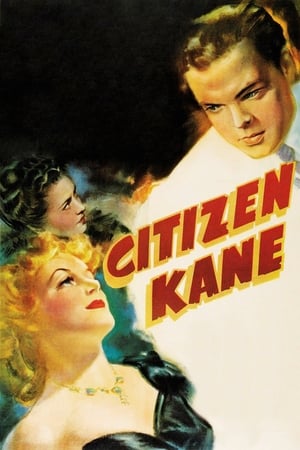
Newspaper magnate Charles Foster Kane is taken from his mother as a boy and made the ward of a rich industrialist. As a result, every well-meaning, tyrannical or self-destructive move he makes for the rest of his life appears in some way to be a reaction to that deeply wounding event.
In a futuristic city sharply divided between the rich and the poor, the son of the city's mastermind meets a prophet who predicts the coming of a savior to mediate their differences.
Julião is a young farm worker who, one day, contracts leprosy. Overnight, the good mountaineers that were so friendly with him refuse to see him again, and he must be by himself in the far woods. Bathing in olive oil, as suggested by an old woman, proves ineffective. Now, he becomes violent, expressing his anguish against those who expelled him from the village. Production date is 1975. Had its first major public release in 2009, at MotelX, Lisbon's International Horror Film Festival in the section "Lost Room". The movie was suggested to the MotelX production by the portuguese director António Macedo who knew about the existence of this and other portuguese movies about popular legends and myths of the portuguese imaginary. The movie was archived and conserved by the portuguese Cinematheque.
1945: The last days of the war. In a remote mountain hut, Anton, a deserted SS man, and Hannah, a Jewish woman, meet. From distrust, feelings develop between the two. But the danger is not over yet. For the two, the war is far from over.
Young couple separated by World War 2, dream of being reunited years later.
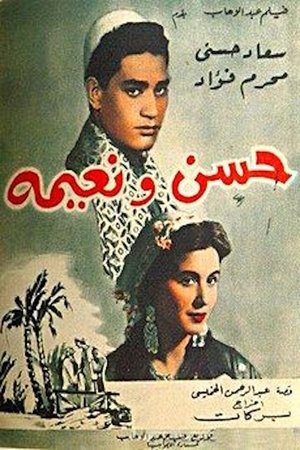
A love story similar to Shakespeare's Romeo and Juliet taking place in the Egyptian Countryside.
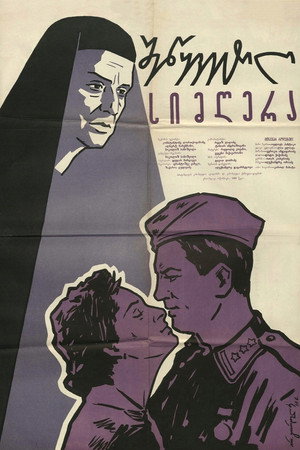
Events take place in an isolated mountaineous village where a rabid dog bites the son of Fatime. The woman has to decide where to take her son, to the doctor or to Aunt Remja, an old woman who practices magic.
The true, harrowing story of a young Jewish girl who, with her family and their friends, is forced into hiding in an attic in Nazi-occupied Amsterdam.
In 1942, in an occupied Paris, the apolitical grocer Edmond Batignole lives with his wife and daughter in a small apartment in the building of his grocery. When his future son-in-law and collaborator of the German Pierre-Jean Lamour calls the Nazis to arrest the Jewish Bernstein family, they move to the confiscated apartment. Some days later, the young Simon Bernstein escapes from the Germans and comes to his former home. When Batignole finds him, he feels sorry for the boy and lodges him, hiding Simon from Pierre-Jean and also from his wife. Later, two cousins of Simon meet him in the cellar of the grocery. When Pierre-Jean finds the children, Batignole decides to travel with the children to Switzerland.
In a chaotic 19th-century Paris teeming with aristocrats, thieves, psychics, and courtesans, theater mime Baptiste is in love with the mysterious actress Garance. But Garance, in turn, is loved by three other men: pretentious actor Frederick, conniving thief Lacenaire, and Count Edouard of Montray.
Haridy arrives at the vegetable market in search of a job opportunity, he works for Master Abu Zaid and after a while he separates and marries Hossnyia. Haridy forms an alliance against Abu Zaid, but he soon becomes more powerful and his condition turns to worse.
A film about peace, love and war. Dedicated to the 100th anniversary of the end of the Civil War in Russia. The film takes place at the end of the summer of 1917, when Russia and the whole world were at a crossroads between two eras. None of the people could even imagine how much his life would change in the very near future. In a strange way, the atmosphere of the film echoes our current reality and what is happening in Russia today. According to the form of visualization, the film belongs to experimental mockumentary cinema. To give greater authenticity to what is happening on the screen, the shooting was carried out on black-and-white negatives of 16 and 35 mm, hand-operated cameras were used and the material was developed in manual spiral tanks. The documentary chronicle of the Kolchak army of 1919 and the White army in the Far East of 1922 is embedded in the finale of the film.
Miha invites his fiancée Minka to the dance, but he's tempted by another big desire of his - climbing. Frustrated Minka insists on the festivity, where she finds herself in a company of older hiker. However, all ends happily, as Minka and Miha, after many smaller adventures, meet at the top of Mount Triglav, where they sign the marriage contract, but also confirming their love for the mountains. In addition to its charming story, the movie features footage of picturesque Slovenian mountains.
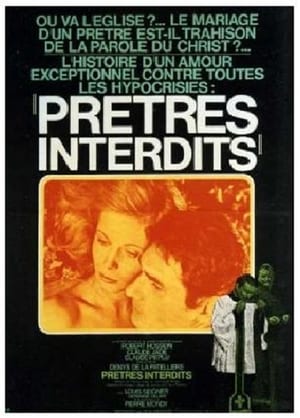
Prêtres interdits
Murad Salem is a rich man who is used to getting what he wants whenever he wants it. When he meets a beautiful woman in Alexandria, he wants her as wife number thirteen. He buys himself into the heart of the woman, until a well-meaning, former fiancée of her husband tells her just how many times he has been divorced. The new bride launches into a series of ploys that keep her away from the marriage bed.
War takes its cruel toll, which everyone must pay. It hits a small Slovak village especially hard, where the struggle for a bare life becomes a test of human character. For two impoverished friends, Jakub and Maja, struggling through poverty is more than difficult. Jakub delivers sour milk from somewhere on his cart to the entire village and lives in a dilapidated house with his sister Tereza, whose caregiver and guide through life is the experienced woman Mara, who provides herself with money from seduced soldiers. Maja, on the other hand, is a foundling and homeless man who does whatever he can to survive the next day. The only consolation for the two inseparable friends are the circulating tales of a kind of promised land, where there is no poverty or hunger, and where they could both go. Only this vision, this idea alone keeps the two of them and the rest of the village on their feet, and gives them hope for a better tomorrow.
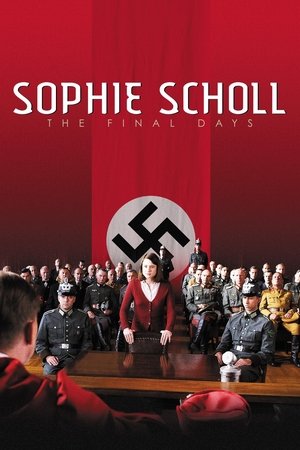
In 1943, as Hitler continues to wage war across Europe, a group of college students mount an underground resistance movement in Munich. Dedicated expressly to the downfall of the monolithic Third Reich war machine, they call themselves the White Rose. One of its few female members, Sophie Scholl is captured during a dangerous mission to distribute pamphlets on campus with her brother Hans. Unwavering in her convictions and loyalty to the White Rose, her cross-examination by the Gestapo quickly escalates into a searing test of wills as Scholl delivers a passionate call to freedom and personal responsibility.
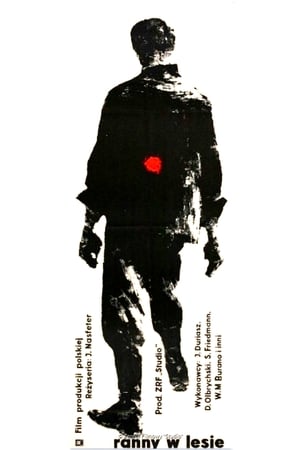
While hiding from the Germans in the forest, young Polish corporal tries hard to fulfill his order to take care of a wounded lieutenant and wait for the doctor and transportation to come.