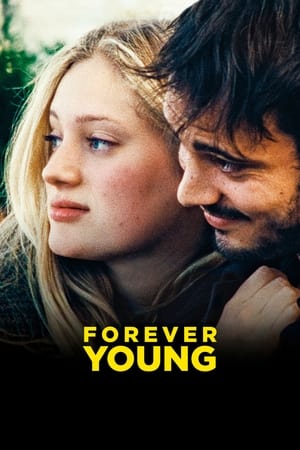
A group of teenagers living in a housing project in the outskirts of Paris rehearse a scene from Marivaux's play of the same name. Krimo is determined not to take part, but after developing feelings for Lydia, he quickly assumes the main role and love interest in the play.
While writing an adaptation of the play "4.48 Psychosis", by English playwright Sarah Kane. Luisa (Ingrid Trigueiro) travels to a desert beach with her family. Immersed in the text, Luisa finds the work's impulses increasingly immersed into her own reality, driving her to the threshold of adaptation and delirium. Between theater, sketch, archival images, and complex memories and family relationships, Arthur Lins uses different staging references to compose a small tropical tale about complex creation process.
La cárcel de cristal
In occupied Paris, an actress wed to a Jewish theater owner must keep him hidden from the Nazis while doing both of their jobs.
Filumena Marturano is a former prostitute who has been living for years with Domenico Soriano, a wealthy Neapolitan pastry chef who was once her client. To force Soriano into marriage, the woman pretends to be dying in order to invoke a "deathbed" wedding, but the charade fails and Don Domenico tries everything he can to annul the sacrament. Filumena is forced to come clean.
In trouble with the local authorities, Mabel Simmons, notoriously known as Madea, is on the run from the law. With no place to turn, she moves in with her friend Bam who is recovering from surgery. Unbeknownst to Bam however, Madea is only using the "concerned friend" gag as a way to hide out from the police.
The Empty King created a mythical figure and a whole world from grotesque, archetypal images. The drama was originally conceived as a student tirade against a teacher at Jarry's school, the Lyceum of Rennes. This teacher, Hébert, was the target of public ridicule. In 1888, at the age of 15, Jarry wrote a puppet play about the exploits of the Woolly Tartar and staged it to the amusement of his friends. The figure of Übü is a crude, cruel caricature of the foolish, selfish bourgeoisie as seen through the unrelenting gaze of a schoolboy; but this Rabelaisian figure, in all his falstaffian greed and cowardice, is more than a mere social satire. It is a terrifying picture of man's animal nature, his evil and cruelty. The Katona József Theatre in Budapest premiered Jarry's play in 1984, and it ran continuously for more than 10 years.
Two rival artists at Sivadas Swamigal's drama troupe compete in everything they do. While one of them goes on to become successful, the other fails in life.
A comedy musical stage version of the Phantom of the Opera, filmed live on-stage during a performance in Florida.
After accidentally killing her lecherous producer, a famous actress tries to hide her guilt.
Britain is in crisis. An ineffectual Queen Cymbeline rules over a divided dystopian Britain. Consumed with grief at the death of two of her children, Cymbeline's judgment is clouded. When Innogen, the only living heir, marries her sweetheart Posthumus in secret, an enraged Cymbeline banishes him. Behind the throne, a power-hungry figure plots to seize power by murdering them both. In exile Innogen's husband is tricked into believing she has been unfaithful to him and in an act of impulsive jealousy begins a scheme to have her murdered. Warned of the danger, Innogen runs away from court in disguise and begins a journey fraught with danger that will eventually reunite Cymbeline with a long-lost heir and reconcile the young lovers.
Based on the short story by Anton Chekhov, Kama Ginkas’ astounding reimagining highlights and builds off of the Chekhovian tension between the beauty of life and the tragedy of how it is lived. The story tells the the tale of philosophy student Andrey Vasil'ich Kovrin. On the verge of a nervous breakdown, Kovrin decides to visit his childhood friend Tanya Pesotsky at the estate of her father. As he and Tanya develop a relationship and eventually marry, a black monk of legend begins appearing to Kovrin in visions. Though these hallucinations at first imbue the young man with joy and energy, they eventually lead to his ruin.
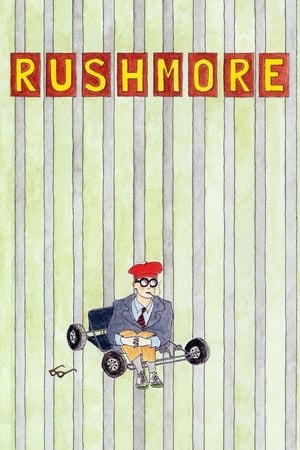
When a beautiful first-grade teacher arrives at a prep school, she soon attracts the attention of an ambitious teenager named Max, who quickly falls in love with her. Max turns to the father of two of his schoolmates for advice on how to woo the teacher. However, the situation soon gets complicated when Max's new friend becomes involved with her, setting the two pals against one another in a war for her attention.
Kristian Smeds's sensational debut at the National Theater. Smeds's adaptation of Väinö Linna's The Unknown Soldier had a powerful impact even on those who had not seen the play. In the National Theater's interpretation, modernity and intensity are strongly present throughout the play. The cast includes Antti Luusuaniemi, Kristo Salminen, and Jaakko Kytömaa.
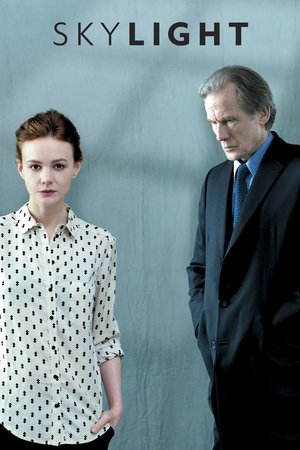
On a bitterly cold London evening, schoolteacher Kyra Hollis receives an unexpected visit from her former lover, Tom Sergeant, a successful and charismatic restaurateur whose wife has recently died. As the evening progresses, the two attempt to rekindle their once passionate relationship only to find themselves locked in a dangerous battle of opposing ideologies and mutual desires.
David Ireland's award-winning dark comedy about sectarian hatred in Northern Ireland. Eric Miller, a Belfast loyalist, mistakes his five-week-old granddaughter for Gerry Adams.
Orgon and his mother swear by Tartuffe, the self-styled devout who lives off them. The other members of the family, scandalized by the clergyman's hold over them, will do anything to expose his hypocrisy. Michel Bouquet plays an almost monstrous Tartuffe, whose only weakness lies in his feelings for Elmire.
Weller Martin and Fonsia Dorsey, two elderly residents at a nursing home for senior citizens, strike up an acquaintance. Neither seems to have any other friends, and they start to enjoy each other's company. Weller offers to teach Fonsia how to play gin rummy, and they begin playing a series of games that Fonsia always wins. Weller's inability to win a single hand becomes increasingly frustrating to him, while Fonsia becomes increasingly confident. While playing their games of gin, they engage in lengthy conversations about their families and their lives in the outside world. Gradually, each conversation becomes a battle, much like the ongoing gin games, as each player tries to expose the other's weaknesses, to belittle the other's life, and to humiliate the other thoroughly.
The life story of Marta Kubišová as a musical, broadcast live from the Summer Stage of the Kampa Museum in Prague, based on real events in the life of Marta Kubišová. On stage, we meet not only the two remaining Golden Kids, but also Jan Němec, Jan Moravec, Alexander Dubček, and Václav Havel.
In their songs, comedy and exuberant music, a travelling theatre company give a fiercely polemic account of Scottish history, from the aftermath of Culloden to the oil boom. Their production before a live audience is intercut with filmed reconstructions of the Highland Clearances and the Victorian obsession with hunting stags.