An immersive journey into the world of wild horses, Wild Beauty illuminates both the profound beauty, and desperate plight faced by the wild horses in the Western United States. Filmmaker Ashley Avis and crew go on a multi-year expedition to uncover the truth in hopes to protect them, before wild horses disappear forever.
This documentary follows various migratory bird species on their long journeys from their summer homes to the equator and back, covering thousands of miles and navigating by the stars. These arduous treks are crucial for survival, seeking hospitable climates and food sources. Birds face numerous challenges, including crossing oceans and evading predators, illness, and injury. Although migrations are undertaken as a community, birds disperse into family units once they reach their destinations, and every continent is affected by these migrations, hosting migratory bird species at least part of the year.
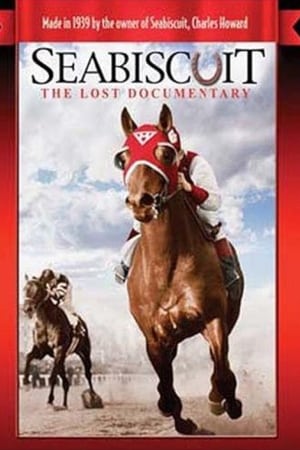
Made in 1939 by Seabiscuit's owner Charles Howard. This inspirational film chronicles Seabiscuit's life from birth, through training, and the legendary match race with War Admiral.
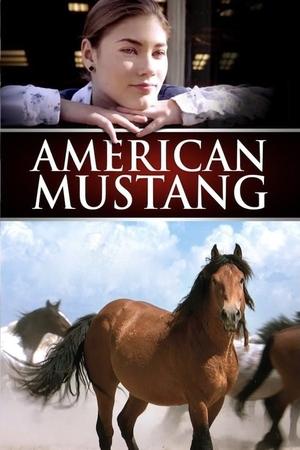
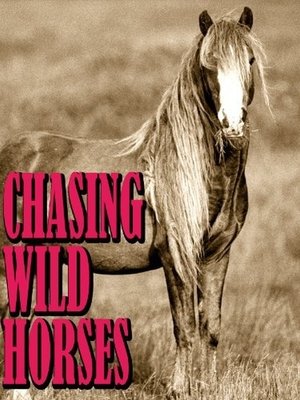
Fueled by stunning footage, this stirring documentary considers wild horses' role in the American psyche and their dwindling numbers in today's West. In an artful blend of exquisite nature documentary and character-driven narrative, the majestic wild horses of the American West are revealed in stereoscopic 3D as never before. The wonder in a girl’s eye pulls us into the drama that unfolds on hundreds of millions of acres of public land. The battle lines have long been carved into the landscape, and the players are deeply entrenched. Yet as the subtle choreography that has evolved over thousands of years begins, we are captivated. The intricate dance between a man and a wild horse presents lessons for us all, even the battle-hardened special interest groups fighting for the place of the AMERICAN MUSTANG.
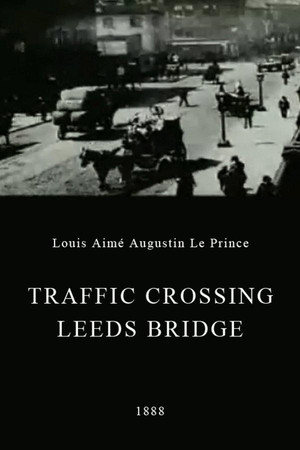
A film by Louis Aimé Augustin Le Prince, shot in late October 1888, showing pedestrians and carriages crossing Leeds Bridge.
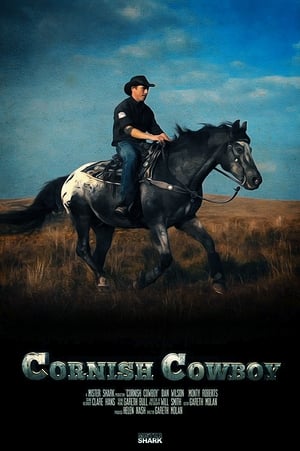
Samuel Grey Horse, an Indigenous equestrian from Austin, Texas, is known for rescuing horses from being put down. After a riding accident lands him in a coma, Grey Horse experiences an afterlife vision that changes his perspective on the world and his place in it.
The larger than life true story of how a barmaid in a poor Welsh mining village convinces some of her fellow residents to pool their resources to compete in the "sport of kings" with a racehorse they would breed and raise.
While the earliest works of art of mankind depicted horses, the early history of the two species remains largely unknown. From the last nomadic peoples of the Altai Mountains to the Bedouins of the Arabian Peninsula and the Blackfoot Indians, Canadian anthropologist and filmmaker Niobe Thompson traveled the world for two years. He went to meet these communities who live in osmosis with their horses, and tried to understand the history and the nature of the very special bond between man and animal. At the same time, the work of German evolutionary biologist Martin Fischer allows, thanks to a 3D animation, to bring back to life the ancestor of the horse, whose appearance is surprisingly reminiscent of a small fox.
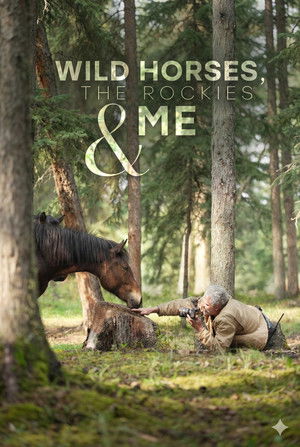
Gordon Buchanan heads to the Rocky Mountains in search of wild horses. Finding two stallions battling over a herd, he immerses himself in their world, hoping to win their trust.
One of the pictures to be seen in the machine, for example, was that of a blacksmith shop in which two men were working, one shoeing a horse, the other heating iron at the forge. One would be seen to drive the nail into the shoe of the horse's hoof, to change his position and every movement needed in the work was clearly shown as if the object was in real (life). In fact, the whole routine of the two men's labor and their movements for the day was presented to the view of the observer.
A horse and cart carrying two nuns is stopped by two men with fixed bayonets.
A musical, and also a reflection on watching, on trying to escape an anthropocentric gaze and also on watching itself in cinema. Featuring mares and horses: Triana, Víctor K, Bambi Sailor, San Special Solano, Buck Red Skin, Onkaia, Cool Boy, the donkey Agostino, the mule Guapa. And also Alfredo Lagos, Raül Refree, María Marín, Pepe Habichuela, Virgina García del Pino, María García Ruiz, Pilar Monsell, María Pérez Sanz.
As the carrier of a nation's hopes, there is a lot riding on Overdose. The successes of Hungary's premier racehorse have provided welcome relief from a decades-long legacy of fiscal austerity. But with Big Business cashing in on this symbol of optimism, the horse soon becomes a pawn in a game of egos and politics.
An old, broken morin khurr (horse head fiddle) compels renowned Mongolian singer Urna Chahar Tugchi to take a road journey to Ulan Bator and the steppes of Mongolia.
Documentary about four friends on a 3,000 mile journey across the American West on horseback.
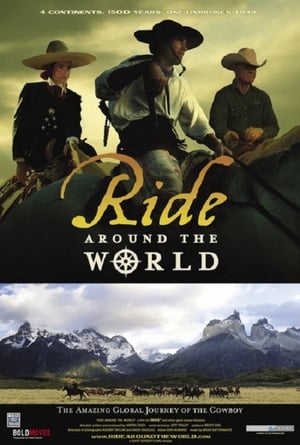
Journey across Morocco, Spain, Mexico, Argentina, Patagonia, Texas and British Columbia, to meet vaqueros, gauchos, baqueanos and cowboys - all part of a single global horse culture, an unbroken trail stretching back 1,500 years.
Celebrate the 150th anniversary of the short-lived but far-reaching American Institution The Pony Express by following a historical re-enactment along the original trail from Sacramento California to Saint Joseph Missouri.
Seabiscuit is a racehorse that has gone down as a legend in American history. Horse racing was an extremely popular sport around the time of America's Great Depression, used as an escapist form of entertainment for out-of-work laborers. This comprehensive overview of Seabiscuit's career includes many of the races for which he was most famous, as well as commentary from a number of racing enthusiasts.
Once one of the most densely populated neighborhoods in the country, Griffintown (in the heart of Montreal) is now dotted with vacant lots and uninhabited areas. But just around the bend, at the end of a dirt alley, the sun still rises over the Horse Palace. Leo Leonard, its owner, stands alone, fragile, like the place that embodies his whole life. At 83, Leo, the last representative of the Irish community that founded the neighborhood, must resign himself to leaving the premises.
This equine odyssey travels such little-known turf as General George Patton's involvement in a daredevil World War II coup called "Operation Cowboy" that rescued 500 of Austria's famous white Lipizzans. It is a stunning behind-the-scenes production on the Spanish Riding School of Vienna, spiced with legends even linked to the prophet Mohammed.