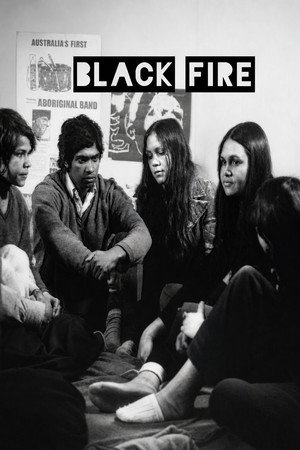
Long thought to be the first film ever made by an Indigenous filmmaker, Black Fire examines the situation of First Nations people in the early 1970s through politically charged discussions, comical vox pops, and interviews with luminaries of the time such as Pastor Doug Nicholls and Aboriginal Tent Embassy co-founder Bertie Williams.
This film without words is composed of Pamela Bone's unique photograhic transparencies. Her talent has been said to 'push photography beyond its own limits, liberating it to the status of an entirely creative art form.' Inspired by nature, and being more responsive to feeling than to thought, Miss Bone has sought to express the mystery and beauty of the inner vision through photographic means alone: landscape has the quality of a dream; children on the sea-shore have a sense of their own enchantment, trees are forboding and strange when night moves in their arms. It took Miss Bone twenty years to find the right technique and so overcome the limitations that photography would impose.
Set at an artificial reservoir in North Carolina, RESERVOIR (SEVEN FRAGMENTS) is a meditation on the unnatural histories of the American environment. The film approaches both the cinematic image and the landscape it captures as damaged, estranged things—things adrift in a world of irreparable discord.
“All that which in Picture is not of the body or argument thereof is Landskip, Parergon, or By-work” (Thomas Blount, Glossographia, 1656).
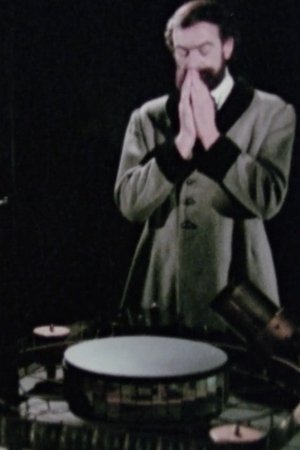
The 8th short film as part of the Magica series dealing with pre-cinema. Fictionalised documentary about Emile Reynau who invented the praxinoscope and its system of central mirrors. He then projects his paper strips into the projection praxinoscope before creating the Théâtre Optique, presented at the Musée Grévin. The perforated strips are fragile and often break. The show is cancelled. Reynaud tries to apply photography to his praxinoscope, but without success. Desperate and ruined, he throws his strips into the Seine. Only two survived.
Adopcja
Marta
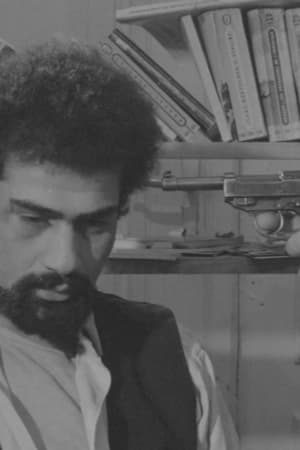
Settling of scores among international Marxist revolutionaries. A spirit of Mhedi Ben Barka inspired revolt.
Mobilisation génération
Discover the story of the greatest civil rights movement most people have never heard about. During eight tumultuous days in 1988 at the world's only Deaf university, four students must find a way to lead a revolution—and change the course of history.
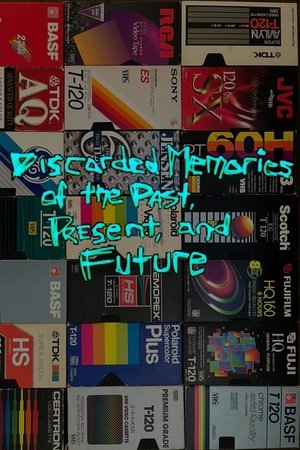
Disjointed moments from the filmmakers’ daily lives during the past year. Captured on a 1985 VHS camcorder with color and luminosity distorted by its failing color Newvicon tube. Cut with distorted tape-recorded fragments of nostalgic broadcast television ephemera. Scored by whatever was handy— from an ambient electronic song with a surprising amount of pipe organ (Oneohtrix Point Never - Boring Angel) to midi versions of your favorite SNES soundtrack (Donkey Kong Country – Aquatic Ambience, Opening, and Treetop Rock) to a not-quite-right rendition of a song that will make you want to say “Oh, Angelo, that’s tearing my heart out!” (Xiu Xiu – Falling). A voyeuristic peak at home movies that exist somewhere between soon to be forgotten and forgotten long ago. The occasional dot matrix time stamps in the corner of the footage somehow make it harder to place in time.
Documentary that describes month by month the fall of the self-proclaimed National Reorganization Process, the dictatorship that governed Argentina for seven years. In addition, we trace the path of the candidates towards the presidential elections, the socio-economic chaos that was experienced at that time, the media, the artistic references and the world of sports, until the arrival of democracy.
Twenty-four images of a camera running in the woods, a moonlight and a cemetery through improvised gestures, mechanical abstraction and saturated colors
The director meets Amir and Ramzi in a café in a small Tunisian town. They don't want to be seen there. They have to find a discreet place to talk. Like many other gay couples in Tunisia, Amir and Ramzi are living a nightmare since the Tunisian Revolution. With them, the director will discover the daily life of the Tunisian homosexual couples, even in the discrete parties organized in hotels of the country.
A short documentary about Brussels' roller derby team, Les Brussels Derby Pixies.
Produced for the NFB by Crawley Films Ltd. for the Canadian Department of Industry Trade and Commerce. This film provides a showcase for products manufactured in Canada, from aircraft designed for special duties, to pre-cast bathrooms that can be installed in one simple operation. There is heavy-duty machinery developed for the special needs of Canadian industry. There are women's fashions of universal appeal. All bear the 'Made in Canada' label and can be viewed in this film in colour and at close range.
In this tape, Ko Nakajima and Video Earth Tokyo interview a homeless man. The subject is initially angry and frustrated, but gradually opens up and shares stories about his life. Under A Bridge was later broadcast on cable television.
In Nigeria, a young Canadian doctor serves in a local mission hospital and learns much from the experience. Stationed abroad under the Canadian University Service Overseas Plan, Dr. Alex McMahon and his schoolteacher wife find every day a fresh challenge. An interesting study of intercultural help.
Castelos de Areia
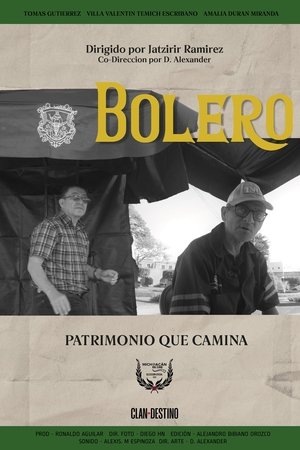
Bolero