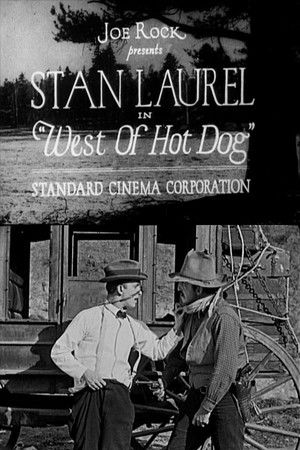
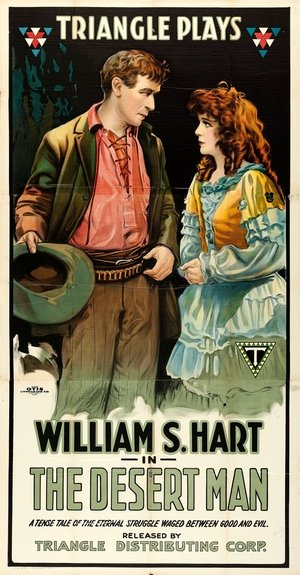
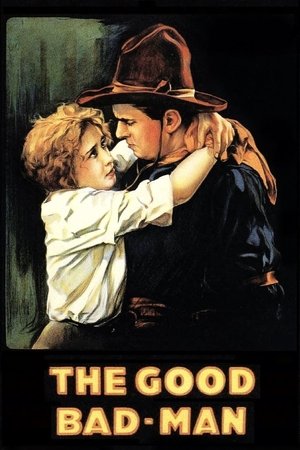
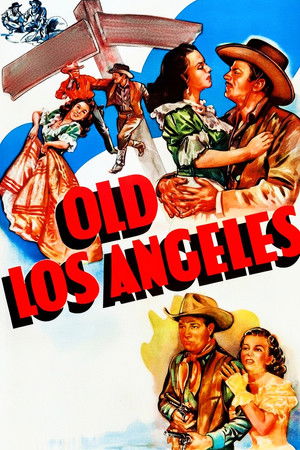
Phil Dolan (aka Black Jack because of his talent at cards), Nancy Dolan, and a rustler all have a piece of a silver dollar with each piece having a portion of an indented map of an ore mine. Phil has to rescue Nancy from the rustlers to keep their portions of the silver dollar from the rustlers. The sheriffs's pose captures the gang of rustlers just as they reach the ore mine ensuring their claim to the mine.
Two romantic suitors avoid their wet-blanket chaperone by way of the titular hedge.
A wayward wife abandons her husband but finds redemption by preventing a railway accident and finding her way back to him. The full 5-reel feature is believed lost; A 1926 abridgement of roughly 12 minutes survives.
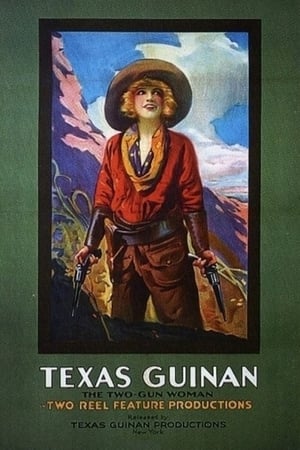
In Oklahoma, kindhearted outlaw Brick Willock rescues little Lahoma Gledware and her father Henry from certain death at the hands of his outlaw band. In the course of the rescue, he kills Kansas Kimball, the brother of the outlaws' leader Red Kimball, who vows vengeance against Brick. Brick renounces his life of crime, and after Gledware relinquishes custody of his daughter to marry an Indian princess, the old cowboy gives refuge to the little girl, raising her with the help of neighbor Bill Atkins.
She creates time lapses, he is into slow motion. Is it possible to meet in time?
After a spectacular college football career, John Harkless leaves the university to pursue a place in Indiana politics. He buys the failing Plattville Herald and, using the newspaper to expose various illegal activities, sets out to rid the county of all mobsters and corrupt officials.
When Madge, a clerk in a flower shop, is sent to a bachelor's apartment to deliver and arrange a bouquet, she discovers a guest, young and handsome Bradley Lane, taking a bath. She loses her job and becomes a playgirl until Bradley, her true love, asks her to marry him.
Cameo Kirby is a 1914 American drama silent film directed by Oscar Apfel and written by Clara Beranger and William C. deMille. The film stars Dustin Farnum, Fred Montague, James Neill, Jode Mullally, Winifred Kingston and Dick La Reno. It is based on the play Cameo Kirby by Booth Tarkington and Harry Leon Wilson. The film was released on December 24, 1914, by Paramount Pictures.
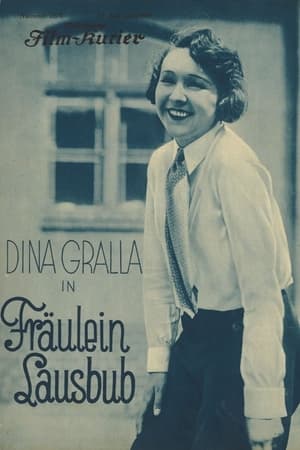
A servant girl plays matchmaker for the local burgomaster's daughter while setting her own sights on a visiting Irishman.
An electric current accidentally brings a female mummy back to life with decidedly romantic inclinations, much to the surprise of a young Egyptologist and his less than understanding fiancée. This film is presumed lost.
Chorus girl Peggy Lane, finds a small part in a new show for David North, a stages-truck country boy. At rehearsal, David meets Delerys Devore, the show's star, and she quickly offers him a larger part in her act. Quite taken with David, Delerys invites him to her home on the pretext that Peggy will be there; when Peggy does not show up, David leaves, infuriating his hostess. Derelys has Peggy fired the next day, and in reprisal Peggy goads her into a Carmenesque fight backstage just before the show. Derelys is unable to go on stage, and Peggy takes her place, becoming the hit of the show. Peggy and David are later married and give up show business, finding contentment living on a farm.
Real life outlaw Al Jennings tells a "real" story about how he came to the aid of a woman who was abused by her alcoholic husband.
An old spinster receives an unexpected Valentine's letter.
Produced and directed by George Albert Smith, the film shows a couple sharing a brief kiss as their train passes through a tunnel. The Kiss in the Tunnel is said to mark the beginnings of narrative editing. It is in fact, two films in one, hence the 2 min length. Firstly, the G.A. Smith film here for the central cheeky scene in the carriage. The train view footage however is Cecil Hepworth's work, entitled 'View From An Engine Front - Shilla Mill Tunnel', edited into two halves in order to provide a visual narrative of the train entering the tunnel before the kiss and then leaving afterwards. More information about the filming of the phantom train ride can be found searching for the Hepworth film separately.
Gold-digger Molly marries the heir to a fortune, but things go badly when he is disinherited and starts working as a ditch digger.
An American banker goes to a small Balkan country looking to invest his bank's money and shore up the country's weak economy in order to maximize the return on their investment. Towards that end he befriends the country's king and they come up with a scheme to get the Crown Prince married, a prospect not particularly appealing to the Crown Prince--until he sees the beautiful cabaret dancer the pair has picked for him to marry.
A young man impersonates his best friend, and in doing so upsets the decorum at a stuffy family gathering and falls in love. The arrival of a gang of hoodlums further disrupts the formalities, but our hero thwarts them and saves the day.
Like a ticking time-bomb, Ronnie tries to hold his personal relationships and artistic career together while struggling with a debilitating writers block. "A Beautiful Rush" is a silent film that explores what it means to be selfish and lose sight of the blessings life has graced us with.
Camille is a courtesan in Paris. She falls deeply in love with a young man of promise, Armand Duval. When Armand's father begs her not to ruin his hope of a career and position by marrying Armand, she acquiesces and leaves her lover. However, when poverty and terminal illness overwhelm her, Camille discovers that Armand has not lost his love for her.
From Edison films catalog: One of the most peculiar customs of the Sioux Tribe is here shown, the dancers being genuine Sioux Indians, in full war paint and war costumes. 40 feet. 7.50. According to Edison film historian C. Musser, this film and others shot on the same day (see also Buffalo dance) featured Native American Indian dancers from Buffalo Bill's Wild West show, and represent the American Indian's first appearance before a motion picture camera.