Joe Ryan, a veteran train engineer, is demoted to a flagman position after a disastrous crash-- one caused by his cowardly and opportunistic partner. Though Ryan's failing eyesight is named as the cause of the crash, he's undeterred as he designs an automatic braking invention.
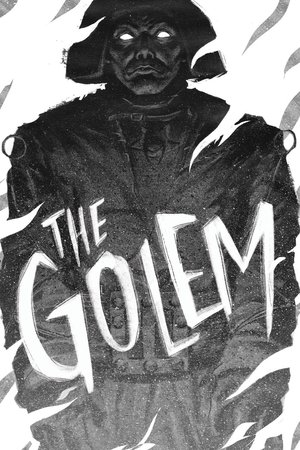
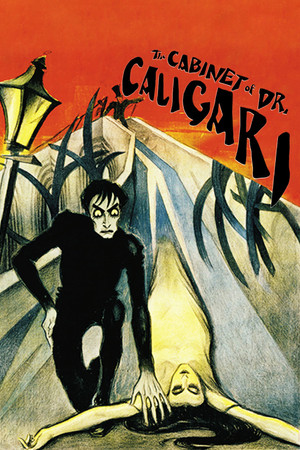
A young woman who lives with her uncle begins to dream about a monster that lurks in the shadows of the night.
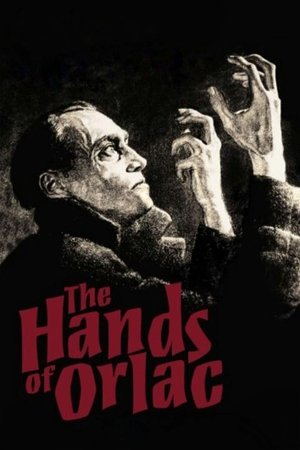
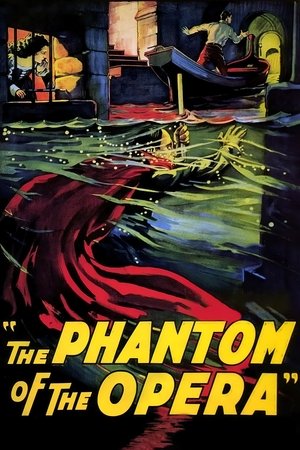
The deformed Phantom who haunts the Paris Opera House causes murder and mayhem in an attempt to make the woman he loves a star.
Dr. Mabuse and his organization of criminals are in the process of completing their latest scheme, a theft of information that will allow Mabuse to make huge profits on the stock exchange. Afterwards, Mabuse disguises himself and attends the Folies Bergères show, where Cara Carozza, the main attraction of the show, passes him information on Mabuse's next intended victim, the young millionaire Edgar Hull. Mabuse then uses psychic manipulation to lure Hull into a card game where he loses heavily. When Police Commissioner von Wenk begins an investigation of this mysterious crime spree, he has little to go on, and he needs to find someone who can help him.
Lusilla Helm has to marry Baron Ludwig Von Reder against her will. But her honeymoon does not last very long. The poor girl dies and is buried inside the family tomb. After a short while, another woman announces herself at the doors of the baron's mansion. Her looks recall Lusilla's but in a disturbing way. As soon as the mysterious woman sets foot in the rooms where the baron's former wife used to live, strange noises and happenings start to haunt the silent halls of the house.
Set off by a traumatic breakup, Paul Fisher (Poissonnier) spirals into a vicious underworld of sex, drugs and violence. Broke and clamoring for his next fix, Paul is lured into the clutches of pornographic film producer Ralph Beavers (Himself), where he is betrothed to none other than his own ex-girlfriend! Can Paul escape the malevolent forces that hunger for the flesh of his soul? Find out the mind-melting conclusion in this phantasmagoric journey into the heart of the unknown. Welcome to WASTERVILLE.
The Count sets out to make a private room for him and his Countess, built in such a way no one can see, hear, and most importantly, disturb them. But unbeknownst to the Count, his wife has set her eyes on the court minstrel. Based on Edgar Allan Poe's “The Cask of Amontillado” and Honoré de Balzac's “La Grande Breteche”.
Directed by Albert Capellani.
A woodsman leaves a hut followed by a woman with their baby. Nearby some men chop down a tree. The baby is left outside the hut, but an eagle flies away with it.
The surrealist film shows repetitive imagery involving a string fashioned in a bizarre, almost spiderweb-like pattern over the hands of several individuals, most notably an unnamed young woman and an elderly gentleman. The film also shows a shadowy darkness and people filmed at odd angles, an exposed human heart, and other occult symbols and ritualistic imagery which evokes an unsettling and dream-like aura. Considered an unfinished film.
A cinematic version of the Royal Winnipeg Ballet's adaptation of Bram Stoker's gothic novel Dracula. Filmed in a style reminiscent of silent Expressionist cinema of the early 20th century (complete with intertitles and monochrome photography), it uses dance to tell the story of a sinister but intriguing immigrant who preys upon young English women.
As a young couple stops and rests in a small village inn, the man is abducted by Death and is sequestered behind a huge doorless, windowless wall. The woman finds a mystic entrance and is met by Death, who tells her three separate stories set in exotic locales, all involving circumstances similar to hers.
One of the two earliest horror films ever made. This film is presumed lost. In this black comedy scene, the bottom falls out of a coffin, the corpse tumble out, and is jolted back to life. Short sequences like this, as well as street scenes and dancing geisha girls were the main subjects of early Nippon cinema, pioneered by Shiro Asano and Shibata Tsunekichi from 1897 onwards. In creating dramatic, scenes, film-makers naturally chose the most striking or bizarre. Another undocumented film, recalled by cameraman Shiro Asano.
A young woman, Margaret Dauncey, is caught between the forces of a charlatan magician, Oliver Haddo, whom she is unable to resist, and the love of a handsome surgeon, Arthur Burdon, who has saved her from being a helpless cripple by performing a delicate operation on her spine.
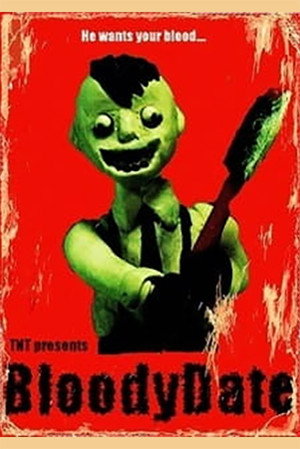
Five friends, all affected in some way by a mercury poisoning incident are partying when a freak accident put them on a collision course with an entity that is in no mood to forgive their misgivings.
Whilst documenting his life as a lowly intern, James Parker (James Powell) uncovers the long forgotten film, The Street Walker. Desperate to make a mark on the film industry and to prove his ever-doubting parents wrong, James endeavours to complete the unfinished horror movie, resulting in a murderous obsession.
Dick Bannister is the new field boss of the Ford Logging Company, a Canadian logging-crew during a time when conflicts with the powerful Consolidated Lumber Company, a bitter rival company, have turned bloody, like a private war. His boss, Miss Edith Ford, comes to inspect the lumberjack camp, bringing her doctor fiancé with her. Dick is attacked by his rivals and left for dead. His loss of blood is so great that he needs a transfusion, but no human will volunteer, so the surgeon uses a wolf as a source of the blood. Afterwards, Dick begins having dreams where he runs with a pack of phantom wolves, and the rival loggers get killed by wolves. Soon, these facts have spread through the camp. (via YouTube)
A wizard sleeps at a table in his well-appointed sitting room. From a drawer in the table, a snake appears.
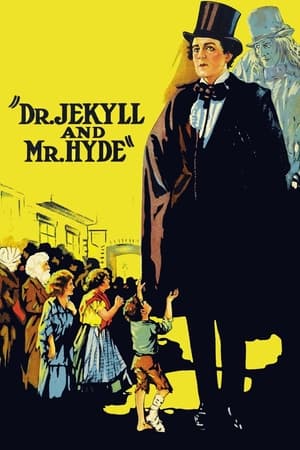
A young woman becomes the eighth wife of the wealthy Bluebeard, whose first seven wives have died under mysterious circumstances.
A prophet who longed to look upon his deities. A daunting journey to a mountain peak. A confrontation with gods too powerful to name. This is the story that inspired Peter Rhodes, who worked as a filmmaker and artist during the 1920s. Few people know of his work, and it's only through luck and perseverance that we have been able to track down the elements for this "lost" film. Rhodes' films were created using silhouette animation, a technique perfectly suited to depict Lovecraft's mythic Dreamland stories. The filmmaker's involvement in New York City's occult and literary scenes provided him with a select audience for his work. Rhodes was especially influenced through his relationships with occultist Aleister Crowley and writer H.P. Lovecraft, but it was personal tragedy that moved him to produce "The Other Gods: A Tale of the Dream Cycle," his most powerful film.