Join V, the newest resident to an ostensibly average New York apartment, and Beatrix, a transgender hacker girl who lives on the 4th floor, as they use "totally real" brain interface technology to jump into legally distinct video games, where hijinks ensue!
After Mito loses her parents and is fired from her job, she must fend for herself on the streets disguised as a boy. She comes across a stranger named Ruka and learns his dark secret—he's a vampire! Ruka invites Mito, still in disguise, to live in an all-boys dorm. Mito exchanges her blood for a place to stay, but a budding romance and her true identity threaten all that hangs in the balance.
Teens Charlie and Nick discover their unlikely friendship might be something more as they navigate school and young love.
Clara never imagined a single night could change everything. Between unexpected encounters, friendships turning into rivalries, and passions sparking out of nowhere, she finds herself at the center of a battle where love is as intense as the twists. Who will win Clara’s heart?
Queer Duck is an animated series produced by Mondo that originally appeared on Icebox.com and later moved to the American cable television channel Showtime in 2002, where it aired as a follow-up feature of the American version of Queer as Folk. Although far from being the first gay cartoon character, Queer Duck was the first animated TV series to have homosexuality as its predominant theme. Like several later television cartoons, Queer Duck was animated in Macromedia Flash. The show was created, written and executive produced by Mike Reiss, executive producer of network cartoons The Simpsons and The Critic. The animation was directed and designed by Xeth Feinberg. The theme song for the cartoon was performed by the drag-queen celebrity, RuPaul. Despite the suggestive content, there is no graphic language or any sexual content, but the latter is heavily implied throughout the series and the movie.
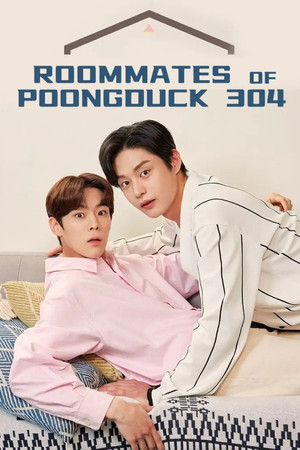
Learn about the relationships, misadventures and the eventful coexistence of three roommates of very different ages who are trying to start new stages in their lives. What could go wrong?
Batfink is an animated television series, consisting of five-minute shorts, that first aired in September 1967. The 100-episode series was quickly created by Hal Seeger, starting in 1966, to parody the popular Batman and The Green Hornet television series which had premiered the same year.
One hundred years since the founding of the Communist Party of China, Faith Makes Great tells stories from different times in history that chronicle the people's endless struggle to realize their dream of rejuvenating the nation.
A collection of feature-length stories featuring beautiful, innocent heroines who regularly find themselves in danger, prey to passionate dramas, machinations or sadists with a fair share of false leads and twists and turns.
A queer anthological period drama set in the same San Francisco apartment where the tenants contend with their relationship’s strengths and weaknesses, as well as their individual vulnerabilities and buried desires.
Revival of the 1970s and 80s series of individual plays, originally shown on the BBC, now freshly-commissioned for Channel 5 and a whole new era of life in Britain.
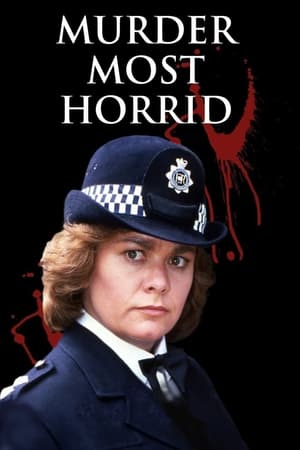
Comedienne Dawn French tackles dark, tongue-in-cheek thrillers as her various characters embark on a different mystery every episode. In one way or another, she is involved with murder — either committing the crime or even getting bumped off herself!
Armchair Theatre is a British television drama anthology series of single plays that ran on the ITV network from 1956 to 1974. It was originally produced by Associated British Corporation, and later by Thames Television from mid-1968.
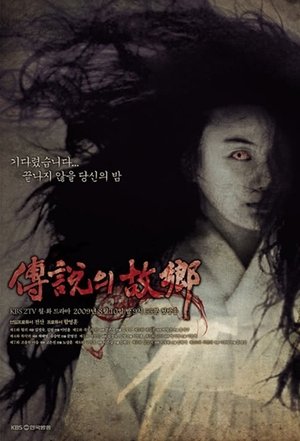
After inheriting an old house, a student meets a ghost who reveals their tragic past life and the eternal fate that still binds them.
Rain plots to make Phayu fall for him to ruin his reputation, while Sky grapples with his feelings for Prapai, in this whirlwind of emotions and growing love.
Who We Are is an LGBTQ web series that tells the story of Ana and Mia, two completely different women, but whose paths will cross, and from then on, nothing will be the same.
A British television comedy series, written by Michael Palin and Terry Jones of Monty Python fame. Following an initial pilot episode in January 1976, it ran for two subsequent series of five and three episodes in October 1977 and October 1979 respectively. Each episode had a different setting and characters, looking at a different aspect of British culture and parodying pre-World War II literature aimed at schoolboys.
LESlieVILLE follows the story of two women with a strong connection, played by Canadian theatre actors Samantha Wan and Tiffany Martin. The trouble is, one of them is already taken — a storyline based on the personal experience of series writer and director Nadine Bell.
An anthology of 1920s set plays and musicals, transmissioned from 10 September to 10 December 1968 on BBC One.
The Huckleberry Hound Show is a 1958 syndicated animated series and the second from Hanna-Barbera following The Ruff & Reddy Show, sponsored by Kellogg's. Three segments were included in the program: one featuring Huckleberry Hound; another starring Yogi Bear and his sidekick Boo Boo; and a third with Pixie and Dixie and Mr. Jinks, two mice who in each short found a new way to outwit the cat Mr. Jinks.