A film about the education of young aviators, which uses the natural interest of the youth in aviation and leads them through modeling circles and motorless flying to flying powered planes.
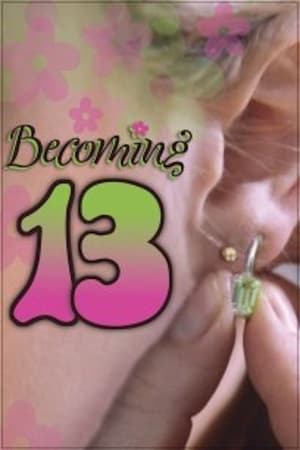
Explores the intimidating terrain of girlhood by following three 12-year-olds over the period of one year. As these girls move from childhood to maturity, it's clear that peer pressure is an important influence, but as the films shows, the greatest influence in a young girl's life is family.
Největší přání
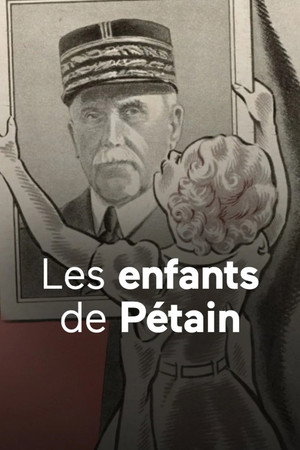
Les enfants de Pétain
A nuanced portrait of a new generation, Dear Thirteen is a cinematic time capsule of coming of age in today’s world. Through the eyes of nine thirteen-year-olds, we see how pressing social, geographical and political challenges are shaping, and being shaped by, young people: rising anti-Semitism in Europe, guns in America, gender identity and racial divisions across Australia and Asia. With no adult commentary outside the filmmaker, Dear Thirteen offers an intimate view into the universal uncertainty inherent in growing up.
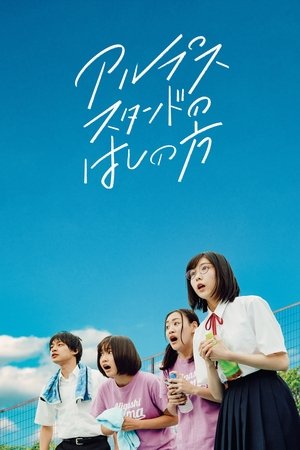
During the first high school baseball game of the season, personal dramas play out within a group of high schoolers sitting in the crowd.
Hwijong loses his job as a parking attendant because a brand-new building will be built on the parking lot he used to work for. Yeun unexpectedly loses her lover. She wants to go back to her old job only to find the office building completely empty. For Yeun, the street that she has been walking for years does not feel the same as before. On the contrary, Hwijong is trapped in a repeated sequence of experience even in his dreams. The daily lives of the two dance with each other to Chopin’s Waltz—they are sometimes tangled, sometimes crossed on the road. This film is intended to go through the high rise building in downtown Seoul like capillary vessels. Little snippets of live sometimes go through the little roads or change directions to create life.
Fantastical road movie about a pained guy and girl who head from the boonies to Tokyo. Hiro Kenichiro has directed numerous music videos and makes his feature film debut. Set in a world where people get a "blue mail" missive from their future selves. Kagari randomly meets a runaway girl named Yuki. They set off on a trip for Tokyo and gradually discover each other's past secrets.
The stage of this work is Saitama, a suburb of Tokyo in the early Heisei period. Immediately after the bubble burst gangster countermeasures law, there were gangsters who defended the last territory and young people who freely controlled the city. The youth conflict escalated day by day and became a force that surpassed the yakuza, and the runaways were sent to juvenile prisons one after another, where exclusive rules awaited.
A high-school girl who lives in a rural town in Japan struggles to define her own way in life. To help her impoverished family she works as a video fetish performer which leads to problems for her and her family with a criminal underworld.
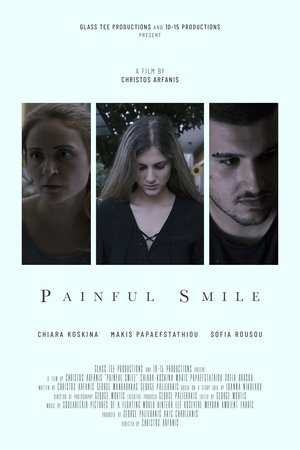
Painful Smile is a psychological thriller about a young woman who experiences sexual assault.
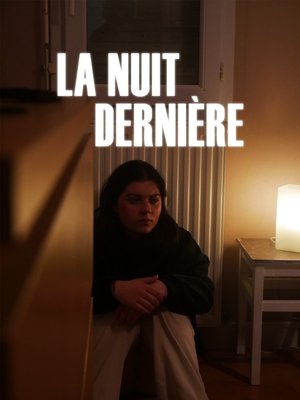
Emy, a mature teenager, wakes up disoriented, after a tumultuous night. Her current state pushing her to (re)discover her body generates a shocking observation… Having no memory of the day before, she immerses herself in the depths of her memory with the help of her best friend, Lola. Through this retrospective, Emy is not only seeking the truth, but also confronting the vices of society…
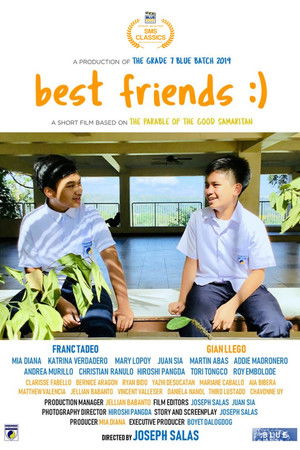
Two conflicting high school friends get paired for a school project, leading them to unexpected encounters in their lives.
After concluding the now-legendary public access TV series, The Pain Factory, Michael Nine embarked on a new and more subversive public access endeavor: a collaboration with Scott Arford called Fuck TV. Whereas The Pain Factory predominantly revolved around experimental music performances, Fuck TV was a comprehensive and experiential audio-visual presentation. Aired to a passive and unsuspecting audience on San Francisco’s public access channel from 1997 to 1998, each episode of Fuck TV was dedicated to a specific topic, combining video collage and cut-up techniques set to a harsh electronic soundtrack. The resultant overload of processed imagery and visceral sound was unlike anything presented on television before or since. EPISODES: Yule Bible, Cults, Riots, Animals, Executions, Static, Media, Haterella (edited version), Self Annihilation Live, Electricity.
A documentary about Margaret Cho's homeless outreach campaign inspired by the philanthropy of Robin Williams. After the death of her friend Robin Williams, Margaret Cho took to the streets of San Francisco with the mantra "Don't grieve Robin, BE Robin." What started as Margaret busking on the corner with a bag of socks and a guitar case, rapidly turned into hundreds of musicians, comedians, and homeless advocates spreading food, clothes, money, and awareness in an amazing humanitarian street theater experience. The film that captured these events, is not only entertaining, but deeply moving and above all else inspiring.
This heartwarming and at times touching documentary chronicles the preparation, experience, and aftermath of the University of Nebraska at Omaha's Black Studies Department, students, and community persons as they embark upon the inauguration of President Barack Obama. A mixture of cinema verity and interview, this documentary provides an eyewitness accounting of the event through emerging primary stories representative of a broad array of cultural and occupational backgrounds. It is the cinematic documentation of the joy, the laughter, and the tears as 55 passengers board a bus and travel over 2,000 miles for an experience of a lifetime.
“The Fallbrook Story,” is a 20-minute film of Cold War-era uneasiness in which director Frank Capra rails against what he calls the evils of Big Bureaucracy. In 1951, Capra lived in Fallbrook, California on his 1,000-acre Red Mountain Ranch farm filled with olive groves. The federal government, which had purchased the old Rancho Santa Margarita land in 1941 to build Camp Pendleton, was concerned that ranchers upstream would take or pollute the Santa Margarita River, which ran through Camp Pendleton. Capra’s film documents how Fallbrook residents fought back against the federal government.
Flubs and bloopers that occurred on the set of some of the major Warner Bros. pictures of 1939.
Flubs and bloopers that occurred on the set of some of the major Warner Bros. pictures of 1940.
Flubs and bloopers that occurred on the set of some of the major Warner Bros. pictures of 1942.