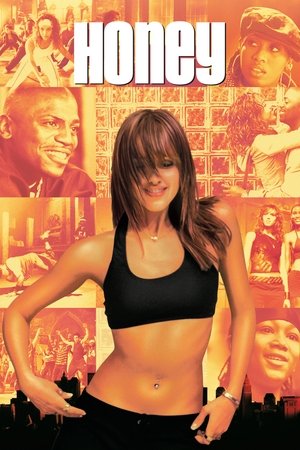
Honey Daniels dreams of making a name for herself as a hip-hop choreographer. When she's not busy hitting downtown clubs with her friends, she teaches dance classes at a nearby community center in Harlem, N.Y., as a way to keep kids off the streets. Honey thinks she's hit the jackpot when she meets a hotshot director casts her in one of his music videos. But, when he starts demanding sexual favors from her, Honey makes a decision that will change her life.
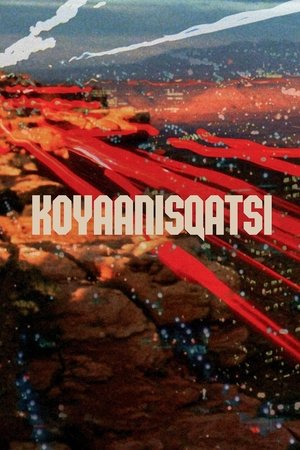
Takes us to locations all around the US and shows us the heavy toll that modern technology is having on humans and the earth. The visual tone poem contains neither dialogue nor a vocalized narration: its tone is set by the juxtaposition of images and the exceptional music by Philip Glass.
A comedic satirical sci-fi pop-musical based on the theories of Ray Kurzweil and other futurists. It’s the story of two Miami girls and how they deal with the technological singularity, as told through a series of cinematic tweets.
The fourth instalment in the surreal Don’t Hug Me I’m Scared videos in which the three returning characters enter a sinister digital world through their computer.
Global Groove was a collaborative piece by Nam June Paik and John Godfrey. Paik, amongst other artists who shared the same vision in the 1960s, saw the potential in the television beyond it being a one-sided medium to present programs and commercials. Instead, he saw it more as a place to facilitate a free flow of information exchange. He wanted to strip away the limitations from copyright system and network restrictions and bring in a new TV culture where information could be accessed inexpensively and conveniently. The full length of the piece ran 28 minutes and was first broadcasted in January 30, 1974 on WNET.
A short film about Techboy's epiphany told through the power of DIY animation.
A film released by Family International featuring 7 pop songs promoting their religious philosophy.
Photos, animation, and music illustrate the story of the Beatles.
One of Lawrence Jordan's earliest animated films, PINK SWINE is an energetic and playful mix of various animation styles. Described as "an anti-art dada collage film," this free-form short presents cut-out images animated across old photos (a style picked up by Terry Gilliam a few years later) and found objects that dance to the beat of the rock-and-roll soundtrack. He produced this short during a summer spent with Joseph Cornell and Jordan edited the film entirely in camera, making the upbeat visual rhythm of this delightful lark even more impressive. –Sean Axmaker
A boy growing up in Dublin during the 1980s escapes his strained family life by starting a band to impress the mysterious girl he likes.
A collaboration between Soda_Jerk and The Avalanches.
Octet is a chamber choir musical written and composed by Dave Malloy. The show explores addiction and nihilism within the messy context of 21st century technology.
A musical odyssey about trauma and the retreat of humanity into itself.
A musical documentary and tribute to Hugh Le Caine. The story of early electronic instruments, and the nearly forgotten Canadian music pioneer who created the first synthesizers. As told through interviews with three modern-day modular synth musicians.
Extended versions of the entrance music videos of these 10 WWE Superstars. Triple H Undertaker The Rock Mr. McMahon Kane Chris Jericho Edge Kurt Angle The Hurricane Billy & Chuck
Terror Mandelão addresses sound, technology, and the job market in the universe of baile funk in São Paulo's favelas. The film follows the journey of DJ K, one of the main DJs of Baile do Helipa, the street party of Heliópolis favela, and his friend Zero K, who got his first hit after 10 years as MC. Combining documentary, fictional elements, and visual experimentation, it portrays the ups and downs faced by young artists on the outskirts.
Destroy All Humans is a documentary exploring AI’s rise in art and media through an existential, experimental lens. At its center is HOVERBORG, a fictional band whose AI-generated music sparked questions about creativity and authenticity. Through interviews with musicians, artists, and media professionals, the film reflects on the unsettling shift toward hyperpersonalized media and asks: In a world shaped by algorithms, will we still recognize ourselves in the art we consume?
Animation. The theme is Weightlessness. Objects and characters are cut loose from habitual meanings, also from tensions and gravitational limitations. A lyric Eric Satie track accompanies the film. Such a portrait seems necessary from time to time to remind us that equilibrium and harmony are possible, and that we will not dissolve into a jelly if we allow ourselves to relax into them: A horseman rides through the landscape, through the town, but never arrives anywhere in particular. An acrobat swings on a rope above a canal in Venice, and is content just to swing there. Nothing threatens to disturb them. This film is a total contrast to the Kafka-like oddities of Eastern European animation. —Canyon Cinema
The DVD contains all the official music videos released with the "Hardwired... to Self-Destruct" album in 2016.
Melody loves when visitors stop by so she can show off all of her favorite electronics.