AMERICAN COUP tells the story of the first coup ever carried out by the CIA - Iran, 1953. Explores the blowback from this seminal event, as well as the coup's lingering effects on the present US-Iranian relationship. Includes a segment on the 1979 Iranian Hostage Crisis and its relation to the 1953 coup. Concludes with a section on the recent Iranian presidential election. Contains interviews with noted Middle East experts and historians and prominent public figures such as Stephen Kinzer (author, All The Shah's Men), Prof. Ervand Abrahamian, Trita Parsi, Col. Lawrence Wilkerson, Ted Koppel and Rep. Ron Paul of Texas. With Iranian cinematography by James Longley.
The documentary goes through the 23 years of MTV Brazil, taking stock from the avant-garde to the ostracism of the broadcaster that was the main guide for the musical, cultural and social formation of young people in the 90's and 2000's with interviews and testimonials from former VJ's and artists that emerged and became popular in the country because of the channel.
The death of punk icon and X-Ray Spex front-woman Poly Styrene sends her daughter on a journey through her mother's archives in this intimate documentary.
On August 8, 1988, the world’s first and largest Satanic rally took place. Ripped from a video featuring Satanist talking about creating a New World Order and killing off the masses. The 8-8-88 ritual was conducted right at the heart of the Satanic Panic. The goal, further exploit and feed upon the energies produced by the fears of the ignorant general public and media. It was shown to a sold-out crowd of degenerates promising them, “A Bitter Message of Hopeless Grief,” “A Nightmare of TERROR!” and “An Evening of Apocalyptic Delight!”
Follows Mas and Saha, two young Iranian asylum seeker musicians, navigating a frightening new world of immigration detention - where they discover the power of music.
After five years studying in Paris, Arash has not adjusted to life there and has decided to return to Iran to live. Hoping to change his mind, his two friends Hossein and Ashkan convince him to take a last trip through France.
Transformer was universally praised for its well-constructed anatomy of a touchstone album. Now expanded to interweave the original broadcast version with the bonus features on the original disc, the story appropriately begins with Reed remembering his days with the Velvet Underground and the importance of Andy Warhol in making them a New York-based phenomenon. These discussions provide more than the historical context for Transformer. Live at Montreux 2000 is a concert, released in 2005 by Eagle Vision. Reed performed eight songs from the Album Ecstasy plus a few older ones. From his days in the sixties as the main singer and songwriter of the Velvet Underground and through his mercurial solo career he has kept his audience and the critics on their toes with dramatic changes of musical direction from album to album. Underpinning everything however has been his unquestionable ability as a songwriter and performer of the highest class.
"Green Day: The Early Years" chronicles the rise of the world's most influential punk band, from their origins playing shows at Berkley's notorious Gilman Street venue in the late 80s, through the release of the platinum-selling Dookie in 1994.
A detailed chronicle of the famous 1969 tour of the United States by the British rock band The Rolling Stones, which culminated with the disastrous and tragic concert held on December 6 at the Altamont Speedway Free Festival, an event of historical significance, as it marked the end of an era: the generation of peace and love suddenly became the generation of disillusionment.
Documentarian Jose Sanchez-Montes turns his attention towards the late Cuban musician Ignacio Villa, known throughout the world as Bola de Nieve (Snowball), with this 2003 biographical documentary entitled simply Bola de Nieve. A master pianist, Bola de Nieve was a mainstay through the middle portion of the 20th century, with his music almost omnipresent in South America cinema throughout those formative decades. With Bola de Nieve's famous statement "I'm a sad person, but my songs sound happy" in mind, Sanchez-Montes also looks at the influence of the musician's African heritage and homosexuality upon Bola de Nieve's unique musical style.
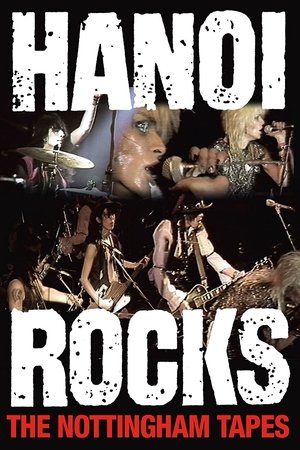
A portrait of a hard rocking band known for their substance-fueled live performances on their evolutionary journey to become one of the greatest cult rock bands of our time.
Electro-Pythagorus is an intimate and subjective portrait of the late Martin Bartlett, the Canadian electronic music pioneer who studied with Pauline Oliveros, David Tudor, John Cage, and Pandit Pran Nath. His contribution as an interdisciplinary composer, educator, and founding member of Western Front, though undoubtedly extensive, is in danger of being erased from cultural memory since his death from AIDS in 1993. Navigating an array of archival materials including letters, correspondences, notebooks, personal photos, and a huge body of unreleased music and field recordings held at the archives of Simon Fraser University, Electro-Pythagoras is a journey through the evolution of Bartlett’s musical time and space, softly guided by Luke Fowler’s insightful camera and montage—creating an experimental portrait that defies one-dimensionality.
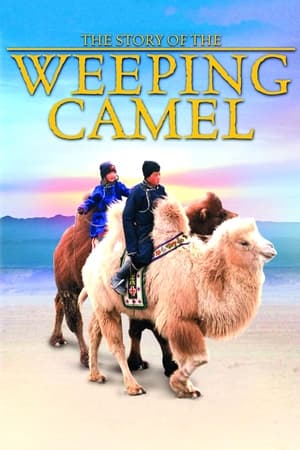
When a Mongolian nomadic family's newest camel colt is rejected by its mother, a musician is needed for a ritual to change her mind.
The Last Jews of Baghdad takes a historical and personal look at the persecution, torture, escape and exodus of over 160,000 Iraqi- Jews between the years 1940 through 2003. Hear from the survivors the real reasons why they left their beloved homeland of over 2500 years and if they will ever return.
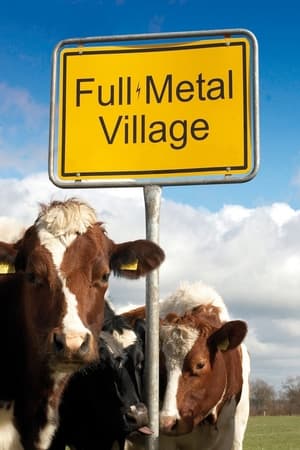
The film describes the microcosmos of the small village Wacken and shows the clash of the cultures, before and during the biggest heavy metal festival in Europe.
An experimental journey through a year in the life of the director, using his always playing playlist to cross the boundaries of fiction and documentary. Through scenes of both comedy and tragedy, realistic documentary footage and experimental sequences of the director's environment and daily life we get a sometimes estranging image of a young man and also an intriguing insight in his mindset and how this translates to the imagery on screen.
Chronicles Harry’s musical journey while creating his much anticipated debut solo album. The film features exclusive interviews and behind the scenes footage shot in Jamaica, Los Angeles and London during the making of the album and is complemented by Harry and his band performing songs from it for the first time at the world famous Abbey Road Studios in London.
The Freedom of the Sea is a short documentary highlighting the freedom of living in the UK - in contrast to a more restrictive life in Iran - through the joy of daily sea swimming in Brighton.
When you listen to The Years, the debut studio recording from Urbanites, you're hearing a band in progress. They wanted to make The Years differently, and decided to record the album together, live, in the same space - Studio A of Electrical Audio in Chicago, Illinois. With the exception of limited overdubs, (vocals, drum ensembles and laptop atmospherics) each song represented one collective take, warmly captured to two inch analogue tape. This recording method embraced the mistake as much as the moment. They also chose to document the making of the record with a film, appropriately titled, 'You Can't Rewind The Years'. With a new understanding and years of progress to come, these longtime friends are making the music that they'd always hoped to. As they sing, in The Years' standout track Restless, "Not without trial, not without err - this brokenness is ours to share."
In spring 1997, after several delays, The Video Dream Mixes was released. It features music material from The Dream Mixes, combined with films of US landscapes and alienated sights of Venice, pictures and computer animated graphics and virtual views from outer space. The film material was mixed up with clips showing the band on stage or during journeys. Most of the material was filmed by Edgar Froese.