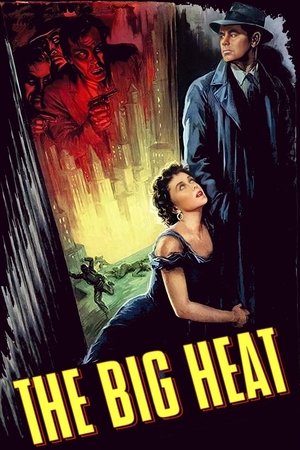
After the suspicious suicide of a fellow cop, tough homicide detective Dave Bannion takes the law into his own hands when he sets out to smash a vicious crime syndicate.
In the years before World War II, a tomboyish postulant at an Austrian abbey is hired as a governess in the home of a widowed naval captain with seven children and brings a new love of life and music into the home.
A “found object of paint and mold” given to Brakhage by the poet David Meltzer. According to Jane Brakhage, Stan did nothing to it but see it, splice it, and add titles. (From Barrett and Brabner. Stan Brakhage: A Guide to References and Resources)
A little nachtmusick, a deep blue overture to the series. Breathing in the cool night airs, breathing out a children's song; then whispering a prayer for a night of easeful sleep. Preserved by the Academy Film Archive in 2012.
UCLA Student Color Film. "a documentary film of marked lyrical and experimental tendency which was photographed and recorded in a L.A. supermarket. It consists of five sequences: 1) description of people 2) Comedy 3) choreographing natural movements 4) transformation fo visual reality 5) empathy". Preserved by the Academy Film Archive in 2011. Filmed at Shopper's Market, Santa Monica, CA.
Thomas Becket, Henry II's longtime advisor, finds his friendship with the debauched king corroding when he is unwillingly appointed as Archbishop of Canterbury in an attempt to gain absolute loyalty from the Church.
Short film about the Manzanar Japanese American internment camp. Preserved by the Academy Film Archive in 2011.
Agitprop short made in West Germany. Preserved by the Academy Film Archive in 2005.
Retired wealthy sea captain Jim McKay arrives in the Old West, where he becomes embroiled in a feud between his future father-in-law, Major Terrill, and the rough and lawless Hannasseys over a valuable patch of land.
A cowboy helps a pretty young woman find lost gold. Restored by the Academy Film Archive with additional funding from the National Endowment for the Arts.
A bitter young man sets out to get back at the gangsters who murdered his father.
Charlie, a wandering tramp, becomes a circus handyman - soon the star of the show - and falls in love with the circus owner's stepdaughter.
Two young men, one rich, one middle class, both in love with the same woman, become US Air Corps fighter pilots and, eventually, heroic flying aces during World War I. Devoted best friends, their mutual love of the girl eventually threatens their bond. Meanwhile, a hometown girl who's the lovestruck lifelong next door neighbor of one of them pines away.
In a dilapidated rural mansion, the last generation of the degenerate, inbred Merrye family lives with the inherited curse of a disease that causes them to mentally regress from the age of 10 or so on as they physically develop. The family chauffeur looks out for them and covers up their indiscretions. Trouble comes when greedy distant relatives and their lawyer arrive to dispossess the family of its home.
Follows a crusading lawyer as he embarks on a campaign to save an African-American man, Paul Crump, from the electric chair. Preserved by the Academy Film Archive in partnership with The Film Foundation in 2007.
A joyous, chaotic and colorful romp through nature; A psychedelic dance troupe rehearses in a studio.
A found footage film that innocently plays with many of the elements I explore in my own work. A family's playful interaction with a 16mm sound movie camera, singing along as a group with Gene Autrey's title song in front of the camera, combines western fantasy, American kitsch, gender posturing, deterioration of the film's surface, the wonderment of the cinematic process, and the use of controlled accidents to shape the form of the film. My only intrusion on the footage was to print it first in negative, which adds a mysterious, ghostly edge to it, and to print it again in positive, which seems to answer many of the questions raised in the first version. Preserved by the Academy Film Archive in 2013.
Experimental short 16mm film directed by Mike Henderson. Preserved by the Academy Film Archive in 2010.
“When Picasso died I wanted to make the first post-mortem documentary, as I knew would happen anyway, and cheaply. The film took four hours to finish from camera to print and cost a little under $5." Preserved by the Academy Film Archive in 2008.
Cube and Room Drawings begins with a view looking down at an angle toward grey paper covering the floor. A performer enters from the back of the scene and begins drawing lines on the floor. The lines are the beginning of a drawing of a distorted cube. The performer leaves the scene. The paper begins to rotate on the floor. As the paper rotates the cube gradually becomes correctly oriented, as if it were drawn on a vertical piece of paper. The performer enters again and draws another cube that corresponds to the perspective of the other cube. After leaving and re-entering the performer draws red receding lines on the floor. He leaves and the paper rotates and the red lines become a grid that corresponds to the vertical screen. The film continues with several additional actions that continue this theme. Preserved by the Academy Film Archive in 2012.