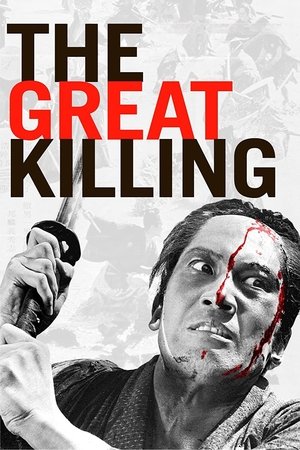
A remake of High Noon (1952) as a Japanese jidai-geki sword-fighting movie.
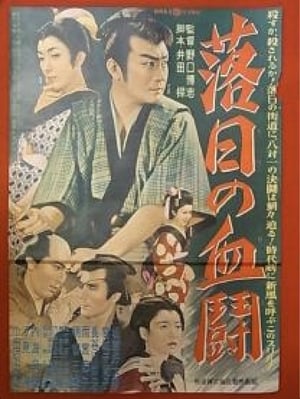
Thirsting for revenge, Jokichi rashly attempts to assassinate the evil Chogoro but ends up being captured by Yakuza. His life is spared by Boss Juzaburo, in order that the harmony of an important commemoration not be further disturbed. Though now even more of an outcast, Jokichi is asked by another Yakuza boss, Umezo, to guard Oyuki, the wayward daughter of Juzaburo. The tragic consequences of this assignment will lead him into a deadly trap and a final confrontation with Chogoro.
Japan, February 1868. As the Tokugawa shogunate declines and the power of Emperor Meiji grows, Gonzo, a soldier of the Restoration Army, returns to Sawando, his hometown, to announce the end of tyranny.
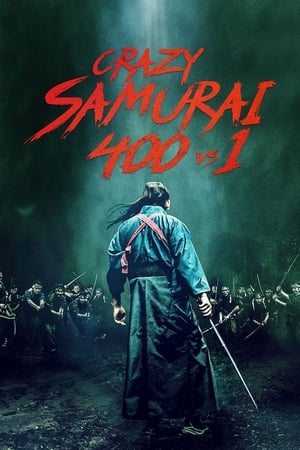
In 1604, Miyamoto Musashi attacked the Yoshioka family at their dojo and defeated master Seijūrō and his younger brother Denshichirō in two duels. To save their reputation, the Yoshioka family decides to fight back with all 100 family members and hire an additional 300 samurai. Now Musashi sets out to defeat all 400 enemies in his most famous battle.
One samurai is ordered to kill another by their master in punishment.
Two amiable samurai wind up on opposite sides of the vendetta between Lord Asano's retainers and the family of Lord Kira that led to the famous revenge of the 47 Ronin.
A man gets rid of a cheap pot without knowing it contains a map to a treasure. As word spreads, many join in hunting it.
The Shinsengumi is a special unit of ronin commissioned by the Tokugawa shogunate to counter anti-shogunate activities in Kyoto. A sinister plot to overthrow the shogun is set in motion and Kondo Isami and his fellow samurai must answer the call and expose those behind it.
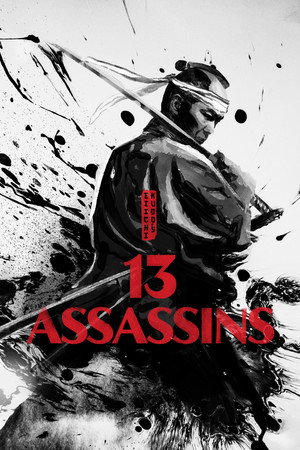
A sadistic Daimyo (feudal lord) rapes a woman and murders both her and her husband, but even when one of his own vassals commits suicide to bring attention to the crime, the matter is quickly hushed up. Not only will there be no punishment, but because the Daimyo is the Shogun's younger brother, he will soon be appointed to a high political position from which he could wreak even more havoc. Convinced that the fate of the Shogunate hangs in the balance, a plot is hatched to assassinate the Daimyo. The two most brilliant strategic minds of their generation find themselves pitted against each other; one is tasked to defend a man he despises, and has a small army at his disposal. The other is given a suicide mission, and has 12 brave men. They are the 13 Assassins.
A cynical samurai is left as the sole survivor to fulfill a plot to assassinate the puppet of a villain intent on usurping the shogunate in the 17th century. A Shogunate Elder connives to rule Japan by making his puppet, the Shogun's brother Tsunashige, the next Shogun. The best strategist in Japan, Yamaga, leads a plot to stop the Elder, but his cabal is betrayed and most of the conspirators are captured and tortured.
In the turbulent last days of the Edo period, Kawai Tsugunosuke, a Japanese samurai serving the Makino clan of Nagaoka, dreamt of independence from the restraints of vassalship. Despite his progressive views and his desire for his estate to remain neutral during the Boshin Civil War, he was bound by loyalty and duty to the clan and was compelled to choose sides.
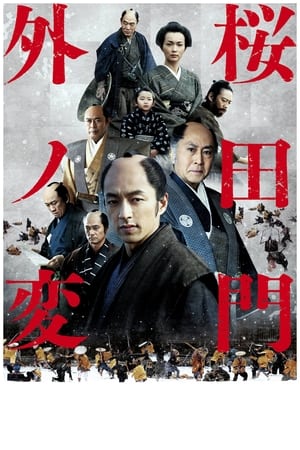
Mito Domain Samurai Seki Tetsunosuke must pay the consequences for his role in the assassination of Great Elder Ii Naosuke. Based on true events.
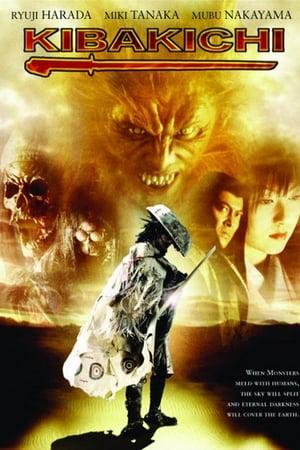
The saga of Kibakichi the samurai werewolf continues as his travels find him helping a blind girl and her small village seek revenge on a murdering madman. But, unknown to Kibakichi, he is being spied on by a strange group of people—and someone from his past, who is out for revenge!
In the third installment of Yoshikawa's novel Musashi, things continue from the 2nd film at the end of battle, where Miyamoto continues on a mission of learning; with the introduction of his arch-rival Sasaki Kojiro; and lastly the large cast of characters rendezvouses for a fateful finale.
Edo, 1703. Young Sugino, one of the 47 rōnin seeking revenge against lord Kira, who caused that his master, Asano of Ako, committed seppuku, meets a skillful spear fighter, Genban, who trains him to fight with honor on the day of retribution.
In feudal Japan, women are vulnerable, in need of protection, and capable of deception. Jokichi of Mikogami, a drifter, has not yet fully revenged the death of his wife and son. He searches for Kunisada Chuji, who in turn has hired the knife-throwing Windmill Kobunji to kill him. Kobunji and Jokichi meet in the winter, near Sasago Pass, when both have rescued women: Jokichi has saved the lute-playing Oyae whose clan and whose lover want her dead; Kobunji has rescued Oharu, a well-born woman married to an innkeeper. Is this rescue a whim or something deeper? And why does Jokichi become the consumptive Kobunji's protector? What ultimately will Jokichi do about Oyae?
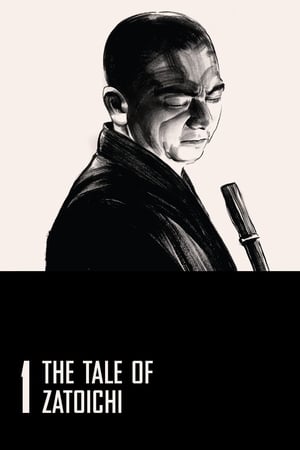
Historical drama about a sleepy-eyed ronin.
Historical drama about a sleep-eyed ronin
[Period covered: 1637-1651] This is one of the most complicated plots of any of the Shinobi no Mono films! This film tells the story of Saizo’s son, Kirigakure Saisuke, who after seeing his father die at the Battle Of Shimabara, grows up to be an expert ninja. Before he dies, “Mist” Saizo tells his children Saisuke, and Yuri that they are not really brother and sister. She, in fact, is the daughter of the late lord Sanada Yukimura, and must be saved from the shogun’s forces. In the chess match of spy versus spy, can Saisuke defeat the shogun’s chief strategist, Matsudaira Izunokami at his own game? Showing many exciting ninja tactics, it is not to be missed.