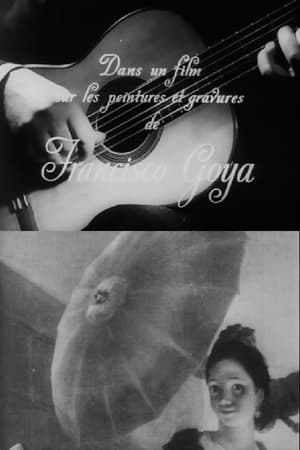
An exploration —manipulated and staged— of life in Las Hurdes, in the province of Cáceres, in Extremadura, Spain, as it was in 1932. Insalubrity, misery and lack of opportunities provoke the emigration of young people and the solitude of those who remain in the desolation of one of the poorest and least developed Spanish regions at that time.
Chris Marker and François Reichenbach document the massive anti–Vietnam War protest held in Washington, D.C., on October 21, 1967, where more than 100,000 demonstrators gathered at the Lincoln Memorial before marching on the Pentagon. Filmed amid the crowd, the short captures the tension, idealism, and growing radicalism of the American peace movement.
Exploring the art of Armenian portraitist Hakob Hovnatanyan, Parajanov revives the culture of Tbilisi of the 19th century.
Corral is a 1954 National Film Board of Canada documentary by Colin Low, partly shot in the Cochrane Ranch in what is now Cochrane, Alberta. In the film, a cowboy rounds up wild horses, lassoing one of the high-spirited animals in the corral, then going on a ride across the Rocky Mountain Foothills of Alberta.
Besieged by cancer and nearing the end, the genius Argentine-Brazilian filmmaker Héctor Babenco (1946-2016) asks Bárbara Paz, his wife, for one last wish: to be the protagonist of his own death.
An account of the life and work of Russian filmmaker Andrey Tarkovsky (1932-86) in his own words: his memories, his vision of art and his reflections on the fate of the artist and the meaning of human existence; through extremely rare audio recordings that allow a complete understanding of his inner life and the mysterious world existing behind his complex cinematic imagery.
Actor/cult icon Bruce Campbell examines the world of fan conventions and what makes a fan into a fanatic.
Filmmaker Jonas Mekas follows the surrealist artist around the streets of New York documenting staged public art events.
An overview of the best methods and techniques for taking nude photographs.
An attempt to create a bridge between the different political positions that coexist, sometimes violently, in the Basque Country, in northern Spain.
'Coffea arábiga' was sponsored as a propaganda documentary to show how to sow coffee around Havana. In fact, Guillén Landrián made a film critical of Castro, exhibited but banned as soon as the coffee plan collapsed.
In this tape, Ko Nakajima and Video Earth Tokyo interview a homeless man. The subject is initially angry and frustrated, but gradually opens up and shares stories about his life. Under A Bridge was later broadcast on cable television.
The 16th short film as part of the Magica series dealing with pre-cinema. Mr Seymour, the hero of the book by London doctor Mr Paris, shows his invention – the thaumatrope – to a little girl and explains how it works. The superimposition of the images is not perfect, so he invents the use of elastic instead of the usual string. Only by recording the two successive images of the thaumatrope on a title bench can they be viewed perfectly. Numerous examples are shown.
The feature-length documentary about the making of the cult film favourite, "Donnie Darko".
Antoine de Caunes meets The Boss to promote the "Bruce Springsteen and The E Street Band" documentary.
The story of an energetic Russian woman, Tamara Fedorovna who moved to Leninabad in the 1950s and, as a pensioner, became a trainer for a men’s soccer team and performed in the local amateur theater. Then, after three or four years, thousands of Russians would have to leave Tajikistan as would Tamara.
Set to a classic Duke Ellington recording "Daybreak Express", this is a five-minute short of the soon-to-be-demolished Third Avenue elevated subway station in New York City.
Short film about dangers for seniors in road traffic
During the Feria of Nîmes, a bullfight is filmed from the perspective of the animal, relegating the matador and public to off-screen spectators. A ritual at the frontiers of mysticism, carried by the sacrificial figure of the bull, revealer of our humanity.
Karlon, born in Pedreira dos Húngaros (a slum in the outskirts of Lisbon) and a pioneer of Cape Verdean creole rap, runs away from the housing project to which he had been relocated.