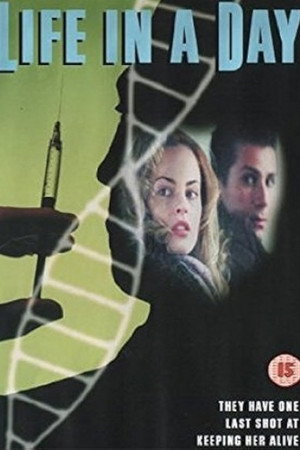
Fact-based drama about the life of Marie Balter, who spent most of her young life in mental institutions. At age 16, she first attempted suicide and the next 20 years she spent in and out of the institutions. At last, a caring doctor started treating her for extreme depression and panic disorder. Weened from strong medications she had taken all her life, at age 36, she emerged for the last time and started a rehabilitation program in the home of a volunteer married couple. There she met a fellow patient with whom she developed a romantic relationship. She also started a college degree. This followed with a long-term professional success in the field of mental health.
An 18 year old on the island Djerba, Aicha, is married to Said, who works in Tunis for much of the year. Aicha breaks with tradition and decides to join Said in Tunis, weaving rugs to make money. Said asks that she give him a son, so Aicha lives under the rule of her mother-in-law.
In an insurrectionary climate, four twenty-year-old friends talk about politics. As a big protest looms, one of them, Clara, has to write a college essay. Caught in the virtual images and the comfort of her bedroom, going out is harder than expected.
Hyo-jeong, a 69-year-old woman, is raped—but few people, including the police, are willing to believe what she says.
A young journalist in London becomes obsessed with a series of letters she discovers that recounts an intense star-crossed love affair from the 1960s.
In Japanese-occupied Hong Kong, a school teacher and her would-be-fiancé link up with Chinese guerrilla fighters, forging their own path to freedom.
Tierna es la Noche is a film without bullets nor sea, without mosquitoes, without peasants nor flowers. It only contains a barman, a man and a beautiful woman who lives in a bathroom. For commercial reasons, we have included two policemen, a drop of blood and a multilingual nymphomaniac. For aesthetic reasons, a tear and a black man. For both reasons, the film takes place anachronically, during the fifties and nineties in a make-believe city called Caracas. It's a story of histerics, like all stories, unfinished.
Seven girls become good friends in high school, then events pull them apart for 25 years. When one of the friends lies dying in a hospital, she wishes to see each of them one last time.
A two days from the life of Pyotr Drozdov, a highly ranked official from Moscow, which he spends with young museum employee Masha.
A young girl breaks up from her petit bourgeoisie home and her piano lessons to lead an entirely new life, as one of the personnel at an institution for juvenile delinquents in a remote part of Northern Iceland. It is the 1970s and the young people in charge of the place are heavily into flower power, sitar music and solving problems by frank talk sessions with the delinquents. However, the hippies, who themselves despise authority, soon find their own authority under attack by the rebellious youngsters, especially after the arrival of a mysterious young girl. Then a violent incident occurs that will have a decisively detrimental effect on relations at the institution.
Drawing inspiration from a poem penned by Castro Alves, this film vividly captures the political, cultural, and intellectual climate of Brazil during the late 1970s. At its core, the story revolves around four distinctive embodiments of Christ's image: a black man, a soldier, an Indian, and a guerrilla fighter. These courageous individuals, hailed as the harbingers of doom in the tupiniquim lands, valiantly combat the insatiable avarice and oppressive "civilizing" brutality propagated by the formidable John Brahms—a foreign exploiter devoid of morals.
The story of Pierre Brossolette, who was a talented student, journalist and a defender of human rights.
Four young people travel through lost towns of the jungle in a van. It is a road movie where all members of the group take an inflatable screen plus all the necessary equipment to faraway places in the country to show movies. Three of the characters, those from Lima, premiered the movie in commercial theaters with tremendous failure. It was taken off in one week due to few spectators. One day they heard about itinerant movies and it thought this would be a good way to show their movie to areas non contaminated by Hollywood films. With this idea they hire Beto, an Argentinean that has experience with outdoor movies, to help with the technical things they didn’t know. The trip begins with the enthusiasm of those that want to exhibit the movie, and little by little convert it to a reflection of the movies, friendship and loneliness.
Tim has a romantic date to watch the start of the Tour the France in Utrecht with his girl. But he ends up at the wrong side of the barriers and has to find a way to get to her.
A mother searches for her lost son, who after four days still has not returned from a party at a friend's house a day's drive away.
A pregnant 22-year-old with a dreary job, a difficult home life and an absent boyfriend learns to love her life and share this love with the child in her womb.
After years of traveling, Anyas parents have decided to return from Australia to their native France, and she has to attend a public school for the first time in her life. But normal everyday school life quickly causes problems for the girl. On the first day, she gets a shot with a soccer ball on the head. When no one wants to apologize for this, a violent argument immediately ensues. So she messed it up with the locals right from the start. Anya becomes an outsider, which doesn't even really bother her. But Zoé, Nils and Jade, who are also a bit different, take care of her. A new clique is formed. But the pretty outsider would prefer to be friends with Nathan, the school director's son. But he gives her the cold shoulder because it wouldn't be cool to be interested in girls in front of his buddies. Meanwhile, the girls hatch a plan to win their place in the schoolyard. A real fight ensues between the students. Now it's girls against boys. But how far can a dispute between children go?
Based on the eponymous novel by Ciro Alegría. An indigenous community living their day-to-day and their relationship with nature. They can be reimagined as hungry dogs.
Second in the Tina trilogy of films (Tina Goes Shopping, Mischief Night) set on a tough Leeds housing estate and starring the residents who actually live there in real life. This time Tina is in prison and life on the estate is viewed through her children's eyes.
The first film in the Tina trilogy, using the actual inhabitants of a tough Leeds council estate in the leading roles. Tina is a single mum who steals to order for her own `shopping' business, her drug-addict boyfriend Aaron is planning the theft of a cow so he can sell the meat, and Tina's father, Don, is the mobster in control of the local drugs trade.